ODM party leader Oburu Oginga has said more than once that the party must either form the next government or be part of the government. The point Oburu is making is that the 2027 election will be decisive for the party.
Whether Oburu and Orange House are aware of this or not, it looks certain that the party as we know won’t survive beyond the next election. The prognosis is bad
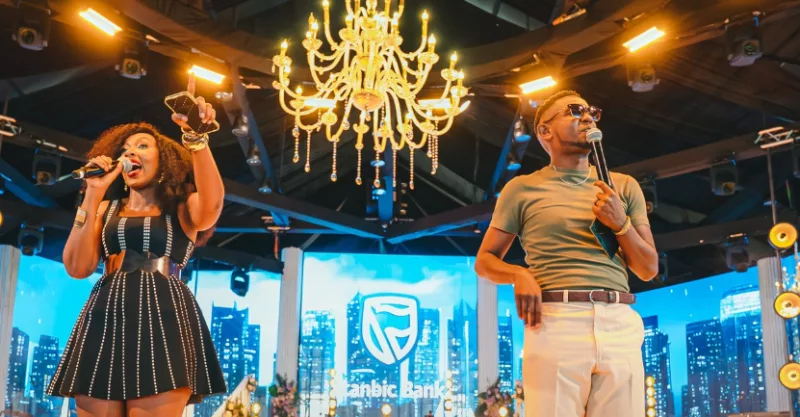
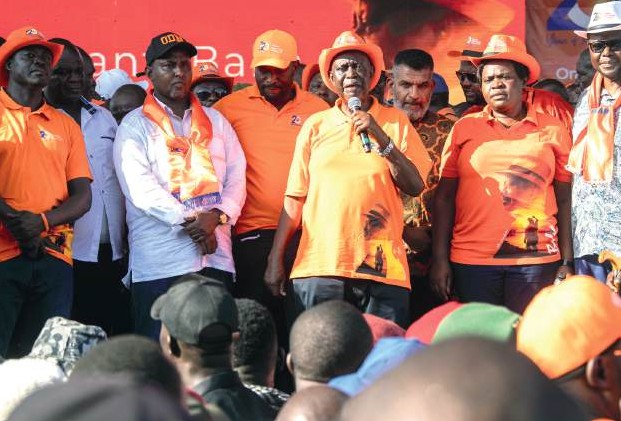
The colourful celebration of the party’s 20th anniversary in Mombasa may have been its final major event, a farewell. The turmoil within ODM is terminal. There is no way of resolving the existential crisis brought about by the highly divisive and potentially fatal decision to join the broad-based government of President William Ruto in March.
Party leader, the late Raila Odinga, struggled to explain that the party was not part of government as it had not signed a coalition agreement with the ruling United Democratic Alliance. But that is just sophistry. Top ODM officials—including its chairman and two deputy party leaders—opted to relinquish their positions to join the government. It is inconceivable that it was a personal decision not involving the party. Senior officials of a major party can’t just walk out without serious discussions. If so, it would suggest internal discord. Yet everyone knows Raila’s tight grip on the party. What’s more, after Wycliffe Oparanya, Hassan Joho, Opiyo Wandayi, John Mbadi and Beatrice Askul joined Ruto, the party became very vocal in support of the government and immediately ceased all criticism.
The President made other senior government appointments, believed to be rewards to Raila for his cooperation. High-ranking government officials often trooped to Raila’s Upper Hill office to “consult” him. Party supporters everywhere read the signal correctly and turned from hostility to fulsome support of the Kenya Kwanza administration. It was no longer the “illegitimate regime”, as Raila had rubbished it during the deadly “maandamano” of 2023. Was all this sea change due to the personal decisions of the five ODM officials?
Raila himself vacillated on the issue. While insisting the move of the ODM 5 was personal, he also described them as “experts” seconded to government at the President’s request. That suggests a party, not individual, decision, doesn’t it? And when he died, Raila was mourned as a selfless statesman who time and again put aside his ambitions to stabilise the government. The context of ODM’s co-optation into government was the Gen Z protests that threatened Ruto’s control of the ship of state.
The lack of clarity about ODM’s relationship with the government has festered after Raila’s death. In his first major TV interview after succeeding his brother as the ODM party leader, Oburu failed to end the confusion.
“Those of us who are in government like Mbadi and Wandayi are now part of the administration. They can speak for themselves, but not for the party,” Oburu told NTV.
But, again, he said, “Those are our people. You can interpret their presence in government as you wish but the truth is, they represent the party’s new pragmatic path.”
This confusion has split the party between those who support the broad-based government and the critics.
As the country hurtles to the next elections, three scenarios are possible for ODM—but none of them can save the party. The first is to back Ruto’s re-election in 2027. Already, secretary general Edwin Sifuna and a group of youthful party MPs have vehemently rejected taking this route. They could break away to form a new party or defect to an existing one.
If the President secures a second term with ODM backing, the party will become one of the numerous outfits forming the ruling coalition. Having been “swallowed” by UDA, it will lose its identity and discipline in the internal jostling for the spoils of Ruto’s second victory and the fierce 2032 succession race that will ensue. At worst, ODM may be forced to fold like Musalia Mudavadi’s ANC. If Ruto loses in 2027, ODM will be thrown out with him into the opposition. In either case, weakened by the fallout from supporting Kenya Kwanza, the party will inherit Ruto’s baggage and is unlikely to recover and stand on its own two feet after the general election.
The second scenario is to delink from Ruto ahead of 2027 and field a presidential candidate. This would still split the party. ODM bigwigs in government are unlikely to relinquish their lucrative positions to fight Ruto. What would woo them away from the trappings of power to risk an uncertain future? If those big names—and their allies—stick with Ruto, ODM would merely be making a token show at the polls. With Raila out of the picture, it would not be easy to select, package and sell an ODM presidential candidate. The rivalry for the party’s flag bearer would be messy and noisy, further splintering and weakening the party. In addition, Ruto would treat ODM’s move as betrayal and do everything in his power (including deploying the former Orange stalwarts) to cripple the party.
The third option is to join the united opposition. Nothing is impossible in politics, but this will be extremely difficult. Oburu and other party honchos are adamant ODM has quit opposition politics for good. The party is today identified with the broad-based government. The opposition space it left has now been fully filled by Rigathi Gachagua and his group. If ODM wants to join that side, it must be ready to accept the crumbs. The main pieces of the cake are already taken. Gachagua and his group are more likely to embrace ODM renegades (operating under the Kenya Moja formation) than accept the Uburu-led faction.
Time is up for ODM. It is the nature of Kenya’s politics. Parties are so closely identified with their founding leader they simply can’t survive without them. Whatever choice Orange House makes, the die is cast. ODM will be, at best, a shell after 2027.