
Kenya’s security landscape has long been shaped by a traditional, top-down model—one in which directives flowed from government offices in the capital Nairobi to communities—with limited citizen participation. For decades, this imbalance bred mistrust, misunderstanding and in some areas, silent resentment.
Yet, in under a year, Jukwaa la Usalama has disrupted that legacy and transformed it for the better. What many initially dismissed as a populist gimmick has rapidly demonstrated itself one of the most transformative public security initiatives in independent Kenya.
At its core, Jukwaa la Usalama is deceptively simple: put citizens, local political and religious leaders and security agencies in the same room. Allow open and honest dialogue, thereby building trust through accountability and visibility. But the impact has proven anything but simple. It has redefined how communities relate to the state and how the state interprets security—not as imposed order, but as a shared responsibility.
The numbers alone tell a powerful story. More than 1,400 firearms, many of them high-calibre deadly weapons, including AK 47s and G3 rifles, have been voluntarily surrendered. For a country historically plagued by proliferation of illicit arms, especially in pastoralist-nomadic and border regions, this achievement is unprecedented.
Voluntary surrender—not forced disarmament—reflects a level of trust that Kenya has struggled to cultivate for over half a century. It signals a shift from fear to cooperation, from hostility to partnership.
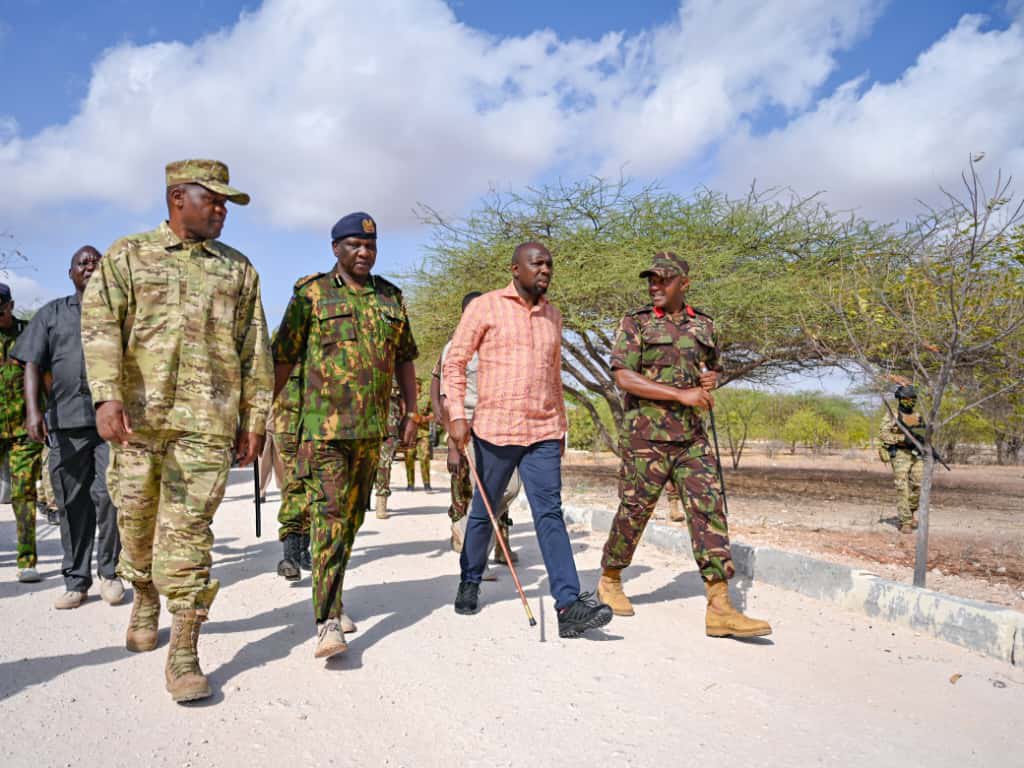
The reason for this success is not a mystery. Cabinet Secretary Kipchumba Murkomen has set foot in every Kenyan subcounty within a remarkably short period. In a political culture where leaders often hover above the people, Murkomen’s hands-on approach has broken protocol and expectations alike. His presence in communities—listening, explaining and being held accountable—has given the initiative moral authority and credibility. More importantly, it has shown citizens that someone in power is finally willing to meet them where they are, both literally and figuratively.
Security experts have long argued that the most sustainable peace is locally negotiated, community-owned and socially reinforced. Jukwaa la Usalama puts this philosophy into operation. By creating space for community-driven problem-solving, it tackles the root causes of crime and conflict—economic frustrations, boundary disputes, radicalisation, drug abuse and historical grievances. These are issues that cannot be solved through force; they require conversation, consensus and collaboration.
For years, Kenya has struggled with the proliferation of small arms. International observers have categorised the Horn of Africa as one of the most difficult and complex regions for arms control due to porous borders and cyclical conflicts. Yet, the progress achieved under Jukwaa la Usalama positions Kenya as a potential regional and global model. Few nations have managed to reduce illegal firearms without aggressive crackdowns. Kenya has done so through dialogue. That alone deserves recognition.
Beyond reducing arms, the initiative has brought a softer but equally critical change: the restoration of public trust. Communities that previously saw government officials as distant, dismissive, or coercive now feel acknowledged. Local leaders are empowered, not sidelined. Young people, often the most vulnerable to criminal networks and radical ideologies, now have spaces for expression rather than confrontation. Trust is not an abstract idea: it is the currency of public safety. And Kenya is finally rebuilding it.
Critics who initially dismissed the initiative as political theatre must now reckon with these tangible outcomes. Security is not measured by rhetoric but results. And the results speak for themselves: fewer weapons, fewer deaths, fewer conflict triggers and stronger ties between the state and its citizens.
No public initiative is perfect and Jukwaa la Usalama will need continuous refinement. Dialogue must translate to sustained investment in youth, infrastructure and policing reforms. Communities must remain central—not only in discussions but also in decision-making. And the government must ensure that this progress does not become episodic, tied to personalities rather than institutional culture.
But even with these caveats, one thing is clear: Kenya is witnessing a rare moment of security innovation that deserves national appreciation. CS Murkomen and the security agencies have demonstrated that leadership grounded in humility, presence and partnership can achieve what decades of command-and-control strategies could not.
As the world grapples with the dangers of small arms proliferation, Kenya’s model could earn regional and global accolades—and deservedly so. Jukwaa la Usalama is more than a forum; it is a breakthrough. It is a testament to what can happen when the government steps down from the dais, sits with its people, listens and acts.
In a country yearning for sustainable peace, this initiative has opened a new chapter—one defined not by force, but by trust; not by fear, but by dialogue; not by distance, but by genuine engagement. And for that, Murkomen and the entire security sector deserve sincere support and commendation. They are potential candidates for the Nobel Peace Prize.







