 Principal Secretary, State Department of Micro, Small and Medium Enterprises Development, Susan Mang’eni./COURTESY
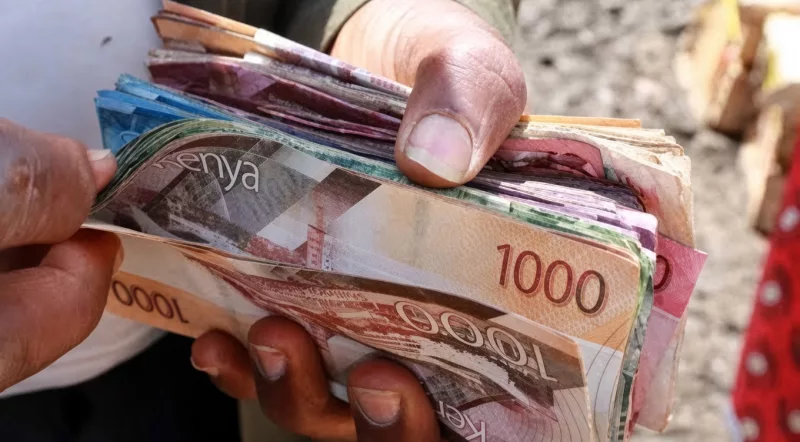
Hustler Fund, President William Ruto’s flagship economic stimulus initiative designed to improve financial access for personal, micro, small, and medium-sized enterprises (MSMEs) in the country, has managed to create a credit profile for 26.9 million Kenyans.
This is a key milestone for the fund that has since disbursed Sh80 billion to 28 million Kenyans over the past 30 months and seen at least Sh4.5 billion saved, according to Principal Secretary, State Department of Micro, Small and Medium Enterprises Development, Susan Mang’eni.
In an exclusive interview with the Star, the PS highlighted the importance of credit history, saying that most Kenyans were not visible to financial institutions, hence unfairly rendered risky.
According to her, before the Hustler Fund, which was meant to stimulate the economy that was struggling to heal from the double impacts of Covid-19 and general elections, most Kenyans had no credit footprints, while those in the system had negative profiles as a result of economic disruption caused by the pandemic.
“Most Kenyans at the bottom of the economic pyramid lose out on credit, as financial institutions cannot determine their behaviour. Hustler Fund has managed to avail this data, which is beneficial to both individual borrowers and financial institutions,’’ Mang’eni said.
She added that the government did not roll out the Hustler Fund to compete with financial institutions. “The government is not in business. It exists to offer a supportive mechanism to ensure the private sector remains in business while citizens have access to a quality life.”
She explains that the Hustler Fund sort of gave out a second chance to the population to be treated fairly by financial institutions. “Everyone was given a chance to grow their credit score. Those with consistent repayment history have since been graduated to the formal market.”
She is now appealing to those yet to repay their loans to act quickly, not to taint their histories.
Mang’eni called out those criticising the fund due to a high default rate estimated at close to Sh12.6 billion, saying that they are not looking at the initiative holistically and objectively.
“Unlike the private sector, the government exists to influence behavioural change. It cannot blacklist its citizens and still expect them to participate in economic building actively. It is not unusual that some people fail to honour their loan obligations.”
She likened the Hustler Fund to the education sector, saying that while the sector costs the government billions every year, the state does not punish students who fail to excel.
“This year, the state has pumped above Sh700 billion into the education sector. The overall goal is to ensure that her citizens get a basic education. Those who excel are rewarded through promotions to higher levels. That is the same concept applied by Hustler Fund,’’ she said.
According to her, the fund has nine bands, from excellent to poor. Data shows that millions of borrowers who have consistently honoured their obligations have since graduated from a credit limit of Sh500 to Sh150,000.
Last December, President William Ruto announced the launch of a new financial product under the Hustler Fund, called the “Bridge Loan.”
The initiative aims to provide Kenyans with higher loan limits and longer repayment periods, addressing the demand for more flexible credit options.
“Bridge Loan targets Kenyans with strong credit scores, enabling them to transition from smaller personal loans to larger, business-oriented financing,” Mang’eni said, adding that at least 730,000 people have since accessed credit worth Sh9.3 billion.
She said that the product has empowered borrowers to pursue larger business opportunities and make more significant investments, with most of the credit (Sh5 billion) going to agriculture and blue economy sectors.
"Apart from ensuring that ordinary Kenyans are cushioned from predatory digital lenders, this fund is geared towards inculcating a saving culture, especially among the 16 million Kenyans who are not in formal employment," the PS said.
Latest data shows that at least 250,000 people have voluntarily joined the Hustler Fund saving scheme, putting the total savings under the fund to Sh4.5 billion. At least Sh1 billion has been withdrawn.
Hustler Fund savings interest is based on the rate for government securities (T-bills), specifically the T-bill rate minus three per cent. Although a rate of 12 per cent was announced in late 2023, based on the aggregated savings and negotiated rates, the exact current rate can fluctuate and is determined by the prevailing T-bill interest rates.
According to the PS, even borrowers receive 95 per cent of the loan in cash, and five per cent is set aside as savings. “This ensures that while you take care of your needs today, you’re also securing a better financial future.”
She concludes that the overall objective of the fund is to reform the collateral system, where everyone will have a National Credit Score to enable access to loans.
"This will cure the inequity in the market where only a small section has a defined credit footprint or collateral assets, blocking the majority from formal financial services."