The highest form of capitalism is that our systems are designed to make you spend. You want a good life, you pay; you head to the market, park and then pay; quality education for your child, you sweat, you pay; your salary, you pay; you just exist you are taxed among other super simplistic examples of day to day life.
But the twist of capitalism gone rogue doesn’t just start with the government, it starts with our day-to-day life and the non-government institutions that serve us.
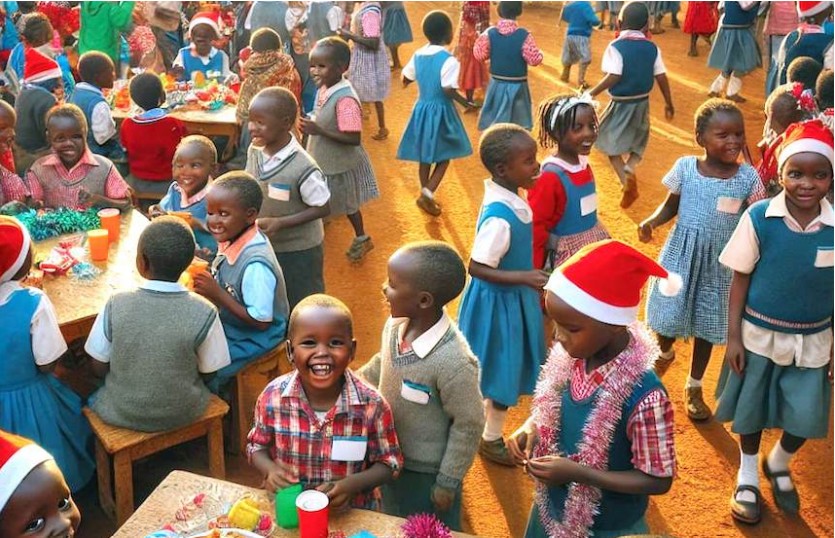
I recently attended a Pre-Christmas cantata event at a school of a friend's sons. What I experienced made me really wonder why we Kenyans tolerate unfairness sometimes.
So, it is a typical private school, those ones driven and funded by middle class parents, who in all their ways wish their children good education, good grades and soft skills. The school has a good reputation in their locality and children perform well above average, the kind of results envisioned by any parent in this new competency-based education era.
I received a beautifully designed e-invitation from my friend, of which, at first glance, got me surprised, as there was an entry fee, for parents and their children.
Only children, who were taking part in the performance, were getting in for free, this was in the pretext of “funds going to a non-indicated children’s home.” If true, it was an initiative the school could easily champion by themselves, based on the huge profits they make already.
Or otherwise have the donation as a separate drive for willing parents, instead of making all the parents pay by force, because anyways, they have to go and watch their children perform Christmas songs and dance.
So, my friend and I, and the son who was not engaged in the performances, of course paid, cumulatively Sh800 to get in, her other son was performing and damned if we were not there to support him, it would be very damaging to the child.
Other parents, well obliged, were also there, happy as always to support their children; they also paid to get into the very same school they fund heavily for their children's education.
Isitoshe,before the performances began, the master of ceremony, one of the teachers then announced that there were snacks, but they had to be paid for, nothing was free of charge.
Someone had probably been engaged by management to make the snacks, and any child or parent who wanted had to pay. The maths was great; at least 1,000 people spending at least Sh100 would bring in at least Sh100,000, not bad at all for a few hours, is it?
Not amused, my friend and I figured, it was just too much to spend, for a school where even going for a trip to our very subsidised KWS facilities based within the same Nairobi costs one Sh3,500 for a child, for something one would pay Sh200 to the government.
In contrast, a similar event in a well-regulated free school in a developed country would look markedly different. Parents would typically walk into the school grounds without paying an entry fee, because public schools and private regulated schools operate on the principle that community events are part of the school’s mandate, not revenue-generating opportunities.
Fundraising, if needed, is usually voluntary and transparent: parent–teacher associations often run donation drives, bake sales, or raffles, clearly indicating where every coin will go.
Snacks might be provided at cost or even offered for free through community sponsorships, the schools, go as far as getting private companies in the locality to fund such an initiative and no child’s participation or sense of belonging would depend on a parent’s ability to pay at the gate.
The broader system, shaped by strong regulation, consumer protection norms and a culture that prizes institutional accountability, discourages the kind of extraction my friend and I witnessed.
My question is how did we get here? How have societies like ours, evolved to create grotesque levels of such corruption and bad governance, right from the lowest like the level of private primary schools to the highest levels in government? Are we victims or enablers of bad systems like this?
What if all parents rebelled against paying for entrance to the same school they pay heavy school fees for, just to watch the very same people they pay for perform? How accountable are these institutions to the government.
As taxpayers, are these institutions using such events to sanitise something, or just to profiteer unnecessarily from parents who are trying too hard? Who should defend parents? Schools are expected to serve families, not profit from them.
When you compare our experience and what happens in developed states, ours is simply exploitative and the highest form of capitalism gone rogue. Over to you our regulators.
Bwire writes on African Youth, Democracy, Higher Education and Development