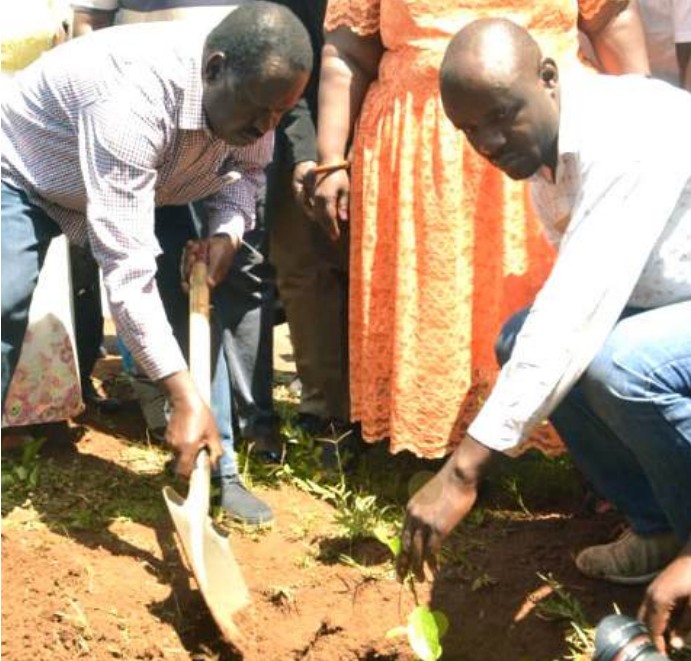
Throughout his life, Baba laboured diligently to elevate awareness regarding the significance of safeguarding our planet and implementing sustainable practices in Kenya.
Despite not garnering widespread acclaim for his endeavors in this sphere, his influence on the environment was profound and enduring.
Odinga’s unwavering commitment to the preservation of the natural world serves as an inspiration for future generations to perpetuate his legacy of environmental stewardship.
His devotion to ecological causes extended far beyond his public persona, revealing a profound passion for sustainability that informed his actions both personally and politically.
His advocacy for conservation initiatives and green policies set a precedent for leaders to prioritise ecological concerns alongside economic development.
By incorporating environmental considerations into his governance strategies, Baba exemplified a comprehensive approach to leadership that acknowledged the interdependence of human welfare and ecological health.
Moreover, Raila’s legacy underscores the crucial role that individuals in positions of influence can play in advancing environmental protection.
His steadfast dedication to conserving natural resources and combating climate change serves as a poignant reminder that every individual, irrespective of their background or profession, possesses the capacity to effectuate positive change for the planet.
Raila Odinga’s narrative highlights the transformative potential that a single individual can wield in shaping environmental policies and galvanising collective action towards a sustainable future.
Odinga’s environmental advocacy was not confined to policy initiatives; he also led by example in his personal life. By embracing sustainable practices such as recycling, energy conservation, and supporting eco-friendly enterprises, Raila embodied the principles he championed.
His eco-conscious lifestyle stood as a testament to the notion that individual actions, regardless of their scale, can collectively yield a significant impact on the environment.
Furthermore, Odinga’s environmental legacy accentuates the importance of education and awareness in fostering a culture of environmental responsibility.
By promoting environmental literacy and engaging communities in conservation efforts, he empowered citizens to become stewards of the natural world. His emphasis on grassroots involvement and community-driven initiatives underscored the belief that environmental protection is a collective responsibility transcending political boundaries and societal divides.
Baba vocally advocated for the conservation of the Mau Forest, one of Kenya’s most critical water towers. In 2009, as Prime Minister of the Republic of Kenya, Baba risked political capital by accusing the government of destruction, citing illegal encroachment and logging activities.
He underscored the importance of safeguarding the catchment, highlighting its pivotal role in sustaining the Maasai Mara ecosystem and supporting local communities.
Ultimately, he faced a decline in political support and popularity in the Rift Valley region due to his unwavering stance on conservation. His staunch critic, President William Ruto, won the argument and managed to persuade the masses that forests hold no significance in rainfall formation.
In today’s rapidly evolving world, Raila Odinga’s vision for a sustainable future remains as pertinent as ever. As climate change continues to pose unprecedented challenges, Raila Odinga’s principles of environmental stewardship and sustainable development serve as guiding beacons for policymakers, activists, and individuals alike.
By honouring Raila’s environmental legacy and perpetuating his commitment to safeguarding our planet, we can pave the way for a greener, healthier future for generations to come. His environmental advocacy not only left an indelible mark on Kenya but also inspired a global movement towards sustainability.
His forward-thinking approach to environmental issues resonates with individuals and organisations worldwide, prompting a shift towards greener practices and policies.
By illuminating the interconnection between environmental health and human well-being, Raila’s legacy continues to influence decision-makers to prioritise eco-friendly solutions that benefit both present and future generations.
In addition to his advocacy for policy change, Raila’s emphasis on personal responsibility in environmental conservation serves as a poignant reminder that every individual can contribute to a healthier planet.
Through simple yet impactful actions like reducing waste, conserving energy, and supporting eco-conscious businesses, individuals can follow in Baba’s footsteps and effect tangible change in preserving the environment.
By fostering a culture of sustainability at the grassroots level, Raila Odinga’s legacy encourages collective action towards a more sustainable and resilient world.
In July 2025, the former Prime Minister advocated for the consolidation of land in Nyanza in accordance with the Physical Land Use Planning Act of 2019, urging the abandonment of the cultural practice of constructing scattered homesteads to enhance productivity, citing the increasing scarcity of land as the population surges.
Furthermore, the former Prime Minister’s vision for a sustainable future extends beyond environmental protection to encompass social justice and equity.
Recognising the disproportionate impact of environmental degradation on marginalised communities, Raila Odinga championed inclusive policies that address both environmental and social challenges.
His holistic approach to sustainability underscores the importance of addressing systemic inequalities and promoting environmental justice as integral components of a truly sustainable society. Even in death, the late Raila posthumously protected the environment by requesting a 72-hour burial.
This request could mitigate the impact of cooking activities that consume significant amounts of wood for fire, which contributes to carbon emissions. Raila chose his burial site adjacent to his father Jaramogi Oginga Odinga’s graveside, reserving his Opoda Farm for other productive agricultural endeavors.
As we reflect on Raila Amollo Odinga’s remarkable contributions to environmental conservation and sustainable development, we are reminded of the power of individual agency in effecting positive change.
By embracing Raila’s principles of environmental stewardship, innovation, and community engagement, we can collectively strive towards a more sustainable and equitable world for all.
Baba’s legacy serves as a beacon of hope and inspiration for current and future generations to continue his pioneering work in safeguarding the planet for the benefit of all living beings.