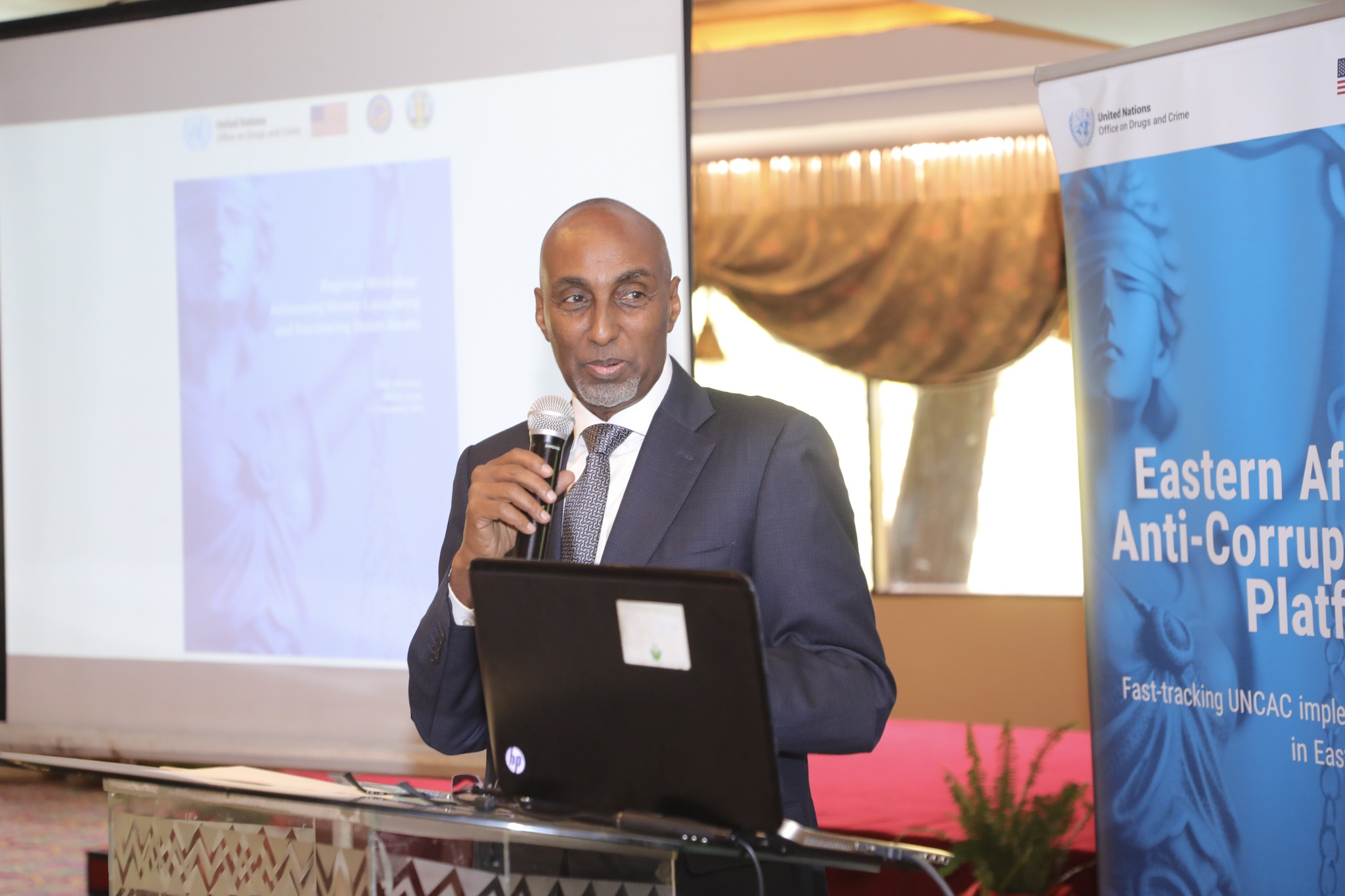
 EACC CEO, Mr. Abdi Mohamud./HANDOUT
This comes as the commission confirmed receipt of 288 graft-related cases in the counties from the Senate for investigation over the past three years.
In damning revelations, EACC said many companies doing business with devolved units are owned by county officers, effectively locking out ordinary citizens from accessing tenders.
“There are conflicts of interest where county officials are beneficial owners of entities trading with the counties,” EACC CEO Abdi Mohamud said.
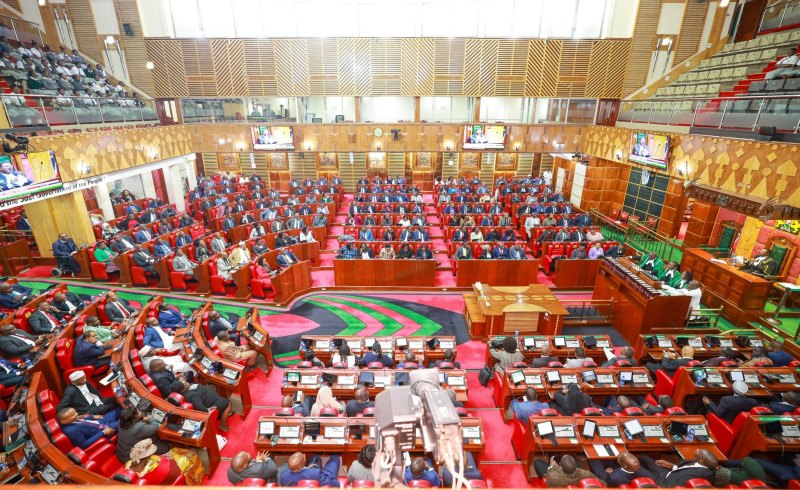
He made the revelation in a report tabled before the Senate’s Justice and Legal Affairs Committee, chaired by Bomet Senator Hillary Sigei, last week.
A beneficial owner is the natural person who ultimately controls or benefits from a company, directly or indirectly, through shareholding, voting rights or significant influence.
Common thresholds of control range from 10 to 25 per cent ownership.
The commission exposed massive payroll fraud, with some counties inflating staff numbers and creating “ghost workers” to siphon public funds.
“These cases involve individuals who are fraudulently added to the payroll as non-existent employees and receive salaries unlawfully,” Mohamud said.
EACC has proposed the introduction of biometric and digital human resource systems to detect and eliminate ghost workers.
The report also revealed widespread manipulation of procurement processes, where officials bend the law to award tenders to unqualified firms—often their own or those of proxies.
“Embezzlement of public funds arises from procurement irregularities leading to unlawful payments to entities for services not rendered, goods not supplied or substandard works,” the report says.
To seal the loopholes, EACC wants full implementation of the e-procurement system to safeguard against fraud and revenue manipulation.
Several current and former governors and senior county officials are under investigation for irregular procurement and payments involving companies linked to them.
EACC also accused county executives and assemblies of colluding to allocate millions of shillings to non-existent projects.
“Collusion between county assemblies and executives to budget for fictitious projects diverts funds meant for public good,” Mohamud said.
County officials are abusing imprest systems through fictitious claims and forged documents, with most devolved units still processing imprests manually, creating room for manipulation, the commission said.
Billions of shillings are also tied up in stalled projects, some abandoned funds were diverted to other uses.
EACC cited irregular subscriptions and payments made by counties to the Council of Governors and regional blocs without enabling statutes, contrary to the law.
To curb these abuses, the commission called for enhanced public participation in budgeting, project monitoring, and real-time expenditure tracking to ensure funds go to genuine projects.
Of the 288 reports received from the Senate County Public Accounts Committee, six cases have been concluded in court and seven are pending in court.
There are seven files with the Director of Public Prosecutions; 74 cases have been referred to other agencies; 125 are under investigation and 69 have been prioritised.
Among the ongoing probes is a case in Homa Bay involving unremitted liquor licensing fees amounting to Sh110 million between 2015 and 2022.
In Kericho, investigators are pursuing irregular payments totaling Sh143.25 million for local travel and subsistence allowances without proper documentation.
In Turkana, the commission is probing a Sh25.1 million contract for the construction of the Kalokol Resource Centre, while in Nyandarua, an investigation is pending into a road maintenance contract worth Sh657.94 million—against a budgeted amount of Sh247.5 million—during the 2013-14 financial year.
Cases under investigation include allegations of irregular procurement of seven waterworks and desilting of four water pans at Sh15.55 million and Sh13.33 million, respectively, in Bomet.
The respective contract agreements were signed before the lapse of 14 days from the date of notification of awards, contrary to Section 135(3) of the Public Procurement and Asset Disposal Act, 2015.
In the same county, the commission is also probing allegations of irregular procurement of a prime mover and five large tippers (dump trucks) for Sh61.3 million.
Out of which an amount of Sh22.5 million was paid in the year 2023-24.
“It is alleged that the equipment was acquired and delivered in the FY2022-2023; however, the purchase of the heavy machinery was not included in the annual development plan of the said year,” the report states.
INSTANT ANALYSIS
The EACC has deployed various preventive measures in county governments to strengthen governance and integrity. In 2019, the commission and the Council of Governors signed a Memorandum of Understanding to institutionalize collaboration in fighting corruption. The EACC has since conducted capacity-building sessions for counties on corruption risk management and prevention procedures.