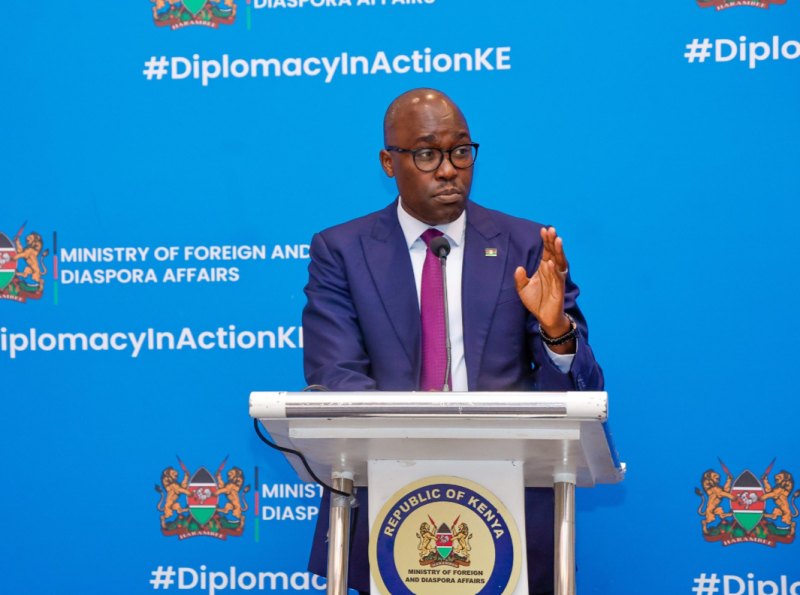
Nairobi Governor Johnson Sakaja has outlined ambitious reforms aimed at reviving the county’s troubled health sector, including the establishment of intensive care units, hiring of specialised medics, improved drug supply and major upgrades to health infrastructure.
Appearing before the Senate Health committee, the governor described the plan as a “turnaround strategy” to restore public confidence in Nairobi’s healthcare services.
Central to the reforms is the introduction of intensive care units in county hospitals. Nairobi now has 46 intensive care unit beds, up from none in 2022 — a move Sakaja said has eased pressure on Kenyatta National Hospital.
“Before I became governor, Nairobi had zero ICU capacity in public hospitals. Today, we have 18 ICU beds at Mama Lucy Kibaki Hospital, 10 at Mama Margaret Uhuru Hospital, and eight at Mbagathi hospital, along with new neonatal ICU units,” he said.
Ten more ICU beds at Mutuini hospital are 90 per cent complete.
The Nairobi governor said the county has hired 50 dentists — also from a previous zero — and established a free eye hospital near Mama Lucy Kibaki Hospital.
He added that the consistent supply of essential medicines has helped draw more patients back to public facilities. The Nairobi Funeral Home (formerly City Mortuary) has also received modern preservation equipment.
Sakaja added that cases have drastically dropped at Pumwani Maternity Hospital, once plagued by maternal deaths. “Since this year began, we have had only two maternal deaths,” he told the committee chaired by Uasin Gishu Senator Jackson Mandago.
To improve governance, the county has appointed chief executive officers to run all level 4 and 5 hospitals, replacing medical superintendents in administrative roles.
“This has injected professionalism into hospital management. Doctors are now focused on clinical work instead of paperwork,” he said, adding that this has helped reduce negligence, baby theft and maternal deaths.
The governor also announced the revival of stalled health projects, including the completion of a new wing at Mama Lucy Kibaki Hospital, which will add 120 more beds by the end of the financial year and the completion of the 400-bed Mutuini hospital.
“The opening of Mama Margaret Uhuru Hospital near Mama Lucy, and the near-completion of the 400-bed Mutuini hospital, will help ease congestion in the county’s main health facilities and further improve access to quality healthcare for Nairobi residents.”
Sakaja further explained that the work of community health promoters has greatly helped in serving residents across all 17 subcounties.
He said that the county has enhanced its share of the stipend to the CHPs to Sh3,500 from Sh2,500.
The governor called for the establishment of a special grant from the national government to elevate the CHPs’ stipend from the current figure to a minimum wage.
Sakaja also announced plans to build a new level 5 facility on Magadi Road to accommodate both the city and non-city residents who are currently forced to travel for long distances for services.
“With a population of seven million, much more still needs to be done, but the changes we have made show that the system can work,” he said, crediting a health sector review by Mercy Mwangangi, the Social Health Authority CEO.
Sakaja said CHPs have played a major role in strengthening primary healthcare across all 17 subcounties.
The county has increased its stipend from Sh2,500 to Sh3,500 and is urging the national government to create a special grant to raise it to the minimum wage.
The governor also announced plans to build a new level 5 hospital on Magadi Road to serve both Nairobi residents and patients from neighbouring counties.
“With a population of seven million, much more still needs to be done,” Sakaja said. “But the changes we have made show that the system can work.”
Instant analysis:
Nairobi has a healthcare system that includes both public and private facilities, with a wide range of providers from large, multi-specialty hospitals to smaller clinics. The city is home to internationally recognised private hospitals like Aga Khan University Hospital and The Nairobi Hospital, which serve as advanced diagnostic and referral centres.