The flag carrier of the Emirate of Dubai, United Arab Emirates (UAE),is one of the major Gulf carriers which has cemented its position on the Nairobi route among other African destinations.
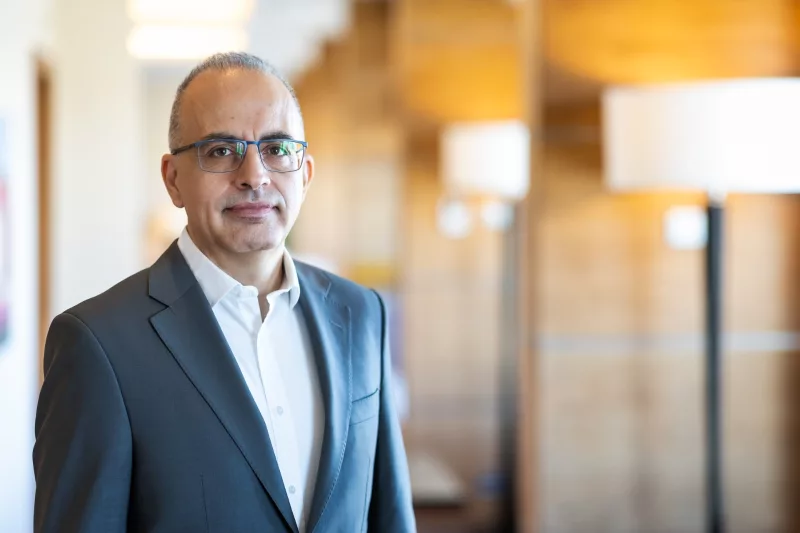
As the airline marks the three-decade milestone, The Star sat down with Emirates’ Kenya country manager, Christophe Leloup, to reflect on Kenya’s aviation industry, the airline’s growth, its contribution to the local economy and his own experience of living and working in Nairobi.
In this candid conversation, Leloup who has spent 15 years in Africa and five in Kenya talks about why he considers Nairobi one of the most vibrant cities in the world, how Emirates is responding to global aircraft spare parts and overall production hitches and what the airline’s future in Kenya looks like.
You have been in Nairobi for five years now. How has the city treated you so far?
I love it here. Nairobi is vibrant, safe and full of energy. My family and I enjoy spending weekends in the national parks and exploring the coast from Lamu to Diani. The weather is fantastic, probably the best in the world. It is easy to see why Kenya is such a special place.
Do you have a favourite Kenyan dish?
I like trying different local foods, although I will admit I am not very good at remembering all the names, but I always enjoy sampling something new whenever I can.
What makes Kenya such a strategic market for Emirates?
Kenya is a dynamic hub for business and tourism. Emirates connects travellers from over 150 destinations to Nairobi from the U.S, Europe, Asia and Australia.We also support exports of flowers, fruits and vegetables through our cargo services. Last year alone, we moved about 16,000 tonnes of fresh flowers to Europe.Kenya’s open skies and strong tourism potential make it a vital part of our network.
There is a proposal to impose a levy on flight tickets. How is that likely to shape air ticket sales in Kenya?
Taxation of air tickets is always a discussion across the world. But I don't think this is something that, of course, the International Air Transport Association (IATA) and the airlines are supporting because it is adding to the cost of travelling.And I think in Africa, one of the issues people are facing is the cost of air travel. Unfortunately, the road infrastructure is not supporting intra-Africa travel.So, air is often the only way to travel across Africa. And I think governments have realised that it is very important that air transport remains affordable for Africans in general, but also here we are in Kenya, to make it easier for travel.
Kenya and the UAE recently signed a Comprehensive Economic Partnership Agreement (CEPA). What does this mean for the aviation industry and you?
The agreement aims to boost trade and tourism between the two countries. Emirates is already a bridge between Kenya and the UAE, and we see this deal as an opportunity to grow exports from Kenya especially perishables, while supporting business travel and investment flows in both directions.
Tell us about your collaboration with Kenya Airways.
We signed an interline agreement in 2023and since then, over 31,000 passengers have travelled between the two airlines.So just to give you an example, Emirates passengers connecting via Nairobi on Kenya Airways, we sold about 15,000 passengers with key destinations being Rwanda, Malawi, Mozambique, Burundi, just to name a few. Kenya Airways is also connecting passengers via Dubai on Emirates.It is a balanced partnership, Emirates customers connect through Nairobi to destinations like Rwanda, Malawi, and Mozambique, while Kenya Airways passengers connect through Dubai to Asia, China, the US and Europe. It is a win-win relationship that strengthens regional connectivity.
The global aviation industry has faced aircraft shortages and supply chain issues. How do you manage that?
It is true, the post-pandemic surge in demand caught everyone by surprise. To respond, Emirates launched a $5 billion (Sh646 billion) fleet refurbishment programme, covering 120 AirbusA380s and 119 Boeing 777s. We have also received 12 new A350s this year.Itis an ongoing process as we speak.
But it is a big investment. Initially, it was $2 billion (Sh258.4 billion). But yes, that is how we manage the situation. We have placed big orders with both Boeing and Airbus, especially for the larger aircraft.The aircrafts we have received so far is beginning to resolve the shortage issue. But it is true that the industry as a whole is under pressure because of the shortage of aircraft. I think it is good to see skies opening more and more in Kenya and in the region.
There is growing talk about open skies and regional air liberalisation. What is your take on this?
Open skies are essential. They encourage competition, lower airfaresand stimulate both business and leisure travel. Kenya is moving in the right direction and Emirates fully supports policies that make air travel more accessible.We have been an important operator in this market, operating the biggest aircraft possible in Nairobi.
That is the 777-300ER. It is a 360-seat aircraft and we look at adding frequencies and capacity to the market. Again, in addition to our passenger flights, we have a minimum of three freighters coming to Nairobi and Kenya every week, so it is quite significant.
We also have a code share partnership with other airline, allowing access to Mombasa, which came over the last few months and it is providing opportunity for inbound tourism to start their travel in Nairobi, visit the parks, then end for a beach destination in the coast and fly back from Mombasa with a one-stop to the final destination through Dubai, of course.
Cross-continent Illegal wildlife trade and human trafficking have been a concern in recent years, what can airlines do to protect the environment?
Emirates enforces a long-standing zero-tolerance policy against illegal wildlife trade. This firm stance against trafficking extends to other areas, including human trafficking.We have put a complete ban on hunting trophies for the Big Four. So that is a statement, a very strong statement from Emirates. We make sure that we are not involved in those trafficking.In collaboration with government authorities and immigration services, we are actively involved in a daily effort to prevent these crimes. As an airline, we are deeply committed to ensuring our operations are not used for any form of trafficking.
What next for Emirates in Kenya?
We are looking to expand capacity and connectivity, especially on the cargo side, to support exports. We are also exploring more seamless connections through Mombasa via our codeshare network. Our goal remains the same; to connect Kenya to the world while supporting its tourism and trade ambitions.
What would you tell the Kenyan travellers?
Keep travelling, keep exploring. Kenya is beautifully connected to the world through Dubai, and we are proud to be part of that journey. We will continue investing in this market, our people, and the experiences that make travel memorable.