

The Computer Misuse and Cybercrimes Act, 2018, has been utilised to limit the freedom of expression of human rights defenders (HRDs) and voices critical of violations and abuses by the state.
Various sections of this Act, including Sections 16 and 23, have been the to go-offences aimed at harassing, threatening and silencing HRDs.
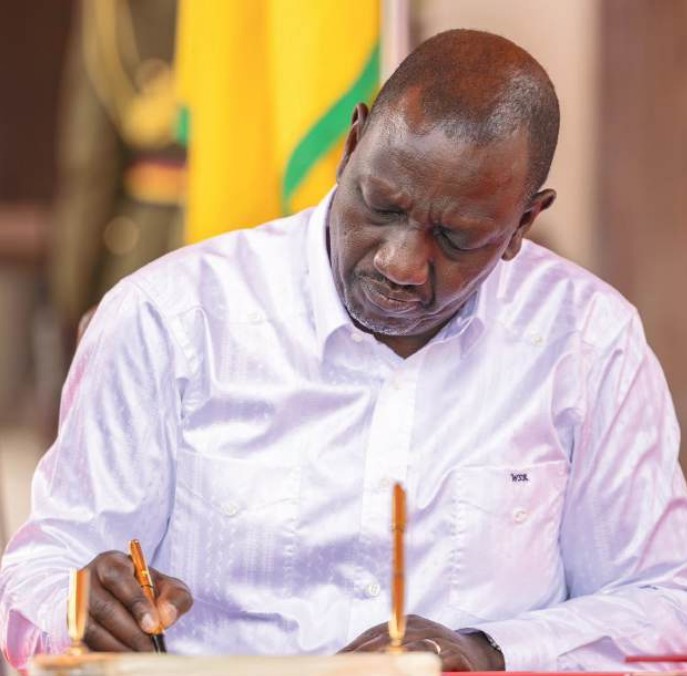
The cases of Mutemi Kiama and Rose Njeri come to mind. Last month, on October 15, President William Ruto signed into law the Computer Misuse and Cybercrimes (Amendment) Act, 2024.
The amendments to the principal Act create a platform to further limit the freedom of expression, despite its guarantee under Article 31 of the Constitution.
A particularly problematic amendment is to Section 6 of the Act, which, provides for the functions of the Committee.
This section has been amended by inserting a new subsection (a) that provides, “where it is proved that a website or application promotes unlawful activities, inappropriate sexual content of a minor, terrorism or religious extremism and cultism, issue a directive to render the website application inaccessible.”
This amendment grants the committee excessive and unchecked powers, whereby they can block websites or applications, which in their view, among others promotes unlawful activities.
Although the new provision states action will only be taken where the offence has been proved, there are no checks in place to ensure that any evidence was adduced and interrogated, leading to the closure of a particular website or application.
Such vast powers within the Executive, and in recent times where we have witnessed the clamp down on voices critical of violations and abuses including those of human rights defenders, spells a danger and a represents platform to limit the freedom of expression and media freedoms.
Amendment to Section 46 allows an authorised person to order the removal of content or deactivate a computer system. Of concern is vagueness in defining who an authorised person is. Such powers, as with the committee, run the risk of being abused and being used to harass, threaten and intimidate HRDs to include limiting the freedom of expression.
It cannot be ignored that activists in present times leverage technology to share and disseminate information on diverse human rights issues. Where such information is shared, for instance, criticising government for failing to set up adequate health care systems and exposing corruption in the parent ministry ¾ this sharing risks being deemed to be promoting an unlawful activity.
This may be despite the fact that such shared information is evidence-based. The committee in such an instance would find such information unlawful and proceed to close such website or application. What is glaring as well is the lack of a proper definition of what constitutes unlawful activities.
As such, there is nothing barring the committee from misusing the vagueness to limit the freedom of expression.
Part of Section 6 makes mention of promoting terrorist activities. Following the peaceful protests in the country, and specifically in June and July 2025, we witnessed the application of anti-terror laws particularly the Prevention of Terrorism Act, 2012 to harass, threaten and intimidate human rights defenders.
With the existence of this provision, and as history bears witness, the committee can utilise this provision to harass, intimidate and threaten human rights defenders, especially where they choose to exercise their freedom of expression through peaceful protest or assembly.
Freedom of expression remains vital in ensuring that HRDs are in a position to address and highlight pressing human rights issues, including violations and abuses by those in authority.
This is achieved through diverse mediums, including writing, art, poetry and online discussions. This is a fundamental freedom guaranteed in the Constitution under Article 33. In addition, regional and international treaties including the African Charter on Human and Peoples’ Rights and the International Covenant on Civil and Political Rights.
Where this freedom is limited in an arbitrary way, violations and abuses may go unnoticed, granted that highlighting the same may be deemed illegal. The stiff penalties under Section 20 of the principal Act will be abused to intimidate HRDs.
The rights and freedoms guaranteed under the constitution should be safeguarded. Regressive laws that seek to roll back these gains should be shunned.







