

At the height of the rivalry between Kenya and Tanzania in the 1970s, which ultimately led to the collapse of the East African Community, Tanzanian President Julius Nyerere is said to have referred to Kenya as a man-eat-man society.
Attorney General Charles Njonjo, with characteristic wit, is said to have retorted that Tanzania itself was a man-eat-nothing society. The exchange had nothing to do with eating but revolved around the “capitalism without a human face” model in Kenya, in comparison to the “gentle” Ujamaa system in its southern neighbour.
The unsaid underlying principle of this exchange was that the aggressive appetite for wealth in Kenya had given rise to a people generally averse to shame, preferring to amass as much as possible in a short time, with no regard for the ripple effects on the nation.
Besides, the Kenyan elite saw Tanzanians as these ridiculously polite, almost docile people. It is difficult to tell if this view ever changed over the years, but the consensus here has been that there are things “only Kenyans can do”. Which things include massive anti-government demos.
The Tanzanian icon and founding father Julius Nyerere is a celebrated figure in most of Africa. Long before most independence leaders could openly speak against colonialism beyond their borders, Nyerere not only gave critical support to freedom movements in different African nations but also hosted many of them in Tanzania.
Needless to say, South Africa’s ANC is the most well known of these, but there were many others, who used Tanzania as a base to undertake the freedom struggle in their countries, from exile.
Beyond that, Nyerere is often cited as the father of a nation that remained a beacon of stability, almost miraculously evading the tribal divisions that afflicted many African countries. In many places, even the union between mainland Tanganyika and the island of Zanzibar wouldn’t have survived long.
There must be a multiplicity of factors around Tanzania’s longevity as both a nation of peace and a country where the electoral cycles have passed without the angry reactions and protests over fraud, which are prevalent in similar processes across the continent.
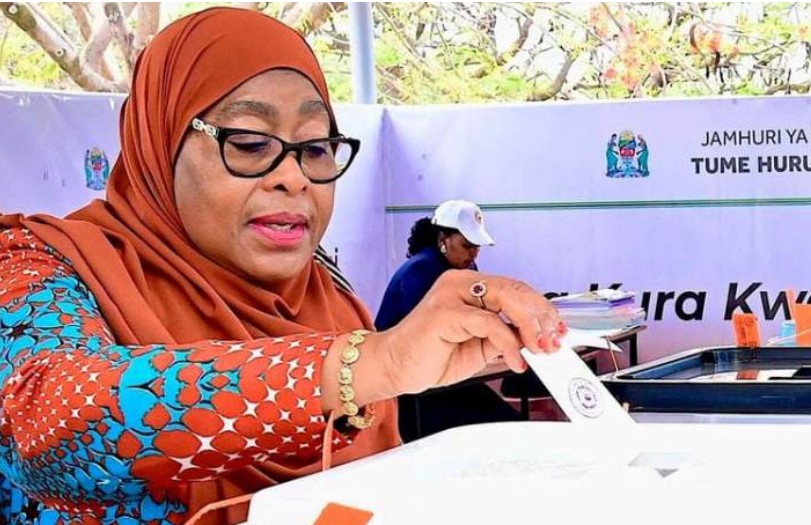
Yet, when Kenya’s southern neighbour went to the polls last week, the story was different. Ahead of the October 29 election, a crackdown on opposition leaders, including Chadema leader Tundu Lissu, had ensured there wouldn’t be a fair and level playing ground for all parties.
As if to complete the script, Lissu’s deputy, John Heche, ended up behind bars, when returning from the funeral ceremony of Kenyan icon Raila Odinga. Things were going from bad to worse.
On Election Day, chaos erupted in several urban areas of Tanzania. Protesters destroyed election materials in some polling stations and defied the curfew declared later that evening.
And by the time the incumbent was declared winner with nearly 98 per cent of votes cast, even usually timid election observers were calling the process a monumental sham.
Truth be told, it is the height of insanity for a democratic election in a stable nation, with a credible opposition, to have a candidate garner 98 per cent of the vote. This is possible only in the military dictatorships that routinely masquerade as democracies with regular “elections”.
The East African region is slowly becoming a hotbed of bad manners, rising intolerance and fraudulent elections, all combining into an unsustainable mix of potent despondency within its population.
Apart from suspect or sham elections, there are emerging trends of police brutality, kidnappings and denial of the right of association and movement. These developments paint a picture of regression in democratic gains and a gradual return of rampant dictatorship that had long been defeated in most of the countries.
However, sustaining fascist rules in the modern era is the big question and not a given. There is a new youthful population, connected easily by the internet and therefore with the ability for quick mobilisation.
This Gen Z population, unlike its older predecessors, is averse to solutions that take long negotiations and winding paths. They are also quite impatient with the slow economic and political progress of nations. In several countries so far, they have risen up and toppled sitting regimes, notably in Madagascar, Indonesia and Nepal, and youth power and protests are being felt in Kenya, Peru and elsewhere.
The Independence generation in Africa is almost entirely gone. The Second Liberation generation, the people who fought to free African nations from the corrupt grip of many founding fathers, is declining too.
These two generations were adept at negotiating settlements, making concessions and sacrificing for the greater good and the stability of their nations. Both of them, having witnessed colonialism first hand, safeguarded the sovereignty of their nations, even when disagreeing with sitting regimes. The Gen Z isn’t so beholden to such considerations.
Unfortunately, many of those still wielding power are from the old generation that believed in asserting their will through sheer military power and police action.
But they are finding out, more and more, that it is impossible to shoot young people into submission, with rulers’ temporary victories turning out to be mere lulls before the real storms. So distant from the key issues of their young populations, ageing African leaders must be watching the emerging trend of youth power with trepidation.
When Mwai Kibaki was sworn in at night after the 2007 election, behind the safety of State House walls, it forced the entire nation on a constitutional reform journey that culminated with the 2010 Constitution defining the exact time and place of swearing-in.
They had to be in broad daylight. It didn’t make subsequent elections any less controversial, but it restored dignity to presidential inaugurations, and sustained the image of a democratic country perennially struggling to give electoral contests a semblance of fairness.
We take it for granted here in Kenya that we have advanced so far from the sort of election in which the opposition leader is in jail and the eventual winner of the presidential vote garners 98 per cent of votes cast.
But are we truly immune to that sort of election? I submit that Tanzania getting away with this sort of poll sets a bad precedent, both in the region and in the larger continent.
Copycat templates always wait. Because the decline of elections as democratic avenues for gaining power sets in a motion the “what is the alternative?” discussion, for which no one is ready.
Linked to this is the spectacle of restive and restless youth populations, disenchanted with governance systems in their countries, and seeking more “youthful” methods of problem resolution.
Here in Kenya, June 2024 showed the potency of this youth force as a disruptive movement, as it came close to toppling a sitting government. The status of that demographic as a ticking time bomb was well and truly confirmed.
To meet these growing numbers of youth halfway in terms of their needs, governments must focus on the issues that matter: jobs, the economy, the cost of living and the youth agenda. Most importantly, holding credible elections in which these young souls feel their voices have been heard is a key starting point in this pursuit.
Pummelling rioting youths into submission after elections is merely a stopgap measure. The acknowledged truth is that there is only so far you can go with forcibly subdued populations.
The more long-term solution is to have elections meaning something to all, followed by good governance and economic management. If you need the army and police to sustain a rule, there is simply no rule!







