A parliamentary investigation has uncovered what appears to be widespread abuse of car loan and mortgage schemes involving current and former governors, and senior county officials.
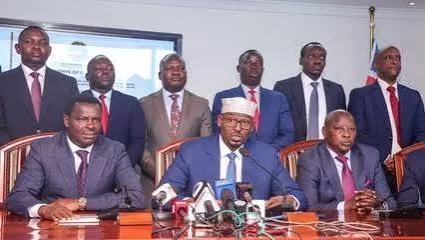
The Senate County Public Investments and Special Funds Committee (CPISF) found many county executives, particularly former governors, have defaulted on their loan repayments.
The probe revealed most of the loans were granted without proper securities or repayment safeguards, allowing officials to leave office without settling their debts.
Committee chairperson Godfrey Osotsi said some officials secured loans with repayment periods exceeding their five-year tenures, raising concerns about accountability.
“County governments are issuing loans without proper securities, insurance or charging property. They also don’t consider whether repayment terms go beyond the tenure of the borrower,” he said.
Osotsi said some sitting governors have taken loans they were unlikely to clear before their terms expire.
“We had a case where a governor borrowed Sh50 million. How can one possibly repay Sh50 million in five years? In Parliament, we also access loans, but all must be cleared within our term,” he said. Governors earn Sh957,000, including allowances, every month.
Over the past two days, the committee identified at least four former governors and a deputy, who still owe millions in unpaid loans years after leaving office.
In Meru county, all three former governors—Peter Munya, Kiraitu Murungi and Kawira Mwangaza—are among the officers who owe a combined Sh58.04 million to the Meru County Executive Staff Housing Fund.
Governor Mutuma Mutuma told senators Kiraitu took a Sh40 million loan in December 2022, repayable over 20 years, while Munya and Mwangaza borrowed Sh25 million and Sh13 million, respectively, also with 20-year repayment terms.
Senators questioned why the county allowed loans with repayment periods that extend far beyond officeholders’ terms.
“The issue we’re facing dates back to Peter Munya’s tenure. Some have defaulted, while others are still attempting to pay,” Governor Mutuma said.
He said the county relied on the Salaries and Remuneration Commission (SRC) guidelines that allowed governors, deputies and executive members to set their own repayment timelines.
“We are developing a local policy to curb defaults and ensure all future loans are properly secured,” Mutuma said.
The senators condemned the arrangement as a blatant abuse of office and threatened to involve the Ethics and Anti-Corruption Commission (EACC).
“Taking a loan and refusing to repay is outright abuse of office. Why shouldn’t we invite EACC to investigate and recover these funds?” nominated Senator Hamida Kibwana asked.
In West Pokot, the committee discovered that former Governor John Lonyangapuo and his deputy Nicholas Atudonyang owe the county more than Sh45 million in unpaid car loans and mortgages.
Atudonyang alone owes Sh23.52 million, according to a county demand letter dated May 15, 2024, which warned of legal action if the arrears were not cleared within 30 days.
“This is to notify you that you have defaulted in servicing your car loan and mortgage without notice to the committee as of May 15, 2024,” a letter by the county to the former deputy governor reads.
“Notice is hereby given to you to clear your car loan/mortgage arrears of Sh23.52 million within 30 days. Failing which, legal action will be taken against you for recovery of the same to your peril as to costs and other incidental costs.”
Also listed among defaulters is Kacheliba MP Titus Lotee, a former county officer, who owes Sh8.04 million.
The three are part of a group of eight beneficiaries, who left the county service while still owing Sh55.64 million.
Governor Simon Kachapin said despite repeated reminders and threats of legal action, none of the defaulters has made any effort to repay their loans.
“It’s true that a huge amount remains unpaid. Efforts to recover the funds have been futile, especially from the former governor and his deputy, who owe the bulk of it,” he said.
Kachapin said Atudonyang spent almost his entire term abroad in the US, yet benefited from the loans.
Attempts to attach their properties or gratuities failed since the land offered as collateral could not be charged, and both received their gratuities before leaving office.
“The main culprits are proving difficult to deal with. While junior officers repay their loans, the big fish are not,” Kachapin lamented.
The senators expressed outrage, terming the situation an entrenched culture of impunity.
“We must treat this as a clear abuse of office. EACC should partner with us to ensure recovery and accountability,” Migori Senator Eddy Oketch said.
The committee resolved to summon all implicated former governors and directed that future loan repayments be tied strictly to officers’ contract periods.
“As per Article 125 of the Constitution, we shall summon those responsible. Recovery through legal means will be difficult since most of these loans were unsecured,” Osotsi said.
According to the auditor general’s report for county car and mortgage loan schemes for the financial year ending June 30, 2024, several counties are struggling to recover outstanding amounts from current and former officials.
In Kirinyaga, the county has failed to recover Sh2.69 million in loans dating back to 2017, while in Kericho, Sh61.95 million owed by 12 executive staff members remains unpaid, including loans to one deceased employee and another who left county service.
The Senate committee said the revelations expose a deeply entrenched culture of financial recklessness and weak controls in county administrations, and vowed to pursue accountability through legal and investigative channels.
INSTANT ANALYSIS
The government provides official car loans and mortgage schemes with favourable terms to state and public officers. These schemes offer lower interest rates and longer repayment periods compared to commercial lending and are managed by different government agencies depending on the employee's role. However, some beneficiaries are defaulting on repayments, triggering concerns about the possibility of loss of public money.