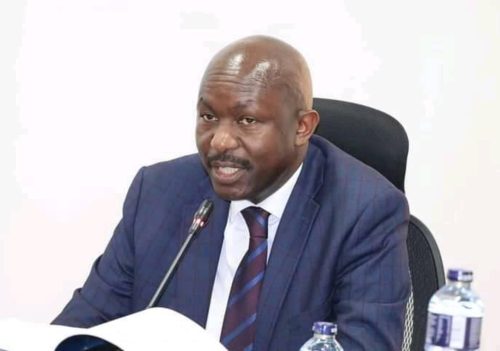
 Nyamira Senator Okong'o Mogeni./FILE
The Health (Amendment) Bill, 2025, sponsored by Nyamira Senator Okong’o Omogeni, seeks to compel hospitals to release patients and bodies regardless of outstanding balances.
In addition, such facilities would be required to forfeit any deposits or partial payments made by patients or their families.
The Bill empowers the Health CS to recover monies paid to hospitals that unlawfully detain patients or bodies over non-payment.
It also authorises the CS to make regulations governing the recovery of fees charged by health facilities.
“The Bill delegates legislative powers to the CS responsible for health to make regulations on fees paid to access services in a health facility,” it states.
Under the proposed law, no health facility will be allowed to hold a patient or a corpse as a lien for unpaid medical bills.
Anyone in charge of a facility that violates this provision would be committing an offence.
The Bill is rooted in growing public concern over hospitals detaining patients and bodies when families cannot afford to settle medical bills—an issue particularly rampant in private institutions.
Many Kenyans have been forced to take loans, sell property, or organise fundraisers to secure the release of their loved ones.
In 2017, a police officer whose twins died after birth was detained in a Nairobi hospital for failure to foot a bill of Sh3 million.
Senator Okong’o argues that the right to health is a fundamental entitlement under both the Kenyan constitution and international law.
He cites Article 28 of the Constitution, which guarantees every person’s inherent dignity, and Article 39(1), which provides for the right to freedom of movement.
Similarly, Article 29(a) and (b) protect individuals from arbitrary detention and deprivation of freedom without just cause.
“At the international level, there are conventions and instruments that recognise human dignity, freedom and respect,” Okong’o notes, referring to Article 2(6) of the Constitution, which makes all ratified treaties part of Kenyan law.
He further cites Article 11 of the International Covenant on Civil and Political Rights, which prohibits imprisonment for failure to pay a debt, and Article 6 of the African Charter on Human and Peoples’ Rights, which upholds the right to liberty and security of the person.
“These international instruments affirm that the right to liberty is inviolable, except as provided by law,” Okong’o said.
He said Kenyan courts have consistently ruled that detaining patients for unpaid bills is unlawful, arbitrary and unconstitutional.
INSTANT ANALYSIS
Senators have raised concerns about the detention of patients and bodies in situations where families are unable to pay medical bills, especially in private hospitals. Some Kenyans have had to take out loans, sell their properties, organise fundraisers, or appeal for donations from friends and well-wishers to clear their bills.