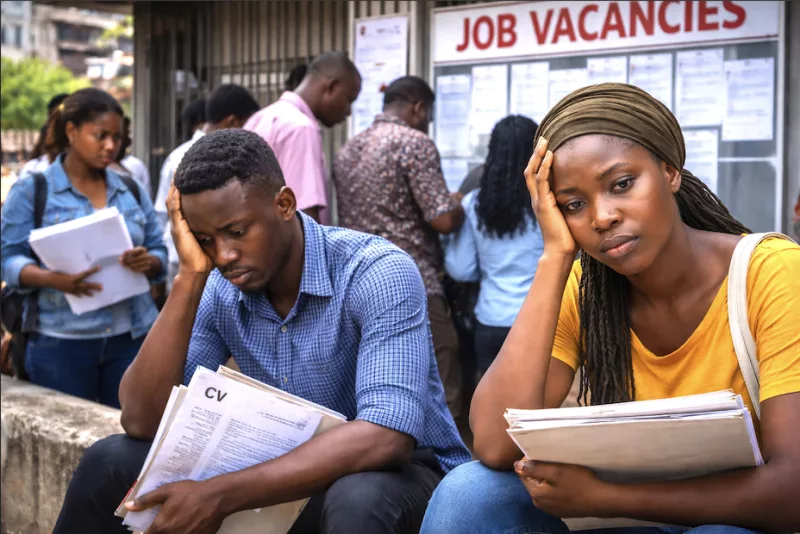
 Youth in Kasipul constituency during Nyota programme verification exercise in Homa Bay.
Kenya’s economy has shown remarkable resilience. Despite global headwinds, the pandemic, Russia’s war in Ukraine, failed rain seasons and debt pressures, the country remains one of Africa’s best performers. The World Bank projects a 4.5 per cent growth rate in 2025, powered by agriculture, services and manufacturing.
Yet, many Kenyans still ask: Why don’t I feel it? Prices remain high, credit tight, and disposable income stretched. The question of our time is not whether the economy is growing, but whether that growth is translating into money in people’s pockets.
Austerity with purpose
Kenya’s fiscal space has narrowed. Nearly 60 per cent of revenue now goes to debt servicing, according to Kenya Institute for Public Policy Research and Analysis. The Treasury’s new focus on fiscal discipline, cutting non-essential spending while protecting development priorities is therefore critical.
Austerity, when done with purpose, is not about shrinking government; it’s about restoring efficiency. Prompt payment of verified pending bills would immediately inject cash into the economy, revive confidence and support private-sector cash flow. Reducing wasteful expenditure and aligning resources with production, not bureaucracy, is the surest way to restore trust and liquidity.
A strong financial sector underpins prosperity. The Nairobi Securities Exchange recently launched a Banking Sector Index to track the performance of 11 listed lenders, a step toward transparency and investor confidence. But ordinary Kenyans face higher lending rates as banks manage risk amid rising non-performing loans.
The Central Bank’s risk-based lending framework and digital credit reforms are improving access, yet credit remains expensive. For small firms, the Public Credit Guarantee Scheme offers partial relief. The goal should be to reward productivity, not just collateral making finance a tool for enterprise rather than consumption. When banks support the real economy through SME lending, green finance and innovation prosperity spreads faster.
From consumption to production
Post-Covid recovery has seen a policy shift from consumption subsidies to production incentives. Fertiliser support, coffee revitalisation and local manufacturing are taking center stage. The Special Economic Zones in Naivasha, Dongo Kundu and Athi River are attracting investors, linking farmers and suppliers to new industries and creating jobs.
The African Development Bank notes that agricultural output could rise by over five per cent in 2025, aided by value-addition reforms. Revitalised cooperatives and Saccoss remain essential, helping mobilise domestic savings and provide affordable credit to millions. When farmers, traders and small manufacturers can borrow, produce and sell; money flows back to households.
The continental opportunity
Kenya’s economic future is intertwined with Africa’s. The African Continental Free Trade Area (AfCFTA) offers a market of 1.4 billion consumers and a projected 50 per cent boost in intra-African trade within a decade. But to benefit, Kenya must invest in competitive production and logistics. The country’s infrastructure drive from new highways to port modernisation and broadband, is part of this vision. Yet, infrastructure must serve people, not just numbers. Roads should move goods from farm to market; power lines should energise factories and homes.
Financial integration is also taking shape. The Pan-African Payment and Settlement System and the rise of African banks promise cross-border trade that keeps value within the continent — a quiet revolution in African finance.
Debt, diaspora and domestic capital
Debt remains a concern, but reforms are helping. Kenya has prioritised concessional borrowing and liability management while expanding domestic resource mobilisation. KIPPRA emphasises that efficiency, not higher taxes — will broaden the revenue base.
Diaspora remittances, now over $4.5 billion annually, are an under-tapped lifeline. Formal savings channels and diaspora bonds can redirect this money into development and housing. At home, the Nairobi Securities Exchange is diversifying products — from green and infrastructure bonds to sectoral indices — to attract local investors and deepen capital markets. A growing middle class investing locally means more domestic wealth formation, less reliance on external borrowing, and a stronger shilling.
Inclusive prosperity
Prosperity must be inclusive to endure. Programmes such as Access to Government Procurement Opportunities and Nyota are bringing youth, women, and persons with disabilities into the economic mainstream. When small enterprises can access tenders, training and affordable credit, employment expands organically.
Micro, small, and medium enterprises — which contribute about a third of GDP and employ 80 per cent of Kenya’s workforce — are the real engines of inclusion. Supporting them through access to markets, innovation hubs and fair taxation will ensure growth is felt on every street and in every village.
Navigating global shocks
Kenya’s macroeconomic environment has endured one shock after another: Covid-19, the Ukraine war, prolonged droughts and now climate-related disruptions. Each has tightened fiscal buffers and raised costs.
But every crisis has also accelerated reform. Food systems are becoming more resilient, digital innovation is deepening and public financial management is strengthening. The push for sustainable energy and value addition reflects a mature policy shift — from short-term relief to long-term competitiveness.
The path to shared prosperity
Kenya is moving in the right direction. Production is replacing consumption, cooperatives are regaining strength, industrialisation is gathering pace, and the financial sector is adapting. The focus on SEZs, local manufacturing, AGPO, Nyota, and cooperative capital formation shows a government serious about spreading opportunity.
Yet, prosperity must move from paper to pocket. Paying pending bills, lowering interest costs, ensuring timely procurement payments, and linking industrial projects to local supply chains will quickly put cash where it matters most — in households and small firms.
As the World Bank observed in its 2025 Kenya Economic Update, sustainable recovery will depend “not on how fast the economy grows, but on how broadly the gains are shared.” Kenya’s true success will be measured not by GDP growth alone, but by whether every farmer, trader and entrepreneur feels the difference in their wallet.
That is the essence of shared prosperity. That is how we build an economy that truly works for its people.
Leah Kasera is a Public Policy Advisor