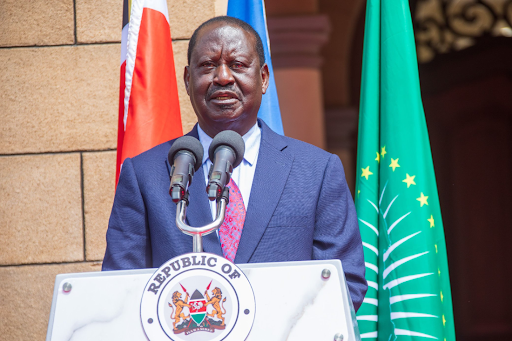
THE controversial remarks of Nyeri Governor Mutahi Kahiga, which appeared to celebrate the death of former Prime Minister Raila Odinga, have exposed a troubling new normal in Kenya—where death is no longer met with empathy, but with mockery or indifference.
Kahiga’s comments, which sparked widespread outrage and led to his resignation as vice chairperson of the Council of Governors, suggested that Raila’s death would free up government resources for the Mt Kenya region.
“The plan that had been hatched—if you look closely - for those who do not travel, because I was in that region, all benefits were being directed there because of future plans. It felt like they had abandoned us, but God intervened and changed that,” Kahiga said in vernacular.
Though the governor later apologised following a public backlash, his remarks highlighted a growing societal trend: Kenyans increasingly showing little sympathy for the dead, especially when the deceased are political figures.
This shift in attitude is most visible on social media, where reactions to deaths of public officials range from sarcasm to chilling indifference.
Recent examples include the brutal murder of Kasipul MP Charles Were and the death of Dagoretti North MP Beatrice Elachi’s son—both met with ridicule and mockery online.
Digital content creator Eric Mboya described it as emotional numbness.
“Kenyans have reached a point where they feel nothing for politicians,” he said. “This year, Beatrice Elachi lost her son, and most Kenyans were seen celebrating. Yesterday, an MP died—people expressed brief sympathy, then quickly moved on.”
Mboya wondered what caused this apathy.
“I don’t know how we got here. Is it that Kenyans have become cruel, or that politicians have made them this way?”The trend has, at times, turned darker. Last year, manipulated images of top political leaders inside coffins circulated widely on social media, appearing to mock—or even wish harm upon—them.
President William Ruto condemned the acts in January, warning the youth against being used for online propaganda.
“I want to ask the youth not to be lured by small amounts of money to create images showing government officials inside coffins,” he said.
University lecturer Dr Edwin Wanjawa said leaders must earn respect through service, not demand it.
“Kenyans owe you decorum only to the extent that you earn it—by serving them with integrity, humility, and competence,” he said.
“Perhaps it is time for leaders to curb their greed, vanity, and the belief that public office is a personal inheritance.”
The strained relationship between citizens and leaders was also evident during this year’s Labour Day celebrations. Cotu secretary general Francis Atwoli called for tighter regulation of social media.
“We cannot allow social media to be used to incite and divide. We must regulate it, just as China has done,” he said.
His remarks triggered immediate backlash online, with critics accusing him of supporting censorship. Activist Boniface Mwangi posted on X that:
“Social media is the last platform for young people to demand accountability. Regulating it means gagging the voice of the people.”
Grace Muthoni, chairperson of the Haki Coalition, echoed the criticism.
“Atwoli has betrayed the very workers he claims to represent. Instead of defending rights, he’s now advocating for censorship,” she said.
As Kenya heads toward the 2027 elections, the growing rift between citizens and the political elite threatens to erode public trust, poison political discourse, and weaken the country’s democratic fabric.