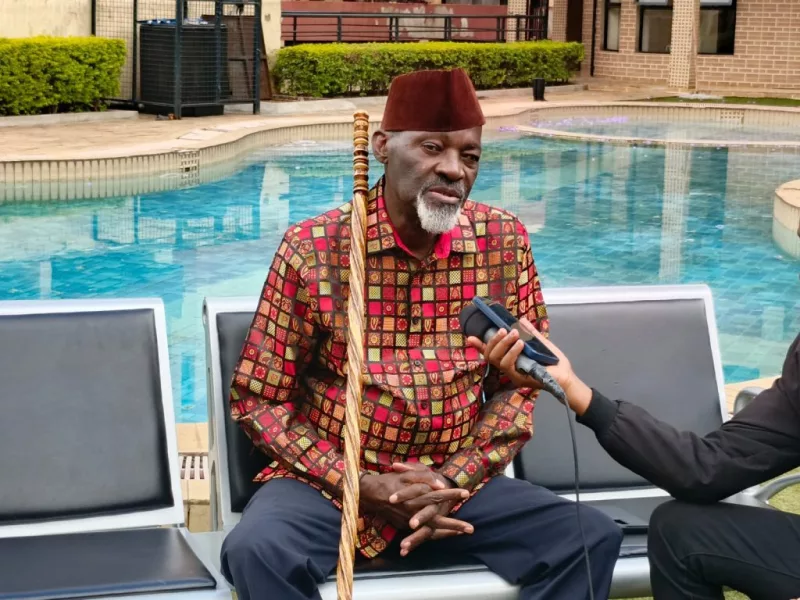
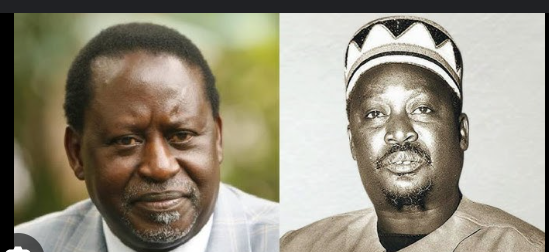
 Left: ODM leader Raila Odinga. Right: Jaramogi Oginga Odinga/FILE
While Raila’s mortal remains were flown to Kisumu, it is
a big contrast from what he wanted for his father, whose body he insisted must
be taken by road for the public to show their love, flatly rejecting the state
offer of two choppers.
When his father, Jaramogi Oginga Odinga, died, there was a protracted debate between the government and opposition over whether his body should be taken to Nyanza by air or by road, with his family settling for road to enable public viewing.
The former PM had also in 2015 accepted President Uhuru Kenyatta’s offer of an Air Force plane to ferry his son Fidel Odinga’s body to Kisumu for burial in Bondo, despite his bitter opposition to the Jubilee government at the time.
Raila, in his autobiography The Flames of Freedom, says the news of his father’s passing broke on January 20, 1994, President Daniel Moi expressed a willingness to support them and was determined to have the public show outpouring of support to the veteran opposition doyen.
Part of debate was whether Jaramogi should be buried at a national location like Uhuru Gardens or at Parliament Buildings, among others.
But Raila writes that “while the government seemed to have given up on most of its promises, there was one it was determined to keep, and this was Jaramogi’s remains would be flown to Kisumu” and that “it became clear that the authorities had a greater fear of outpouring of support we were likely to receive if we took Jaramogi home by road, and [the government was] determined to prevent this.”
But the family, he says, “after all they had put us through, were determined to make [the road trip] happen.”
The public funeral service was conducted at Uhuru Park where the mammoth crowd roundly jeered leading government officials led by then Vice President George Saitoti.
And the following day, the family was determined to start its daylong journey of transporting the body by road.
But the flat rejection of Moi’s offer of two planes was on open display when the aircrafts were sent to Jaramogi’s Lavington home but the family ignored them.
Raila gave the order to have the procession start at 7.30am, but at that moment, “we heard the sound of the aircraft… [and the] people stared up at the sky as two helicopters circled overheard and then moved of in search of a place to land.”
“The government was not giving up, even at this late stage; the helicopters had been sent to carry Jaramogi’s remains. But by the time they landed in a nearby school field, the cortege was already on the move,” the book reads.
The helicopters with their uniformed pilots stood impotent and rejected on the grass as the cortege swept triumphantly by, off on its odyssey to Nyanza, Jaramogi’s last journey home, it says.
Not long afterwards, it was clear the government finally conceded defeat on the matter, as the police motorcycle outriders joined the long column of procession to Kisumu, clearing the roads ahead.
As the Lang’ata MP rode behind the hearse, he reflected that Jaramogi was getting the kind of official respect and recognition he had never got while alive.
“It was magnificent and stately with only one thing wrong; he was not alive to see it.”
Along the way, people across the regions stood by the road to pay their respect as the convoy snaked its way, noting that “knots of people, undaunted by the government announcement that Jaramogi’s remains would be flown to Kisumu, waited to pay their last respect. They raised their arms in salute as the cortege passed by.”
The convoy stopped at Nakuru at 10 am and was greeted by thousands of humanity that burst into wailing and waving branches at the sight of the hearse.
The body stopped at Afraha Stadium, where up to 100,000 thronged.
The procession later proceeded to Kisumu before stopping briefly at Kericho, Awasi, Ahero and eventually the lakeside city.