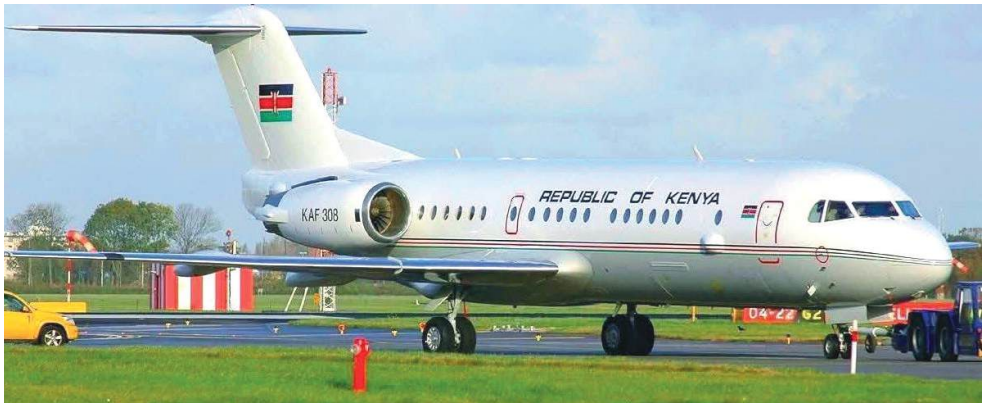
Former Prime Minister Raila Odinga travelled in the presidential jet for the first time in 1999 when he was part of the Kenyan delegation to the inauguration of former Nigerian President Olusegun Obasanjo.
Raila says in his book The Flame of Freedom, co-authored with Sarah Elderkin, that despite his frosty relationship with President Daniel Moi’s regime in the late 1990s, State House turned to him to help mend ties between Kenya and Nigeria’s incoming administration in Abuja.
He had been involved in Obasanjo’s campaign, serving as an agent, observer and adviser alongside others during the election period. Obasanjo was contesting on a People’s Democratic Party ticket.
Raila had flown to Nigeria with Hans d’Orville, a German national and close friend of Obasanjo. Together, they toured various parts of the country, including Abeokuta, Ibadan, Ife, Enugu, Kano, Port Harcourt and Lagos. From the mood across these regions, Raila writes, it was clear that Obasanjo was headed for victory.
On Election Day – February 27, 1999 – they stayed at Obasanjo’s Ota Farm residence. When results were announced, he had secured more than18 million votes.
“There was jubilation in our camp and we celebrated that night,” Raila writes. “The next morning, we accompanied Obasanjo, a devout Christian and a Baptist, to church, then returned to the farm.”
Ahead of the May 1999 presidential inauguration, Obasanjo planned a tour of several African countries, including South Africa, Mozambique, Tanzania, Kenya and Egypt. Raila extended an invitation for him to visit Kenya, and he accepted.
The former Nigerian president’s planned visit to Nairobi in April 1999 presented a dilemma for the Moi government. At the time, the administration had been closely aligned with Nigeria’s outgoing regime and was suspicious of Obasanjo’s intentions—particularly given his links with opposition figures like Raila. But now, with Obasanjo as president-elect, diplomatic protocol had to be observed.
“There were protocol issues to consider, and I was called to the Office of the President to agree on how these should be handled,” Raila writes.
The Nigerian High Commission had reserved a suite for Obasanjo at the Grand Regency Hotel, and a programme was drawn up that included a courtesy call on President Moi and meetings with the Kenya National Chamber of Commerce and Industry and the Kenya Association of Manufacturers.
However, State House later requested that Obasanjo stay at the official residence for security reasons—an arrangement the Nigerian delegation accepted. When the time came for his inauguration, the Kenyan government included Raila in the official delegation and offered him a seat on the presidential jet.
“When the time came for Obasanjo’s inauguration as president, it seemed the Kenya government was now relying on me as a conduit to repair its relationship with Obasanjo, and I was incorporated into the Kenyan presidential delegation,” the book says.
“The journey to Nigeria marked my first trip in the Kenyan presidential jet. We were well received by [the outgoing president] at the airport and we were billeted with other heads of state in an until-then unoccupied estate.”
The swearing-in ceremony took place at Eagle Square, a large open ground in the centre of Abuja, marking a pivotal moment in Nigeria’s return to civilian rule—and a unique chapter in Raila’s diplomatic journey.
Instant analysis:
Raila Odinga’s inclusion in the 1999 Kenyan delegation to Obasanjo’s inauguration—despite tensions with the Moi regime—highlights his rising diplomatic relevance in African politics. His role as a bridge between governments underscores how personal networks can transcend political rivalries.