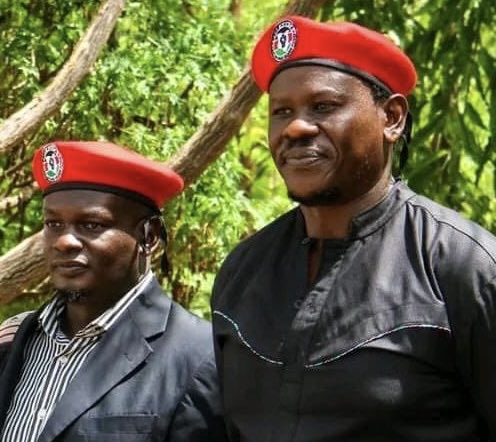
 Missing activists Nicholas Oyoo and Bob Njagi /HANDOUT
Kenya has consolidated its position as a regional leader in a number of areas over the past decades. Relevant to my thesis today is Kenya’s position at the UN Human Rights Council, where its three-year tenure to advance and protect human rights for all began in January, following its election in October last year.
The UN Human Rights Council is an agency that requires members to protect, promote and fulfill human rights for all its citizens. This requirement is not a coincidence, as it finds its footing in biblical teachings.
The Bible, in the book of Genesis, teaches us that human dignity is created in the image of God (Imago Dei), which bestows intrinsic dignity and possesses an inherent non-negotiable worth, irrespective of social status and political utility.
The above theological foundation is what was the UN secularized by establishing the concept of universal equality through the Universal Declaration of Human Rights.
The UDHR recognises inherent dignity, which formalises the religious view that human worth is not a political privilege to be debated or revoked at anyone’s will. It is a fundamental truth that ought to be protected.
It is ironic that the Kenya Kwanza administration, a regime that is faith-influenced and capitalises on religious rhetoric and public displays of worship to shape its political discourse, has failed to utilise the teachings of the Bible or the Quran to address some of the pressing human rights issues in Kenya and even the region.
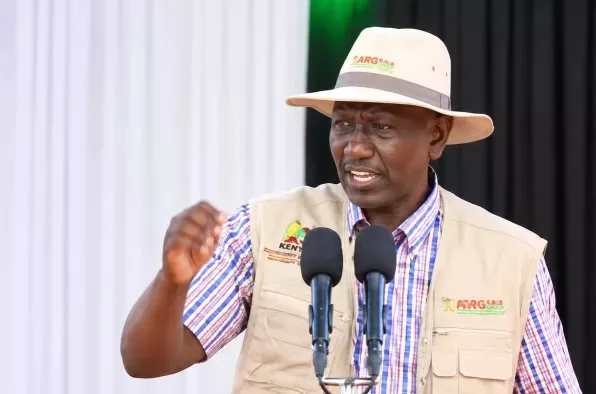
In his campaigns, President William Ruto walked with the clergy. Together, they gathered in prayer, fasted and pronounced prophetic endorsements with divine promises of a President who would breathe life into the Mosaic Law anchored in justice and protection of the most vulnerable. Together, they committed to a proactive stance against systemic oppression.
Fast forward, the anointed President and his regime have overseen one of the bloodiest state-led violations of human rights. In what appears to be collaboration with its peers within the East Africa region, national security apparatuses have failed to protect citizens. Instead, they have collaborated to oversee extra-judicial killings, torture, enforced disappearances and brutal suppression of civil or political dissent.
Relevant to the cycle of state violence is that the perpetrators are rarely held accountable despite committing to uphold the UDHR due to Kenya’s membership and status at the HRC.
Kenya’s human rights record is not exceptional among UDHR members. In the past, China, which is a consistent member, has faced criticism for systematic human rights abuses, including suppression of dissent, mass surveillance and a broad crackdown on human rights defenders (HRDs).
Just to mention a few, Kenyan HRDs Bob Njagi and Longton Jamil were detained and tortured for 32 days last year. Kizza Besigye, Uganda’s opposition leader, was abducted in Nairobi and resurfaced in Kampala, where he is still incarcerated.
Kenya appears to be following in China’s footsteps, demonstrating noncompliance with fundamental human rights principles central to the UN framework by taking domestic actions inconsistent with its human rights commitments, such as the International Covenant on Civil and Political Rights.
It is a paradox that during the current 80th United Nations General Assembly in New York, President Ruto on September 24 depicted his government as one dictating respect for the rule of law, constitutionalism and human rights for its citizens. Of course, he said this extends to the global village and he demanded other members should emulate the same.
In a fiery delivery, the head of state addressed the humanitarian situation in Gaza, the war in Sudan, the need for institutional reforms at the UN and among international lenders, the security situation in Haiti and the world’s smouldering geopolitics.
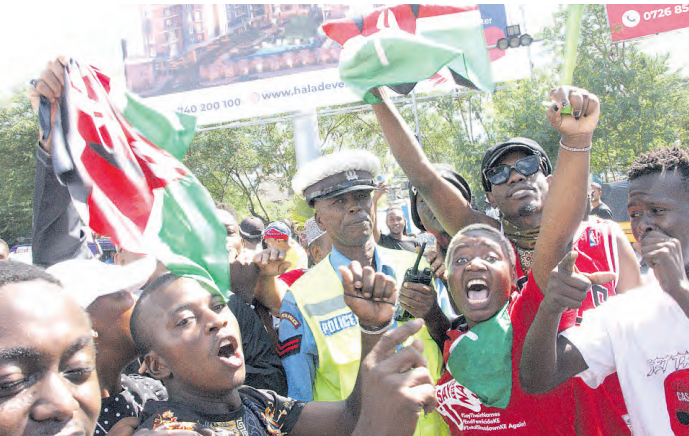
Ruto, in his own right and wisdom, ignored the poor human rights record in Kenya and amongst his peers within East Africa and his role in them. He completely ignored unlawful killing and abduction of peaceful protesters. He forgot to mention that HRDs in Kenya, Tanzania, Uganda and Burundi are facing serious threats and are routinely attacked, threatened, tortured and killed.
He forgot to mention that his government and all counterparts in the regions have lost their potency to integrate and cooperate on human rights issues, but rather recently joined forces to abduct, torture and deport activists such as Njagi and Otieno Oyoo. They were kidnapped and have been missing since October 1.
President Ruto further stated that the UN, as an organisation, currently faces its deepest credibility challenges, which have diminished its moral authority, and its calls are no longer a deterrent to human rights violations and conflicts.
My question on his submission is this: Did Ruto tell the UN he will not abide by any human rights standards and that the UN has no capacity to stop him?
At the tail end of his address, he turned around his position and pleaded for resources to back the Kenya-led Haiti mission, appealing to the very institution that he had said had lost its credibility and power.
This, from my standpoint, is an admission that ending impunity requires a dual approach: robust, continued international scrutiny coupled with the strengthening of domestic oversight institutions. It is an admission that there is a lot that is desired to be done at the national level, considering Kenya’s position at the UN Human Rights Commission.
There are bare minimums that Kenya must fulfil to its citizens – commitment to transparency, accountability and the rule of law. For the cycle of state violence to be broken, the UN must not only continue its vital work of documentation but also intensify its efforts to ensure that accountability mechanisms at the national level are fully independent and operational.
Communication and advocacy manager at the Defenders Coalition