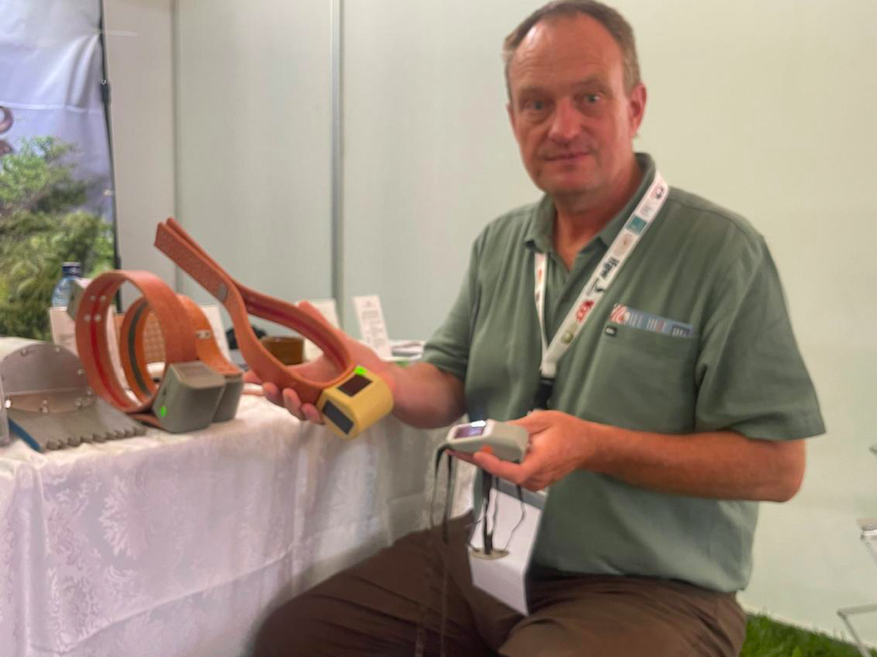
 Savannah Tracking Limited director Dr Henrik Rasmussen showcases wildlife tracking tools /GILBERT KOECH
TRACKING technology is emerging as one of the most effective ways to reduce deadly clashes between humans and wildlife in Kenya.
Dr Henrik Rasmussen, director of Savannah Tracking Limited, says real-time monitoring gives wildlife managers a clearer picture of animal movements and helps prevent dangerous encounters.
“We provide technological solutions for conservation, research, management, anti-poaching, and curbing conflict—for example when lions attack livestock or elephants raid crops,” he explained during the Second International Wildlife Scientific Conference held in Naivasha in late September.
Human-wildlife conflict costs the government billions of shillings each year in compensation.
The urgency is underscored by the fact that about 65 per cent of Kenya’s wildlife lives outside protected areas, directly alongside human communities.
Protected land makes up just 12.34 per cent of the country’s area, spread across 24 national parks, 29 reserves, sanctuaries, marine parks, and forest reserves.
Government data shows 57,006 conflict incidents were reported between 2009 and 2024.
The numbers fluctuate but have climbed sharply in recent years—from 2,409 in 2009 to a peak of 8,272 in 2023.
The 2024 figure stands at 7,883. Crop destruction is the most frequent problem, with 32,480 recorded cases over the 15 years, followed by 15,940 cases of livestock predation.
Elephants account for the highest number of incidents, responsible for 17,917 between 2022 and 2024, including crop damage, 149 injuries, and 121 deaths. Hyenas followed with 3,109 cases, largely livestock attacks.
The crisis is widespread, with Taita Taveta recording the most incidents in recent years at 6,293, followed by Laikipia with 4,479 and Kajiado with 3,196.
Other affected counties include Meru, Marsabit, Nakuru, Kilifi, Kitui, Kwale, and Isiolo. The drivers are many: climate change, habitat loss, blocked migration corridors, land fragmentation, infrastructure projects, and poverty all intensify the pressure.
Rasmussen believes technology offers practical solutions. Founded in 2008 in Kenya and expanded to Canada in 2022, Savannah Tracking develops and supplies tracking systems that guide conservation decisions.
“Technology has helped us understand animal movements and patterns, and it is becoming more sophisticated every year. That means constant research and innovation,” he said.
His Kilifi-based company employs 15 people, mostly electronic engineers and software developers. Recent advances include tracking devices powered by both primary and solar charging, making them reliable and energy efficient.
“Collaring a lion or elephant is not a small task. Equipment must be durable, efficient, and able to survive in harsh environments. The technology we use now is extremely power efficient and built to last,” Rasmussen said.
For Kenya, where wildlife roams beyond protected borders and human populations continue to expand, the balance between conservation and livelihoods remains fragile.
Tracking technology, Rasmussen argues, is not just about knowing where animals are—it is about giving communities and conservationists a fighting chance to coexist peacefully.
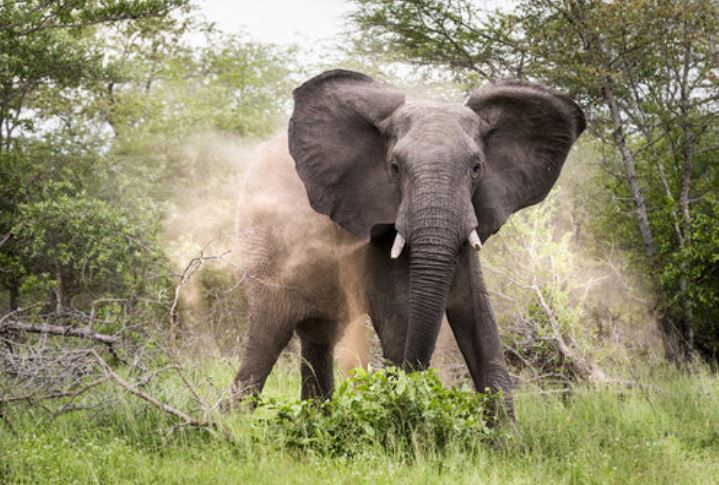
A lone elephant charging/FILE