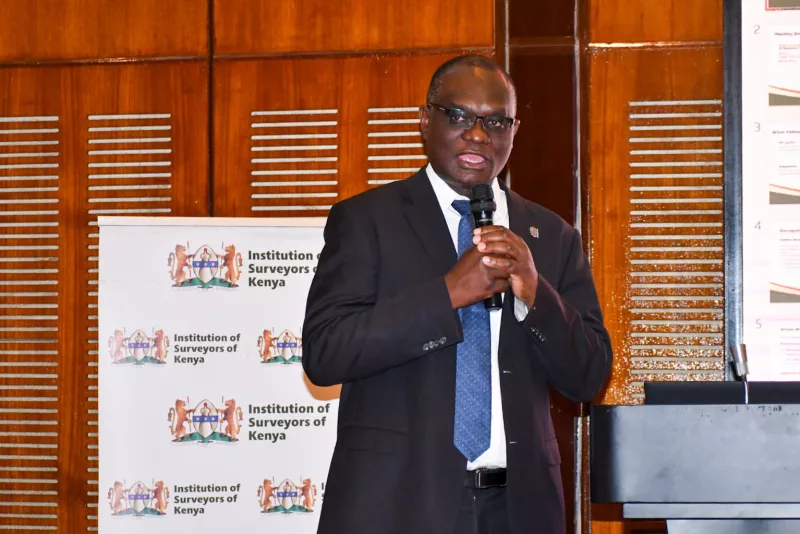
 Jamlic Munyasya, economist, business consultant and corporate trainer./HANDOUT
Kenya is on a crossroad in the journey of its economic transformation. Speaking at the 2025 Nairobi International Trade Fair, President William Ruto made a decisive declaration: the era of exporting raw agricultural produce must end.
For years Kenya has been exporting tea, coffee, hides and skins, cotton, livestock products in their raw form, only to import them back as premium finished goods. Such an extractive model has deprived the farmers and the country the maximum value of its resources.
Value addition is more than an industrial slogan – it is a pathway to prosperity. With domestic processing of the tea, Kenya has an opportunity to forego the current five per cent of value-added exports to at least 50 per cent, adding billions to the revenue.
Likewise, when hides and skins are processed into leather products, cotton into textiles, or coffee merely roasted and branded locally, will increase profits across the value chain. Not only will these interventions boost the incomes of farmers, but will also generate jobs, boost manufacturing capacities and intensely increase the GDP, hence boosting the economy.
Additionally, there are ancillary industries of packaging, logistics, branding and marketing, which are triggered by value addition. It also forges foreign direct investment since it makes Kenya an agro-processing hub in the region. The spillover effect is also witnessed in education and research, where institutions are capable of developing agricultural technologies which strengthens industrial capacity and competitiveness even more. The multiplier impact on the economy is immense: each shilling, which is made on the processed exports, enters further into the domestic economy. Value addition will lower dependence on imports, the cost of logistical services, post-harvest losses, and will guarantee a larger portion of wealth to stay in Kenya.
Ambitious blueprints such as the Vision 2030, the Big Four Agenda and others – that were usually aspirational but never actionable, have characterised the development discourse in Kenya. Value addition is one way of breaking this cycle. The current government, unlike the past agendas, is basing the strategy on some real infrastructure including County Aggregation and Industrial Parks and common user facilities that are the drivers of the Beta blueprint. These terminals will likely offer farmers warehousing, cold storage and processing facilities, which will connect them to export markets directly.
If properly implemented, this model will ultimately ensure that the policy vision and economic reality come closer as agriculture represents the inclusive growth driver.
To gain long-term benefits, however, value addition should be depoliticised. Each election period has been disrupting economic strategy. Embedding a technocratic leadership that is insulated from political turbulence is therefore essential. Kenya can enhance the sustainability of policies across the change of leadership by empowering professional managers to manage agricultural industrialisation and bring about sustained outputs still. In practice, this means strengthening institutions like the Agriculture and Food Authority, promoting public–private partnerships and creating independent monitoring frameworks insulated from political interference. Such structures will give investors’ confidence, enhance accountability and enable Kenya to benchmark its progress against regional peers like Ethiopia and Rwanda, ensuring steady competitiveness.
This continuity is essential in scaling up reforms to include improved access to affordable credit, modernisation of processing equipment and sectoral integration into lucrative global processes via deals like AfCFTA, the EU market and China.
Value addition is not just about economics – it is about redefining Kenya’s position in global trade. It turns farmers into entrepreneurs and counties into industrial hubs and Kenya into an exporter of finished product and not raw commodity. The appeal to value addition of President Ruto rings well as the theme of Bottom-Up Economic Transformation Agenda: inclusive, sustainable and transformative growth.
Through value addition, Kenya will be in a position to achieve sustainable prosperity, achieve food security and advance to emerge as a middle-income economy. The choice is clear – Kenya must export finished goods, not raw potential.
The writer is an economist, business consultant and corporate trainer, [email protected]