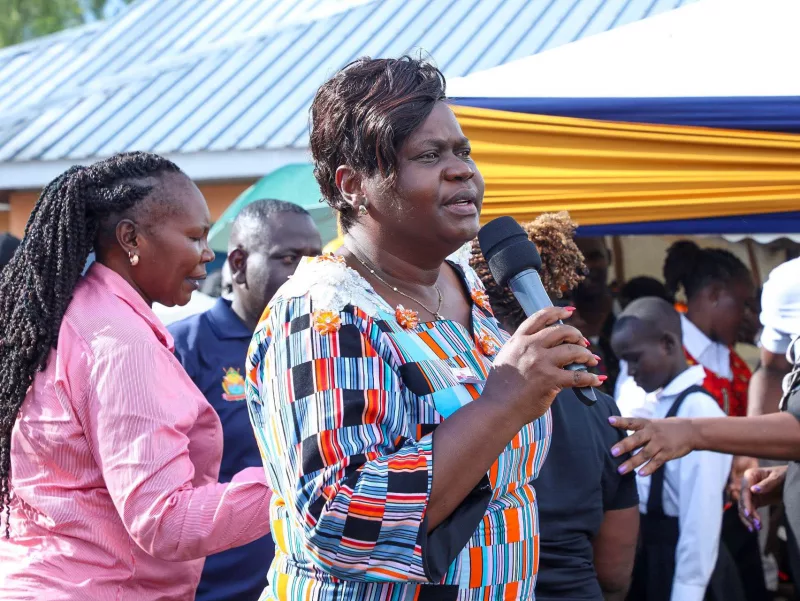
When Sharon Mbola watched the small robot, she had built from scratch roll across the floor, she could hardly believe it.
The mathematics and chemistry teacher from Wajir county never imagined herself as a coder. “Creating something that moves opened my eyes,” she says.
That moment, during a coding bootcamp, turned her from a curious learner into a digital pioneer determined to bring coding to girls in her community.
Mbola is one of the dozens of young women whose lives have been transformed by the African Girls Can Code Initiative (AGCCI).
The UN-backed programme is designed to break barriers in the male-dominated tech sector.
Supported by UN Women Kenya and the African Union, the initiative trains young women in digital skills while tackling the stereotypes that hold them back.
Building Skills and Sisterhood
Launched in 2022, AGCCI runs six-month intensive bootcamps that blend technical training with mentorship and leadership development. Each cohort brings together 50 women, but this year, the programme doubled its intake, enrolling 100 participants in two groups.
According to Elizabeth Obanda, team lead for UN Women Kenya’s women empowerment initiative, the impact goes beyond coding. “It has opened doors for travel, study, empowerment and networks that change lives,” she says.
The bootcamps offer more than programming and robotics. They provide safe spaces for conversations on gender equality, personal growth and solidarity — a sisterhood that encourages participants to dream bigger and take on spaces long denied to them.
Stories of Change
For Terry Oluoch, joining AGCCI was supposed to be just another résumé builder. Then a diploma student in ICT at Kisumu National Polytechnic, she found herself interning at Kisumu High Court’s ICT department, where she helped roll out Kenya’s virtual court system after COVID-19.
From managing networks to troubleshooting, she proved wrong those who thought such roles were “too technical” for women. Beyond tech, she uses her football club to campaign against gender-based violence, embodying the resilience AGCCI seeks to nurture.
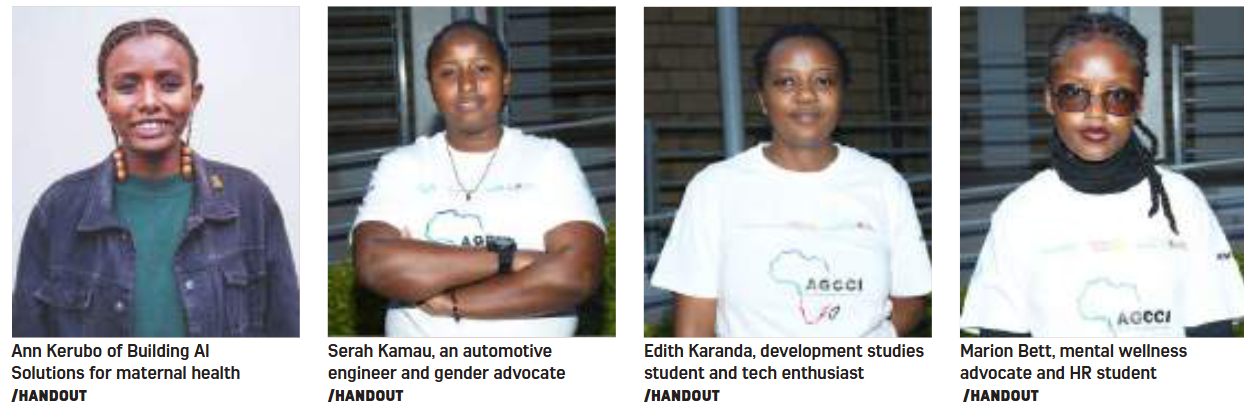
Serah Kamau, 25, was already in engineering, training in industrial mechanics in Germany. Yet stereotypes wore her down. At AGCCI, she regained her confidence, diving into robotics and gender studies. Today, she hopes to replicate the inclusive practices she saw abroad and insists, “Empowering one woman creates ripples that transform entire communities.”
For Edith Karanda, a 21-year-old development studies student, technology became a bridge between theory and practice. Though not an ICT major, AGCCI exposed her to blockchain, robotics and digital problem-solving. “It was a cool space filled with mentorship, friendship and inspiration,” she says. Now she dreams of using tech to address social challenges like poverty and gender-based violence.
In Mombasa, Christine Titus started uncertain if she belonged in technology. But lessons in UI/UX design, cybersecurity and computer science changed her outlook. “I now call myself a coder,” she says proudly. Her goal is to build an inclusive disaster-risk management app that considers people with disabilities.
For Rosa Mai, who lives with a disability, the camp was deeply personal. Specialising in robotics, she rated the programme a “10 out of 10.” Her mission now is to ensure more women with disabilities gain access to tech. “Inclusion is not optional,” she insists. “It’s essential to Africa’s digital future.”
From Bomet county, Marion Bett joined AGCCI to bridge the digital gap in her community. As class president, she grew her leadership skills while learning coding and digital marketing. A mental health advocate, she now dreams of creating platforms to support people’s wellbeing. “Technology can be more than an industry,” she says. “It can be a tool for healing and change.”
The Bigger Picture
AGCCI is proving that technology education can be a lever for social transformation. From courtrooms to classrooms, from robotics labs to community projects, the programme is equipping women with the tools and confidence to challenge stereotypes and lead innovation.
Instant analysis
By blending technical training with mentorship and solidarity, UN Women’s African Girls Can Code Initiative is preparing a generation of young women not just to enter the digital economy but to redefine it. Their stories show that coding is about much more than writing programs — it is about reshaping society itself.