The African Growth and Opportunity Act (AGOA) is a non-reciprocal US trade preference programme introduced in May 2000 to support sub-Saharan African economies.
The programme grants duty-free access to the US market to over 1,800 products from many African economies, Kenya included.
Currently, 32 countries are eligible for preferential treatment under AGOA, of which 21 “lesser developed countries”, as defined by the US, also receive special textiles/apparel preferential treatment.
In 2023, US imports under AGOA totalled nearly $10 billion. While this accounted for only a small fraction of overall US merchandise imports, it represented a substantial share of exports from eligible countries, such as Lesotho and Madagascar.
In 2024, Kenya exported goods worth Sh60.57 billion to the U.S. market, representing a 19 per cent increase from the previous year.
Kenya emerged as the top exporter of textile and apparel products to the U.S. under AGOA in 2024, with exports exceeding US$530 million. The country also maintained a leading position within the East African Community (EAC).
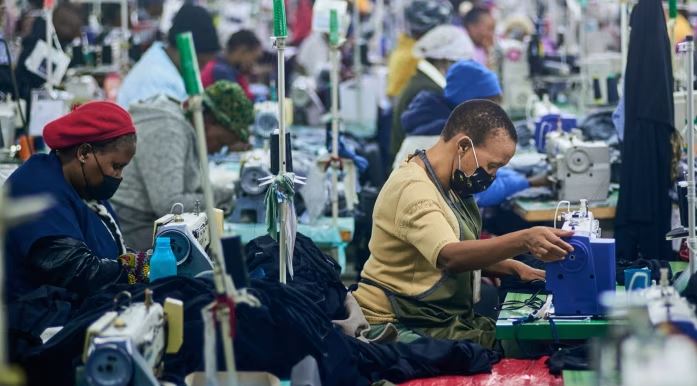
There are 43 apparel firms operating under the EPZ programme and currently employ over 66,800 Kenyans, the majority of whom are women and youth.
With most US imports under AGOA consisting of fuels, metals and apparel products, US firms enjoyed greater choice and lower prices on imported raw material and intermediates, which enhances competitiveness in downstream industries.
The programme has also been instrumental in fostering US foreign direct investment in the African region, contributing to the establishment of more resilient supply chains.
Since coming to office in January, the Trump administration has not publicly stated a position on AGOA, a law passed in 2000 by President Bill Clinton’s administration to deepen trade with sub-Saharan Africa and boost economic development.
In 2015, Congress passed legislation modernising and extending the programme to 2025.
Since April 2025, rising US tariffs – especially country-specific tariffs implemented on 7 August 2025 and new sectoral trade measures – have increased duties on a wide range of products, regardless of AGOA preferences.
Garment sales from Kenya have also been hit this year by the 10% tariff introduced by the Trump administration earlier this year, meaning that should Washington fail to renew the deal, the country’s textile industry will be in for a further dip.
“This sudden jump in tariffs could disrupt long-standing trade relations and severely disadvantage African exporters, particularly in highly protected sectors like textiles and apparel, where AGOA has so far provided critical market access. For example, Kenya would see its trade-weighted average US tariff nearly triple, jumping from 10% to 28%,” UN Trade Development UNCTAD states.
UNCTAD added that without AGOA’s renewal, Africa’s export competitiveness in the US market could quickly erode at a time when competition for alternative export markets intensifies globally.
“Accelerating the implementation of the African Continental Free Trade Area could help mitigate this situation, but such a readjustment would be challenging and require considerable time.”
Apparel Manufacturers and Exporters (EPZ) Sector Chair and a board member of Kenya Association of Manufacturers (KAM) Pankaj Bedi says that in Kenya, the apparel industry alone employs more than 58,000 people directly, with a one-to-one ratio of indirect jobs, and supports an estimated five dependents per worker.
This means that approximately 580,000 people depend on apparel exports to the U.S. under AGOA, and beyond apparel, Bedi adds Kenya’s exports of agro-commodities under AGOA also sustain thousands of additional livelihoods across the country.
“These are not just numbers; they represent real families whose livelihoods depend on AGOA. To put this into perspective, a typical employee in an apparel manufacturing factory is likely supporting an entire household, ensuring that children go to school and basic needs are met,” Bedi added.
To meet AGOA’s rigorous eligibility requirements, countries must establish or make continual progress toward establishing a market-based economy, the rule of law, political pluralism, and the right to due process.
Additionally, the US State Department states, countries must eliminate barriers to U.S. trade and investment, enact policies to reduce poverty, combat corruption, and protect human rights.
If the US fails to extend the deal, then there is a likelihood that Washington will not be dangling the carrot of trade in demanding human rights, transparency rights and accountability from African countries, Kenya included.
In June, Trade, Investments and Industry Cabinet Secretary Lee Kinyanjui said that Kenya had initiated direct engagements with U.S. senators and trade authorities to lobby for an extension.
However, today, a source from the ministry said the government was waiting for ‘possible good news’ from Washington of a renewal and won’t be commenting.
However, CS Kinyanjui had indicated back then that Kenya is actively pursuing alternative trade frameworks, including commercial agreements and free trade arrangements with emerging markets in Europe, Asia and the Middle East.
Bedi adds that the impact of AGOA on U.S. businesses cannot be overemphasised, as over the past decade, American companies have leveraged AGOA to access raw materials, critical supplies such as petroleum, diversify supply chains, and maintain competitive pricing.
“For industries such as textiles, agriculture, and automotive manufacturing, AGOA ensures a steady flow of goods that are both competitively priced and ethically produced. Furthermore, the stability that AGOA fosters in Africa reduces economic desperation, which in turn helps curb forced migration and security threats, both of which remain high on the U.S. foreign policy agenda.”