A Senate watchdog committee has ordered Auditor General Nancy Gathungu to probe the persistent decline in own-source revenue in Kajiado county.
The Senate County Public Accounts Committee suspects ‘systemic theft’ of funds across key revenue streams that posted sharp drops in the 2023-24 financial year.
The revelations came as it emerged that multinational firm Tata Chemicals Magadi Limited owes the county government more than Sh10.5 billion in unpaid land rates.
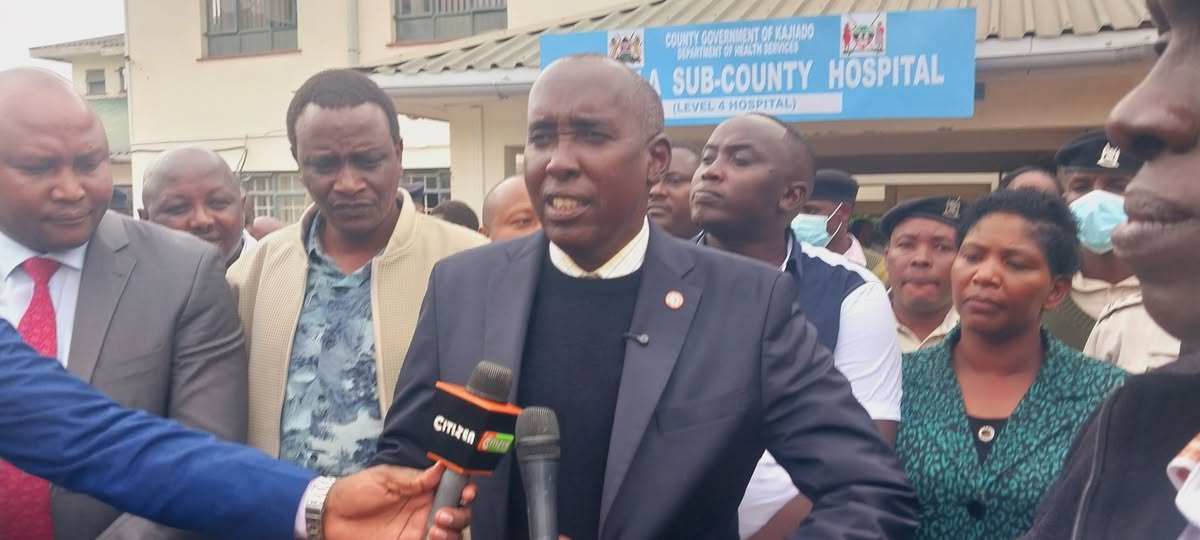
Governor Joseph Ole Lenku was grilled by the committee—chaired by Homa Bay Senator Moses Kajwang’—over audit queries highlighting revenue shortfalls.
The committee noted that cess, advertising and conservancy administration—all major revenue streams—recorded steep declines.
According to the report presented by the county, cess collection fell by Sh6 million, advertising revenue dropped by Sh13 million while conservancy administration dipped by about Sh33 million.
“Cess is a big contributor to your revenue, about 14–15 per cent of your total own-source revenue. What made this revenue drop in this FY?” Kajwang’ asked.
County officials, however, attributed the figures to “misclassification” of revenue streams, insisting there was no actual decline. They also blamed the prolonged drought and heavy rains for disrupting market supplies.
But senators dismissed the explanation.
“It’s either you have a system problem or something else. It’s impractical to misclassify collections from all key streams,” Kajiado Senator Seki Kanar said.
According to the Commission on Revenue Allocation, Kajiado has the potential to raise Sh6.8 billion annually, but generated just over Sh1 billion in 2023-24.
Kajwang’ was blunt: “Figures should explain themselves. I feel and my colleagues feel, that you are collecting but not reporting. That is theft.”
Lenku defended his administration, saying revenues have risen significantly since he assumed office.
“Our system is automated. We have grown from Sh250 million to over Sh1 billion and we are working to realise our potential,” he said.
The session also heard that the county has struggled to collect Sh11 billion in arrears, most of it owed by Tata Chemicals.
The company, which controls over 400,000 acres in Kajiado, has refused to pay land rates set at Sh1,200 per acre under the Finance Act of 2016.
The firm went to court to challenge the law but lost at both the High Court and arbitration. It has since appealed and the case is pending.
Lenku described the company as exploitative.
“Here is a big money mover that refuses to pay taxes. It occupies a whole ward—almost like a county in other regions. It is an injustice for one business to refuse to pay while ordinary residents pay Sh1,200 per acre.”
He further accused Tata of declining to return grazing land and instead holding onto nearly all 400,000 acres, leaving only about 8,000 acres around Lake Magadi.
Nandi Senator Samson Cherargei branded the firm “rogue” and called for Mining CS Hassan Joho, the company’s managers and the governor to be summoned to resolve the matter.
Senators also questioned how international firms could mine soda ash and occupy vast lands while failing to remit royalties to counties as required by law.
“The Senate will invite the National Treasury, Ministry of Mining and Magadi Soda Mining Company to explain why the Sh10.5 billion land rates have not been paid. That money can transform Kajiado,” Kajwang’ said.
By law, royalties from mining are shared as follows: 70 per cent to the national government, 20 per cent to the county and 10 per cent to the local community.
INSTANT ANALYSIS
The Auditor General’s report also flagged anomalies in county financial management. It revealed that 1,922 transactions worth Sh2.2 billion in the IFMIS system were voided without supporting documentation. No payment vouchers, void requests, Treasury approvals, or requisitions from the Controller of Budget were provided for audit. The voided payments were also not disclosed as pending accounts payable, raising concerns that the funds may have been diverted to unauthorised uses.