DOING business with county governments has increasingly become what a new report paints as nothing short of a ‘thousand ways to die’ for both enterprises and their entrepreneurs.
Instead of being gateways to growth, county contracts have turned into slow poison for enterprises, with ballooning pending bills dragging companies into debt, despair, and in some cases, outright death.
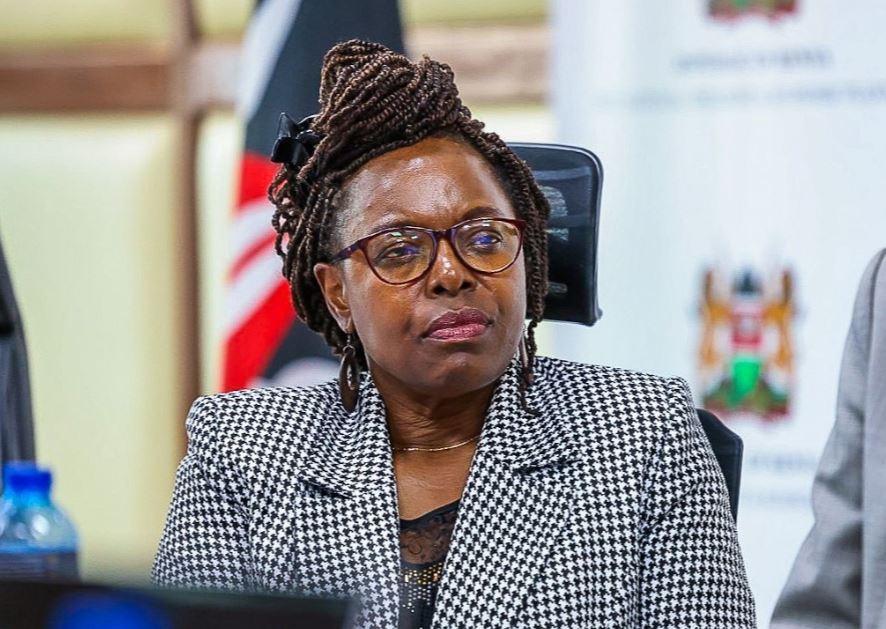
The latest report by Controller of Budget Margaret Nyakang’o paints the picture in stark numbers.
By June 30, 2025, counties collectively owed suppliers and contractors a staggering Sh176.90 billion.
Of this, the county executives accounted for Sh171.75 billion while assemblies racked up another Sh5.16 billion.
The age of these debts tells an even more troubling story.
More than Sh85.42 billion has been outstanding for over three years, Sh20.34 billion for between two and three years, and Sh19.78 billion for one or two years.
Only Sh48.87 billion is less than a year old.
“The significant amount of bills under one year is concerning, especially since full disbursement of the equitable share for FY 2024-25 had been provided,” the report states.
For businesses, the consequences are devastating.
What begins as a handshake in a governor’s office often ends in courtrooms, auction blocks, or hospitals.
Many firms that supplied goods and services in good faith have been pushed to the brink, unable to pay staff, service bank loans, or keep their doors open.
Entrepreneurs whisper of a grim playbook: provide services, chase payments for years, drown in paperwork and bureaucracy, face frustrations from county officials, then either sink into debt or get auctioned.
In every case, the end feels inevitable—a slow death by a thousand cuts.
According to the report, the pending bills for Bomet county have increased by Sh1.07 billion, from Sh448.76 million in June last year to Sh1.52 billion in June this year.
Bungoma’s have increased by Sh89 million, while Busia's pending bills have grown by Sh1.8 billion, and Nakuru’s have ballooned by Sh2.57 billion in a record one year.
Murang’a’s pending bills have grown by Sh533 million, Kilifi’s debt has increased by Sh8.03 billion, Kiambu’s has grown by Sh1.40 billion, while that of Machakos has grown by Sh2.53 billion over the one year.
Other counties whose pending bills have grown are Migori (from Sh864.39 million to Sh1.05 billion), Kajiado ( Sh2.44 billion to Sh2.64 billion) and Makueni ( Sh672.04 million to Sh818.2 million).
“County governments should avoid accumulating pending bills by refraining from making commitments at the end of the financial year, forecasting revenues realistically, and prioritising payments for completed activities,” Nyakang’o recommended.
The CoB identified multiple causes of the debt crisis, including overestimation of own-source revenue, which creates hidden budget deficits and artificial delays in verifying ineligible bills.
Others are prolonged court cases, and cash flow shortages linked to delayed disbursements from the National Treasury.
“Counties such as Turkana, Bungoma, Lamu, and Kajiado were among those where these challenges were observed, highlighting persistent weaknesses in expenditure management and pending bills resolution,” Nyakang’o noted.
To fix the mess, the Controller of Budget has directed counties to adopt realistic revenue estimates, fast-track the verification of ineligible bills, and integrate them into their budgeting processes.
Counties are also required to submit pending bills, payment plans and periodic progress reports for monitoring.
However, Nyakang’o revealed that several counties are not adhering to their agreed payment schedules, further worsening the crisis.
According to Regulation 55(2)(b) of the Public Finance Management (County Governments) Regulations, 2015, county governments are legally obligated to prioritise the settlement of all eligible pending bills as a first charge in their budgets—a requirement many are blatantly ignoring.
Interestingly, Nairobi is leading the counties whose pending bills have significantly reduced over the period.
The capital’s pending bills have dropped by Sh36.78 billion.
“As of June 30, 2025, the pending bills for Nairobi City county stood at Sh86.77 billion, 49 per cent of the total pending bills reported,” the report states.
Mombasa’s bills have dropped from Sh4.44 billion to Sh3.86 billion, and Kwale’s reduced from Sh2.13 billion to Sh1.89 billion.
“County treasuries are advised to settle outstanding debts using the first-in-first-out principle, in line with Regulation 55(1)(b) of the Public Finance Management (County Governments) Regulations 2015,” the report states.
The CoB stated that her office has developed a pending bills template, approved during the 27th IBEC session, which county executives and the assembly should implement for tracking and reporting in the financial year 2025-26.
“Additionally, pending bills submitted to the Controller of Budget and trade payables must be consistently reported in financial statements,” she stated.
INSTANT ANALYSIS
Regulation 41 (2) of the Public Finance Management (County Governments) Regulations, 2015, requires prioritising debt settlement. Despite this legislative requirement, counties continued accumulating pending bills. During the monitoring exercises, the CoB sought to identify the delays in settling pending bills and the measures implemented to address the issues. Some of the reasons cited included overestimation of own-source revenue, creating hidden deficits in the budget, artificial delays in verifying ineligible pending bills, ongoing litigation, and low cash flows attributed to delayed disbursement of funds by the National Treasury.