
A forensic audit of the National Education Management Information System has uncovered approximately 50,000 non-existent ‘ghost’ students in secondary schools.
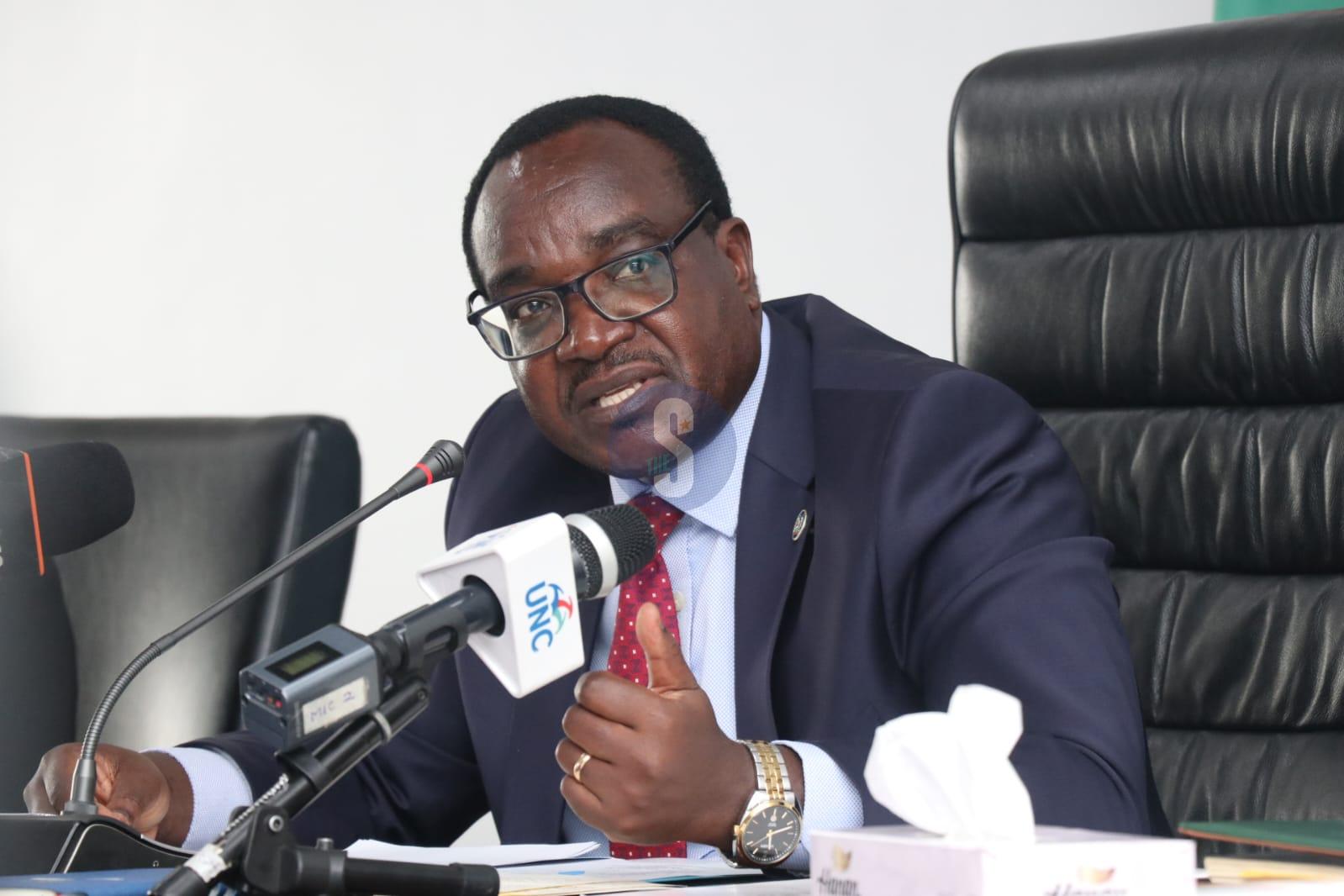
Basic Education PS Julius Bitok revealed this in a tense session of the National Assembly’s Education committee chaired by Julius Melly (Tinderet) on Tuesday.
This means taxpayers may have been losing up to Sh1.1 billion every year in unclear remittances, considering that each student is allocated about Sh22,200 per year in capitation.
This is internal data from the Ministry itself. Auditors have put the sums lost to ghost students much higher.
“The secondary schools' data has seen student population lower by 50,000 compared with the data we had,” Bitok said.
“We have cleaned more than 60 per cent of the schools. We had cleaned 17,000 schools. In the process, we have found that more than 50,000 students on record were not there.”
The amount could be higher as the review only covered 17,400 secondary schools out of 32,000 and is yet to be extended to primary schools.
The discovery has triggered a parliamentary inquiry into accountability, capitation disbursements and the ministry’s preparedness to transition to Kemis—a new system the government is rolling out.
During the meeting, MPs also raised concerns about disparities in capitation for junior secondary and primary schools.
JSS learners domiciled in secondary schools get Sh15,200 while their primary school counterparts get Sh1,400, causing a major point of contention.
MPs questioned why they are treated differently, yet most are housed in the same school, further demanding answers on what the Sh15,000 for JSS goes to, with schools charging extra levies.
It emerged that the allocation goes towards tuition and operations, but the ministry only shared details of the tuition account voteheads.
Under sustained pressure, Bitok provided a detailed, albeit contentious, breakdown.
He listed voteheads including capacity building for science and mathematics (Sh100), supplementary readers (Sh1,834), laboratory materials (Sh450), CBC materials (Sh1,200), assessment (Sh647) and stationery (Sh2,000).
The operational account covered costs like electricity, water, internet, casual labour, repairs, co-curricular activities and medical insurance.
MPs, led by Melly, demanded a more precise and official cost breakdown per votehead, questioning the feasibility of these allocations in schools lacking basic amenities like electricity and internet.
The lawmakers said it was for these reasons and the immense losses Kenyans could be subjected to, that the data cleanup was overdue.
Bitok detailed the ongoing data cleaning, stating that the ministry was comparing three distinct datasets from schools, subcounty education directors and the Nemis database itself.
The variances were particularly pronounced in secondary schools, he added, while data for Junior Secondary Schools remained unclear but “showed a different trend”.
Melly immediately pressed the PS on accountability, demanding to know what would become of the officers responsible for the fraudulent entries.
“How far are you and how many students have you flagged? What are you doing to the officers behind the ghost students and wrong remittances?” Melly questioned.
Bitok responded that disciplinary action would be pursued, but only after the verification process is complete to ensure fairness.
“It will be better to complete the process and disciplinary actions would follow for officers in contravention of the regulations,” he stated.
The session grew increasingly heated as MPs sought clarity on the disbursement of funds amidst the ghost student crisis.
On the same issue, they lamented delays in the disbursement of capitation, a situation the PS said was caused by the ongoing review.
Bitok assured the committee that the government was committed to timely capitation despite budget constraints, detailing allocations of Sh1.7 billion for primary schools, Sh5.7 billion for JSS and Sh10.3 billion for secondary schools.
However, he admitted that the rigorous verification process was deliberately slowing down disbursements to prevent further fraud.
“We are doing everything possible to implement the recommendations of the Auditor General... that is why capitation is slow,” he explained.
Narok Woman representative Rebecca Tonkei highlighted the suffering schools are subjected to due to the delays.
“Does the PS understand the suffering schools are subjected to? How long are they going to wait?” she asked, noting that some students are learning under trees due to inadequate infrastructure.
Committee vice-chair and Kabondo MP Eve Obara demanded to know what the larger sum was meant for, noting that parents are still being asked to pay numerous levies.
“What activities are they funding, as nothing is being done in the schools you sent the money to?” she probed.
The committee also turned its attention to the upcoming Kenya Education Management Information System (Kemis), slated to go live by January 2026.
Bitok described it as a one-stop platform with enhanced architecture for data analysis, integrated with agencies like Helb, KNQA and CUE and crucially, with the unique Maisha Namba.
Students will be assigned a unique number which they will use throughout their journey through school.
“The Maisha Namba will not be changed in their lifetime. This will cure the identity issues Nemis had, which relied on birth certificate numbers,” the PS said.
However, Mandera South MP Haro Abdul raised concerns about the digital divide, asking how Kemis would function in schools without internet or electricity.
His Kitutu Masaba counterpart Clive Gisairo had reservations too.
"How sure are we that we will not have Kemis run by those unscrupulous individuals who have been defrauding Kenyans through Nemis?”
MPs want the ministry to issue a comprehensive report on the ghost student audit with names of culpable officers, a detailed justification of the JSS capitation, the list of all schools that received infrastructure grants and a clear timeline for the Nemis-to-Kemis transition.
In the session, Luanda MP Dick Maungu accused the ministry of breaching the Public Finance Management Act by allegedly diverting infrastructure funds meant for 295 schools.
He asserted that while MPs ring-fenced the Sh1.3 billion budget and specified the beneficiary schools, they were not part of the 195 institutions the ministry reported as having been funded.
“Why did you finance schools not certified in the budget? You are in breach of the law… that makes you a candidate for impeachment,” Maungu declared, demanding a full list of funded schools.
The ministry officials were directed to return with the requested information, as the case of 50,000 ghost students continues to haunt the halls of Jogoo House.
Instant Analysis
This audit exposes a systemic failure, revealing a potential Sh1.1 billion annual fraud through 50,000 ghost students. While the ministry's data cleanup is a positive step, MPs rightly demand immediate accountability for the culpable officers, not just promises of future action. The huge disparity in JSS versus primary school funding remains unjustified, and the Kemis system's success hinges on addressing the digital divide and ensuring it is not compromised by the same corrupt officials.







