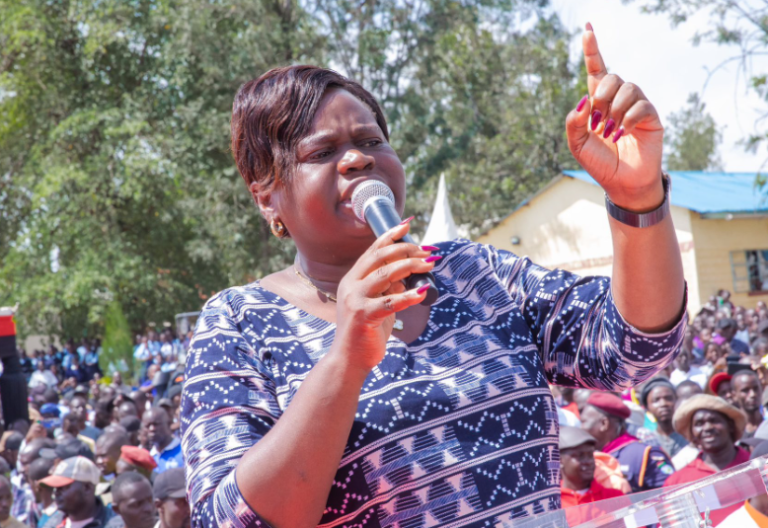
Homa Bay Governor Gladys Wanga has come under scrutiny after it emerged that the county’s wage bill grew by more than Sh400 million in just one year.
The county now spends an average of 55 per cent of its revenue on salaries and wages — well above the 35 per cent legal threshold.
Read Also
The matter came up when Wanga appeared before the Senate County Public Accounts Committee (CPAC) to respond to audit queries for the 2023-24 financial year.
“The wage bill grew from about Sh4.6 billion to about Sh5 billion in one year. What happened?” committee chairperson and Homa Bay Senator Moses Kajwang’ asked.
He described the sharp rise in employee compensation as “worrying,” warning that it could cripple service delivery.
“What is the exact percentage? This is where the risk lies. If 55 per cent of your money is going to employees, then even your payment plans for pending bills sound like a political promise,” Kajwang’ said.
In her response, the governor attributed the rise in spending on employees to her decision to include and pay the unremitted statutory deduction that had been pending for a long period.
“We have been looking at that figure seriously, and there has been a major question of employer obligations,” she said.
The county boss said they decided to pay gratuity and pensions that had been outstanding for a long period, thus ballooning the wage bill.
The governor explained that the introduction of non-discriminatory expenses, such as the Affordable Housing Levy, which required employers to match employees also contributed to the rise.
Further, Governor Wanga also attributed the rise in spending on employees to the hiring of more employees.
“When you start remitting employer obligations, you will not pay the same as when you were not paying the obligations,” she said.
However, the senators raised an alarm over the county’s wage bill, describing it as unsustainable.
The county spends up to 55 per cent of its revenue on salaries and wages, far beyond the 35 per cent threshold provided for in law.
Regulation 25(1)(a) of Public Finance Management (County Governments) Regulations, 2015 requires the County Executive Committee Member for Finance with the approval of the county assembly to set a limit on the county government's expenditure on wages and benefits for its public officers.
This is pursuant to Section 1O7(2) of the Public Finance Management Act, 2012. Further, Regulation 25(1Xb) requires the limit set not to exceed 35 per cent of the county government's total revenue.
According to the governor, the county executive currently has 7,183 employees, gobbling about Sh457 million in salary every month.
However, according to the special audit report on payroll of the county executive filed by Auditor General Nancy Gathungu and released last month, the county’s wage bill stood at Sh53 per cent in the 2023-24 financial year.
“The increase in the percentage ratio of compensation of employee to total revenue indicates a growing wage bill, which may be unsustainable in the long term,” the report states.
“Further, the high budget allocation for compensation of employee may strain the county's financial resources, thereby limiting funds available for critical development projects and essential service delivery,” Gathungu warned.
According to the report, the county recruited 423,117, and 17 employees during the financial years 2021-22, 2022-23 and 2023-24, respectively.
INSTANT ANALYSIS
The auditor said the increase in the percentage ratio of compensation of employees to total revenue indicates a growing wage bill, which may be unsustainable in the long term. Further, the high budget allocation for compensation of employees may strain the county's financial resources, thereby limiting funds available for critical development projects and essential service delivery.