
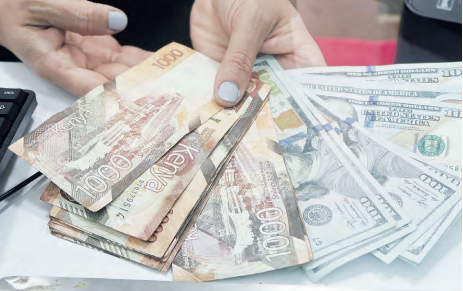
The United Democratic Alliance and Orange Democratic Movement have been allocated Sh1.21 billion from the Political Parties Fund for the 2025-26 financial year.
The massive allocation is detailed in the Kenya Gazette Notice published by the Registrar of Political Parties.
It reveals a lopsided distribution of the Sh1.94 billion total fund, cementing the dominance of the two parties, which entered into a working pact last April.
With their unity, the two main political players stand to command a war chest that would see their parties organised better, comparatively, ahead of the 2027 general election.
According to the Gazette Notice, UDA is set to receive the lion's share of Sh789.7 million, which constitutes over 40 per cent of the entire fund.
ODM follows a distant second, but has a significantly bigger share with an allocation of Sh421.8 million, accounting for roughly 22 per cent of the kitty.
Combined, the two parties will control approximately Sh1.211 billion, or 62.3 per cent of the total Sh1.94 billion allocated to the 47 qualifying political parties.
The financial muscle far exceeds the combined allocation of all the other 45 parties, which will share the remaining Sh729 million.
“The allocated funds will be disbursed on a quarterly basis upon receipt from the National Treasury,” Sophia Sitati, the acting Registrar of Political Parties, said in the notice.
Other significant beneficiaries, though paling in comparison to UDA and ODM, include the Jubilee Party, which will receive Sh184.8 million.
The Wiper Patriotic Front, led by former Vice President Kalonzo Musyoka, is allocated Sh98.8 million.
Other parties in the opposition that will get some funding include the Democratic Action Party of former Defence Cabinet Secretary Eugene Wamalwa, which will receive Sh43.2 million.
Former Deputy President Rigathi Gachagua's DCP is not eligible for funding as he does not have any elected leaders as yet.
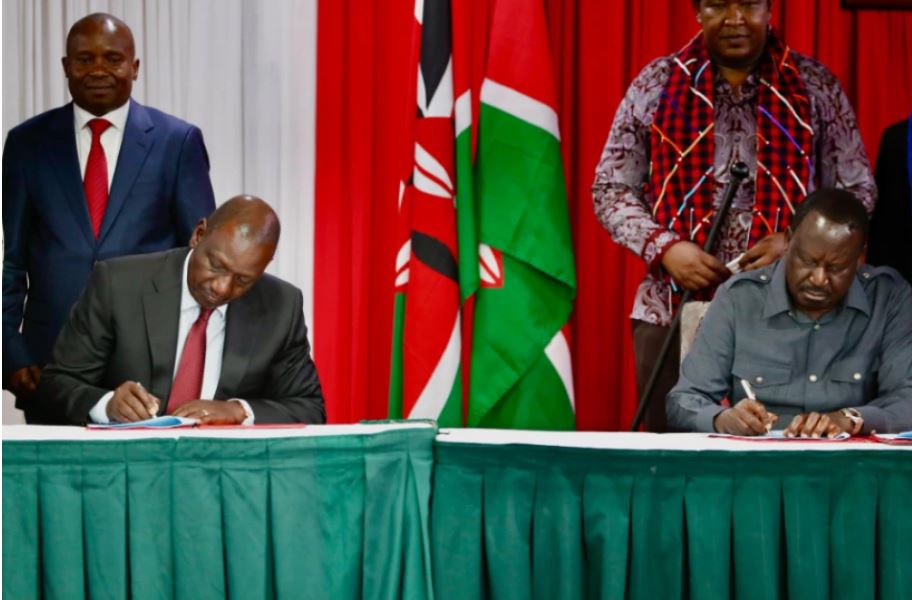
Sitati explained that the Sh1.94 billion allocation includes the parties’ normal allocation of Sh1.4 billion and Sh539 million in respect of court awards in favour of the parties last May.
Also in the count is Sh2.9 million, which was meant for Musalia Mudavadi’s ANC party that was dissolved in favour of UDA.
“The balance from the dissolved Amani National Congress party (Sh2.9 million) will be disbursed together with the first quarter allocation,” the registrar said.
Even so, ODM, through its secretary general and Nairobi Senator Edwin Sifuna said the amount allocated is not sufficient. “ODM’s claim is Sh12 billion,” he said.
Pundits hold that, regardless, the disbursement underscores the financial might that the two leading parties wield.
Observers argue that the war chest entrenches their dominance and makes it increasingly difficult for smaller parties to compete on a level playing field.
Wilson Muna of the University of Nairobi and Michael Otieno, in a review of parties' funding, said, “Smaller parties remain disadvantaged since allocation is computed proportionate to the votes garnered by each political party in the preceding general election.”
A member of one of the smaller parties said in confidence, "With over a billion shillings between them, UDA and ODM can finance extensive grassroots mobilisation, massive advertising campaigns, and reward loyalty in a way that no other party can. This doesn't level the playing field; it tilts it decisively in their favour."
The Political Parties Fund is distributed based on a formula stipulated in the Political Parties Act.
The bulk of the fund is distributed based on the proportion of votes secured by each party in the preceding general election - the Sh1.4 billion.
The court award stemmed from a legal settlement for previously withheld funds, which ruled in favour of the ODM party.
Justice Chacha Mwita ruled in favour of the parties after the government slashed Sh800 million from the parties' kitty in a supplementary budget.
UDA's colossal share is a direct result of its victory in the 2022 general election, where President Ruto, running on its ticket, won the presidency.
The party also secured a majority of elected seats in the National Assembly (140 – 119 MPs and 21 Woman Reps) and Senate (22). The party won a total of 701 seats.
ODM’s share reflects its position as the single largest opposition party and its strong performance at the polls.
The Raila-led party won 83 National Assembly seats and 13 Senators in 2022, winning 425 seats in the end.
The Wiper Patriotic Front clinched 100 seats, with 21 members of the National Assembly and three senators.
National Assembly Speaker Moses Wetang'ula's Ford-Kenya has been allocated Sh35.3 million for its 41 seats (including six MPs, a senator, one governor and 33 MCAs).DAP-K, set to receive Sh43.2 million, won 34 seats in the 2022 vote, including one governor, five MPs, and 28 MCAs.
United Democratic Movement under the leadership of Mandera Senator Ali Roba is also among those with substantive amounts at Sh36.8 million, while post-independence party Kanu is set for Sh32 million.
Kiraitu Murungi’s Devolution Empowerment Party – Mbus - has been allocated Sh18.8 million, Sh17.3 million for Maendeleo Chap Chap, Pamoja Africa Alliance (Sh15.7 million), and Sh14.4 million for The Service Party headed by Laikipia East MP Mwangi Kiunjuri.
Martha Karua’s People’s Liberation Party has been allocated Sh10.3 million, UPIA (Sh12.4 million), Ugenya MP David Ochieng’s MDG (Sh13.4 million), UPA (Sh11.9 million), Kenya Union Party (Sh13 million), Chama Cha Mashinani (Sh11 million) and Tujibebe (Sh10.3 million).
For the dozens of smaller parties, the allocations are meagre, amounting to between Sh5 million and Sh9 million.
The sums, while critical for the small parties’ operations, are barely sufficient to mount a serious national campaign.
Parties are allocated cash to promote representation in Parliament and county assemblies, develop policies, and promote the participation of marginalised groups.
They also use taxpayers’ money to popularise the outfits, pay utilities and other administrative expenses, including rent for party offices.
However, oversight on the actual expenditure remains a subject of public concern, even as audits continue to highlight shortages.
Auditor General Nancy Gathungu has raised concerns that political parties were being deprived of funds guaranteed by the constitution.
In the latest audit, she revealed that parties received Sh808 million in the financial year ending June 2024, far below the legally mandated allocation.
“The underfunding may have negatively affected the planned activities of the eligible political parties that were to receive funding,” the Auditor General said.
The amount is calculated as 0.3 per cent of the national shareable revenues specified in the Division of Revenue Act of every spending cycle.
The funding gap stems from a longstanding dispute over the 0.3 per cent allocation formula, which the National Treasury has contested as unconstitutional.
INSTANT ANALYSIS
For proponents, the Political Parties Fund is a crucial tool for strengthening institutions, reducing over-reliance on well-heeled donors who may expect political favours, and promoting issue-based politics by funding party activities. However, detractors see it as a system that rewards the largest parties and effectively punishes smaller ones, creating a financial duopoly. They argue that it stifles political innovation and makes it nearly impossible for new parties or ideologies to break through, as the established giants are continuously fortified with public money.







