J.V., a 26-year-old single mother from Mukhonje village in Kakamega County, doesn’t want to include her child’s father’s name on the birth certificate after a painful breakup.
She isn’t alone. Across Kenya, many mothers find themselves in the same position, sometimes out of anger, fear, or mistrust, often unaware of the lifelong consequences this decision could have for their children.
To unpack the issue, we spoke to Brenda Yambo, Legal Counsel at the Federation of Women Lawyers (FIDA-Kenya). But first, here’s what the law says.
The child’s right to identity
Kenya’s Constitution and the Children Act guarantee every child the right to a name, nationality, and parental protection, whether or not the parents are married.
This right is enshrined not only in domestic law but also in international instruments such as the United Nations Convention on the Rights of the Child, which Kenya has ratified.
In 2017, Justice Maureen Odera emphasised that identity is critical for a child’s social, physical, and psychological well-being, ruling that one parent cannot unilaterally name a child.
In 2024, Justice Roselyne Aburili reaffirmed this position, declaring that children have a constitutional right to know their biological father.
"Mothers, please, your children have the right to know who their biological fathers are. We live in a world where paternity can no longer be hidden,” Justice Aburili stated.
What the law requires
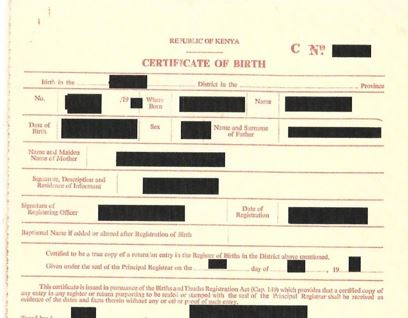
According to Yambo, the rules are clear. Under the Births and Deaths Registration Act, if parents are not married, the father’s details can only be included with his acknowledgement of paternity, either by signing the birth notification or providing an affidavit.
If the parents are married, the father’s name is automatically included.
“No parent can unilaterally decide to exclude the other,” Yambo explains. “The guiding principle is always the best interests of the child.”
Many mothers assume leaving out a father’s name spares them trouble. In reality, it can create long-term hurdles for the child.
Citizenship and nationality. Where the mother is not Kenyan, the child may struggle to prove Kenyan nationality through her alone. The father’s identity often becomes the deciding factor.
Travel restrictions. For passports, visas, or even school trips abroad, authorities frequently require proof of both parents. Missing details can stall applications or subject the child to extra scrutiny.
Identity and stigma. A birth certificate without a father’s name raises questions. Children may face discrimination or uncomfortable inquiries when asserting their lineage.
Inheritance rights. During succession proceedings, proof of paternity is essential. Without the father’s name, children may be locked out of their rightful share of property or assets.
The consequences are not just legal or administrative. Psychologists warn that the absence of a father’s name can leave deep emotional scars.
In schools, children are frequently asked to provide both parents’ details for admission, health records, or academic forms. Those without one parent listed may feel singled out.
The stigma can grow heavier in adolescence, when young people begin to question their background. Without answers, they may struggle with identity confusion, anxiety, or feelings of rejection. These effects can spill into adulthood, influencing relationships, career choices, and mental well-being.
What happens when a father outright refuses to acknowledge a child?
A mother can seek a court order for DNA testing. If confirmed, the registrar is compelled to include the father’s name. Courts have consistently prioritised the child’s right to identity over parental disputes.
This path can be emotionally taxing and financially costly, but Yambo insists it is necessary for safeguarding a child’s future.
“At the end of the day, the law protects the child, not the pride of either parent.”
Kenya is not alone in grappling with this issue.
In Uganda and Tanzania, similar laws require fathers to formally acknowledge children born outside marriage before their names appear on official records.
In South Africa, courts have gone further, compelling reluctant fathers to undergo DNA testing and ensuring that children are not denied their right to identity.
Globally, the pattern is clear. Children’s rights take precedence over adult disagreements, and states are increasingly unwilling to let personal conflicts override constitutional guarantees.
For parents navigating this delicate matter, experts recommend the following.
Notify births early. Ensure both parents’ names are captured during the initial hospital registration.
Get written acknowledgement. If unmarried, secure the father’s affidavit or signed birth notification as proof.
Seek legal help. If the father resists, consult a lawyer or approach organisations like FIDA-Kenya for support.
Prioritise the child. Remember that, beyond disagreements, a child’s rights and future opportunities must come first.
Why it matters
Yambo stresses that the issue is not about settling scores between parents. It is about safeguarding a child’s dignity, rights, and opportunities.
The father’s name on a birth certificate is not just an administrative formality. It provides a foundation for legal recognition, emotional and social belonging, and access to opportunities and protections throughout life.
“By leaving out one parent’s name, you are blocking a child’s rights,” Yambo concludes.
“It’s not about the parents. It’s about the child.”
The decision to include or exclude a father’s name may seem personal, even private, but in the eyes of the law and society, it carries far-reaching consequences.
A name on a birth certificate can determine whether a child feels secure in their identity, whether they can inherit from their father, or whether they face barriers in education, travel, and citizenship.
At its core, the question is not about honouring or shaming parents. It is about protecting the child, today and for the rest of their life.