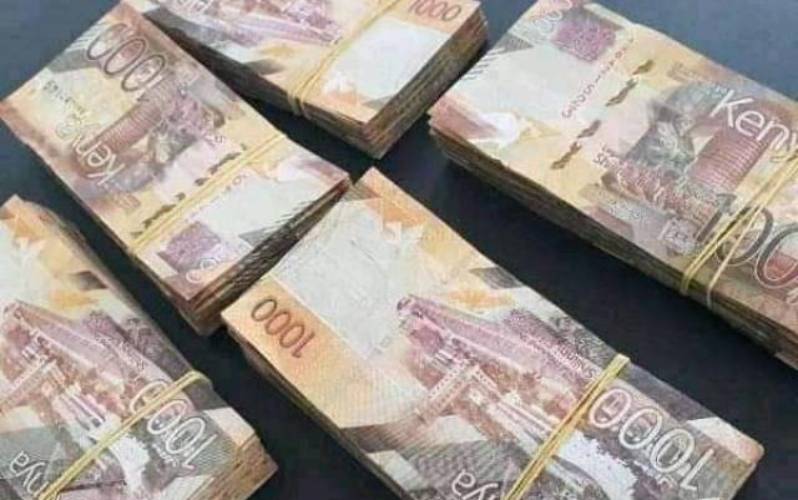
The National Assembly has unveiled details of how Sh55.8 billion National Government Constituencies Development Fund cash would be shared by constituencies, creating clear winners and losers.
The High Court ordered that the NG-CDF and all its projects cease operations by 30 June 2026 to avoid disrupting ongoing projects and allow for a transition.
Following the ruling, Parliament introduced the Constitution of Kenya (Amendment) Bill, 2025, seeking to entrench the NG-CDF, the National Government Affirmative Action Fund and a new Senate Oversight Fund into law. The High Court declined to halt the legislative process, allowing Parliament to proceed with the amendment Bill.
The new allocation, recently approved by the National Assembly, reveals a massive Sh48 million gap between the highest- and lowest-funded constituencies. That gulf is expected to reignite debate about equity in resource distribution across the 290 electoral areas.
Under the formula detailed in the 40-page parliamentary report, only seven constituencies with eight wards nationwide will receive the maximum allocation of Sh221.5 million.
These are Kinangop (Nyandarua), Kieni (Nyeri), Mwea (Kirinyaga), Kanduyi (Bungoma), Ruiru (Kiambu), Naivasha (Nakuru) and Bobasi (Kisii).
On the opposite end, 21 constituencies with only three wards each will receive the minimum allocation of Sh173,351,923.
The report states: "Twenty-one will receive the lowest at Sh173,351,923 in financial year 2025-26, up from Sh161,497,759.03 in financial year 2024-25."
On the list are Jomvu (Mombasa), Lamu East (Lamu), Saku (Marsabit), Isiolo South (Isiolo), Mbeere North (Embu), Tetu (Nyeri), Ndia (Kirinyaga), Kangema and Mathioya (Murang’a).
Others are Webuye East and Sirisia (Bungoma), Mumias East (Kakamega), Emuhaya (Vihiga), Turkana East and Bomachoge Chache (Kisii).
All constituencies will see increased funding compared to the previous year, although the percentage increase varies with ward count. This will see those with more wards receive more money.
As such, the 2025-26 allocation represents a 7.3 per cent increase from the previous financial year.
All constituencies’ allocations will increase by between Sh11.85 million and Sh15.15 million.
Section 34 of the NG-CDF Act creates a tiered system whereby constituencies are essentially ranked by their ward count.
Those units with four wards will get Sh183 million, Sh192 million for those with five wards, Sh202 million for those with six wards, and Sh211 million for constituencies of seven wards.
At least 23 constituencies will get Sh211 million, with 54 others allocated Sh202 million, while 106 will get Sh192 million. The Sh183 million category has 79 constituencies.
Most Nairobi and Kisumu county constituencies have been allocated Sh192 million, apart from Embakasi West and Makadara, which have been given Sh182 million each.
The 54 allocated Sh202 million include Magarini, Garsen, Voi, Lagdera, Dadaab, Manyatta, Runyenjes, Mwingi Central, Kitui East, Kitui South, Mwala, Mbooni, Kitui West, Mathira, Kiharu, Maragwa, Kandara, Gatanga, and Turkana North, among others.
Thirteen constituencies reported additional revenues amounting to Sh734,000, collected as Appropriations-in-Aid (A-I-A).
These constituencies, including Kaloleni (Kilifi), Central Imenti (Meru), and Kitui West, had additional funds ranging from Sh4,000 to Sh189,000 added to their allocations from locally generated revenues.
These funds, which include revenues, interest, and liabilities from constituency accounts, were incorporated into their allocations under the Public Finance Management Act and NG-CDF regulations.
The NG-CDF committee chairman, Eldama Ravine MP Musa Sirma, emphasised that the team sought to ensure equitable distribution and compliance with the law.
“The committee has duly reviewed the proposed budget ceilings and confirms that the allocations are in strict compliance with the NG-CDF Act,” he said in the report tabled before the House went on recess.
Despite the allocations, constituencies won't receive these full amounts for project implementation.
The report indicates: "Constituencies shall leave the emergency portion unallocated in conformity with Section 8(1)", meaning five per cent of each constituency's allocation must be set aside for emergencies. This reduces actual project implementation funds to Sh164 million for three-ward constituencies and Sh209.8 million for eight-ward constituencies.
The allocation formula has exposed structural inequalities between the rural and urban CDF units.
Urban constituencies with dense populations but fewer wards tend to receive less funding, while rural constituencies with more wards but potentially smaller populations receive higher allocations.
Nairobi constituencies, for instance, predominantly fall in the four to six ward categories, receiving between Sh183 million and Sh202 million, while some less populated rural constituencies with seven to eight wards receive as much as Sh221 million.
The committee has directed the NG-CDF Board to request constituencies to start submitting project proposals for approval for the 2025-26 financial year.
The total budgetary allocation to the fund this year amounted to Sh58.8 billion, up from Sh54 billion, which was allocated in the period to June 2025.
MPs approved Sh3 billion to the NG-CDF board, leaving constituencies to share Sh55.8 billion based on the new formula.
From the amount, 75 per cent (Sh41 billion) is shared equally among constituencies, giving each a head-start of Sh144 million.
It is Sh13 billion that is shared based on the number of wards per constituency, while Sh3 billion would be shared by the units for emergencies.
MPs and other supporters say the NG-CDF is one of the most effective devolved funds, supporting education, health, infrastructure, and economic initiatives in constituencies.
The allocations, however, have been hotly debated amidst calls by stakeholders for their scrapping and the funds handed to counties.
ODM leader Raila Odinga has been leading the charge to abolish CDF, while MPs are working to entrench the kitty in the constitution.
INSTANT ANALYSIS
As constituencies prepare their development plans, the revelation of major disparities will fuel ongoing debates about the equity of resource distribution and whether the ward-based formula truly serves the country’s development needs equally/fairly.
The revenue formula for county shareable revenue has, in every cycle, generated fierce debates. The CDF formula was, however, arrived at after extensive consultations.