Credibility is the invisible currency that sustains international leadership. A country’s power is not only measured in military budgets or economic size but also in its ability to inspire confidence and trust among allies, partners, and even rivals.
For much of the post-war period, the United States carried that mantle, not without flaws, but with a consistency that reassured its friends and anchored the global order. In recent years, however, that currency has depreciated.
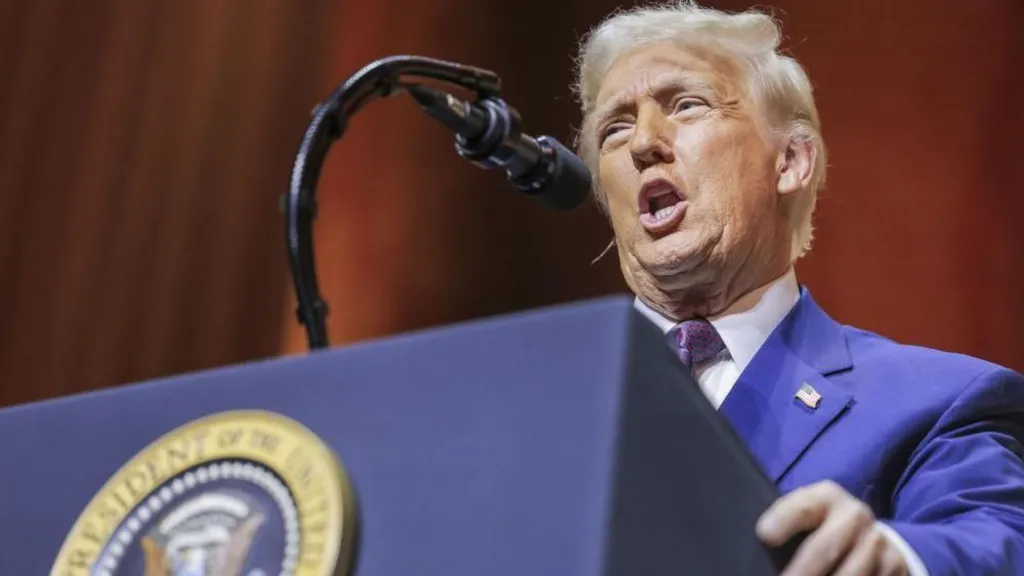
Donald Trump’s return to the White House, defined by tariff battles, transactional diplomacy, and retreat from multilateralism, has eroded America’s credibility at a pace unseen in modern times.
The clearest signal of this shift came in the image of Xi Jinping, Narendra Modi, and Vladimir Putin clasping hands at a recent summit – a gesture that symbolised not just by a photo opportunity but a reordering of global trust.
Trump’s trade wars, launched under the banner of ‘America First,’ were meant to show strength but instead revealed shortsightedness. Punitive tariffs against India, Japan and long-standing European allies unsettled the fabric of global commerce.
Markets, used to predictable American leadership, became volatile. Businesses struggled with uncertainty. Governments that once considered Washington a reliable partner began hedging their bets, turning toward alternative centres of influence.
In bypassing international mechanisms such as the World Trade Organisation, Trump demonstrated a willingness to disregard the very rules the US had spent decades building, a move that left even America’s closest allies questioning its commitment to fairness.
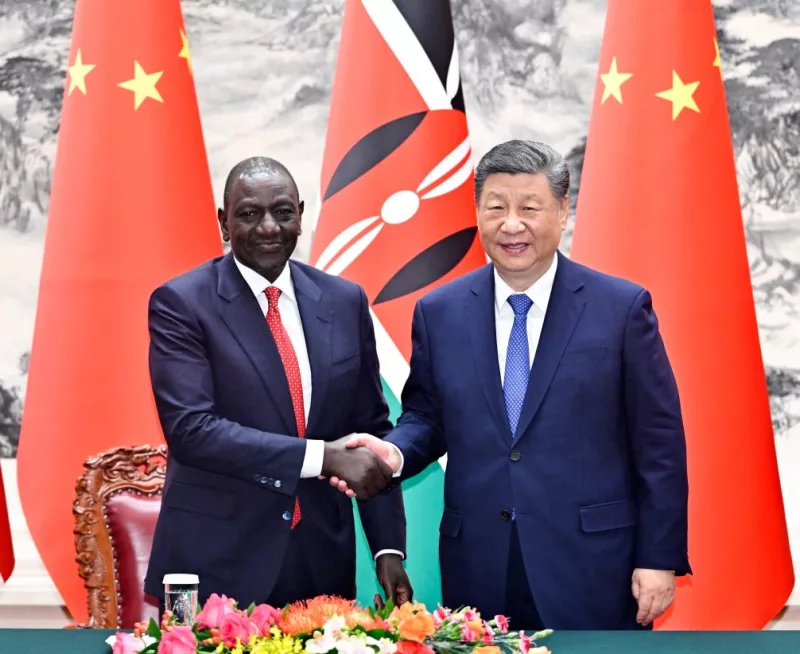
The consequences of this approach are not confined to Asia or Europe; they reverberate deeply in Africa. East Africa in particular has long been a theatre where global powers compete for influence. Kenya, Uganda and Tanzania, once seen as natural partners for Washington in trade and security, increasingly look to Beijing for stability.
China’s Belt and Road Initiative has poured billions into infrastructure projects across the region – from railways in Kenya to ports in Tanzania – while American engagement appears inconsistent and reactive. Where Washington has offered lectures about governance and conditional aid, Beijing has offered visible results, from highways to energy grids. The message resonates: while the US retreats into tariff wars and inward-looking policies, China is writing itself into the story of Africa’s development.
The credibility gap widens further when one considers Trump’s disdain for multilateral institutions. His withdrawal from global agreements on climate and health may have played well to domestic audiences but was disastrous for countries in the Global South. East Africa faces the brunt of climate change, from prolonged droughts in Kenya and Ethiopia to destructive floods in Uganda. When Washington disengages from collective climate action, it signals to African nations that their struggles are secondary to America’s internal politics. Meanwhile, China positions itself as a committed partner in climate financing, offering both rhetoric and resources. In this contrast, African states read a clear story: the US cannot be counted on to uphold shared responsibilities.
Trust in America’s leadership has also diminished among African publics. For decades, Washington wielded soft power in the region through education, cultural exchange and development programmes. Yet under Trump, cuts to USAID budgets and an emphasis on transactional relationships have chipped away at that goodwill. Kenyan policymakers, for instance, recall the Trump administration’s push for skewed trade deals that appeared less like partnerships and more like impositions. At the same time, Chinese universities offer scholarships, and Chinese companies create jobs in Nairobi and Addis Ababa, building a narrative of partnership that Washington once enjoyed but now risks losing.
The Xi-Modi-Putin handshake is thus emblematic of a broader reality: the world is diversifying its options. East Africa no longer looks exclusively to Washington for leadership; it weighs offers from Beijing, Moscow, New Delhi and even regional blocs. This multipolar moment could have been an opportunity for the US to reinforce its relevance through consistency and respect for partners. Instead, Trump’s policies have amplified doubts about America’s staying power. Nations in East Africa are pragmatic; they follow where reliability leads. Today, reliability points eastward.
Restoring credibility is possible, but it will not come easily. Trust once lost is slow to return. For Washington, this means more than reversing tariffs or rejoining agreements; it requires a renewed commitment to partnership that values African agency. Kenya and its neighbours do not want lectures – they want predictable collaboration, investment and genuine respect for sovereignty. America must rediscover that credibility is built not only by projecting power but by practising humility, listening to partners and showing up when it matters most.
Trump’s approach has left scars that extend well beyond Washington’s traditional spheres of influence. By turning trade into a weapon, retreating from collective action and treating allies as adversaries, he has accelerated the erosion of US credibility on the world stage. The effects are visible from Brussels to Beijing, but perhaps most poignantly in Nairobi, Kampala and Dar es Salaam, where the future is being shaped by choices made far from American shores. As the US struggles with its own inward battles, East Africa and much of the Global South are finding new partners, new leaders and new anchors of trust.
In the end, credibility is not inherited; it is earned daily. Trump’s policies have squandered much of the goodwill that America accumulated over decades. The Xi-Modi-Putin moment may prove temporary, but the signal it sent – that others are willing to lead where America falters – is lasting. For East Africa, the lesson is clear: the US can no longer be counted on with certainty. For America, the challenge is equally stark: to restore credibility, it must return to the practice of consistency and cooperation that once made it the trusted leader of the international order.