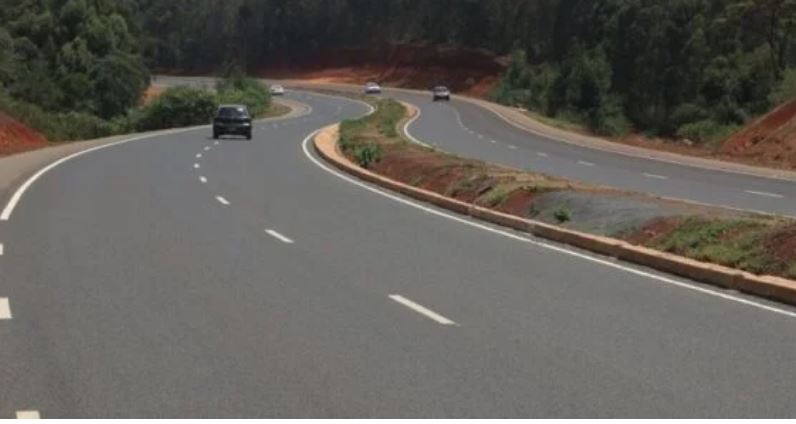
Since Independence, the Western part of the country—home to more than half the population—has been served by a narrow outlet, a slim road that meanders through hills, valleys, plains, and ridges, yet it is blighted by its obvious demerits.
This side of the country, the section from the Kiambu and Nakuru boundary going westward, covers at least 24 counties, which is roughly half of the country.
Residents of these counties rely on this critical artery for access to and from the capital Nairobi, the nation’s social and economic epicentre.
They include Nakuru, Laikipia, Nyandarua, Kericho, Bomet, Kisii, Nyamira, Uasin Gishu, Turkana, Baringo, Samburu, West Pokot, Elgeyo Marakwet, Trans Nzoia, Nandi, Kisumu, Siaya, Bungoma, Kakamega, Vihiga, Busia, Kisumu, Homa Bay and Migori counties
Each county contributes immensely to the nation’s economic well-being and often looks to Nairobi for a ready market for its goods, financial investment, policy direction, lawmaking, judicial interventions, and other services directly impacting their growth and survival.
This means that daily movement along this route is quite high as the residents travel to and from the capital for business and other commitments.
For instance, Uasin Gishu and Trans Nzoia are the nation’s breadbaskets, the main source of maize, the staple food.
Millions of bags of seeds, fertiliser, pesticides, machinery and other inputs are ferried on this road yearly. In return, millions of bags of maize are transported to millers in the city and other regions for processing.
The oil deposits in Turkana and other prospective areas in North Rift mean intensified movement in this corridor, as demonstrated during the pilot programme for ferrying oil to Mombasa not long ago.
For fresh omena and tilapia from Lake Victoria to reach tables in Nairobi and elsewhere, reliable transportation is a must yet hasn’t been prioritised, causing frequent traffic snarl-ups on this road.
In the East African economic matrix, this road extending to the Busia and Malaba borders is indispensable to realising the East African Community’s ambitions, as it is a crucial link between the inland and Mombasa port. It is a key route for landlocked countries such as Uganda, Rwanda, Burundi and South Sudan that rely on it for access to the port.
This road’s significance cannot not be overemphasized. The Kenya National Highways Authority estimates that 20,000 vehicles pass through Nairobi-Nakuru stretch alone every day.
Huge traffic volume means more road carnage, due to its narrow width and poor design in some sections. Today, the road is one of the country’s deadliest, with many accidents occurring on almost every stretch.
In 2020, it was rated among the world’s deadliest by Driving Experiences, an England based outfit tracking usage of key roads globally. Since 2020, traffic volume and accidents have only increased.
Kenya’s economic growth in the west is also significant. Since 2000, three key towns have grown immensely and acquired city status—Kisumu in 2001, Nakuru in 2021 and Eldoret in 2024.
This year, still in its original condition—barring some little adjustments and improvements here and there occasioned by deadly crashes—the road is relied on to connect the capital to the other three cities. Blockages are innumerable, frustrating even the most resolute traveller.
As the cities grow and others emerge, the importance of this road increases.
The expansion should not end at Mau Summit, as that limited outcome would be a disservice to millions of Kenya beyond this point. To be fully exploited and appreciated, it should be extended to Malaba and Busia border towns.
There is still the controversial issue of whether to make it a toll road, especially when other roads, such as the Nairobi-Thika-Nyeri highway serving far fewer counties, haven't been tolled.
Given the prevailing tough economic circumstances, the push for a public-private partnership and charging a toll to recoup investment may be understandable.
But beyond the debate on the financing model and other emerging issues, dualling the highway is essential for the nation’s progress. The works have been critically delayed by years, if not decades. It cannot be delayed any longer.