The government has outlined how cash-strapped public universities will plug the financial gap created by the recent drastic reduction in fees.
The institutions are implementing cuts of up to 75 per cent, a directive announced in July and effective September 1, coinciding with the start of the new academic year.
While the move has eased pressure on families, it has deepened concerns about the financial sustainability of universities already grappling with debt, bloated wage bills and erratic state disbursements.
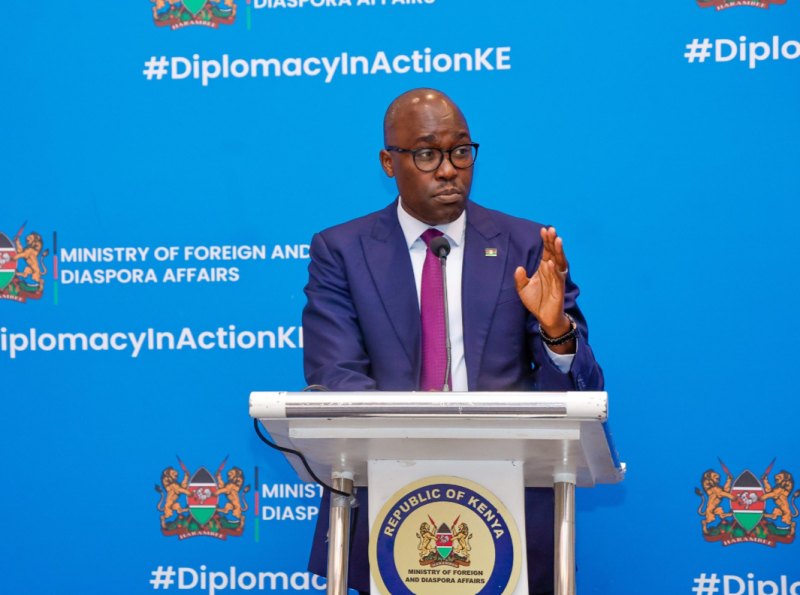
In a detailed disclosure, Higher Education PS Beatrice Inyangala said universities are adopting a multipronged survival strategy to remain afloat.
They include boosting admissions, tapping into enhanced government funding through capitation, loans and scholarships and fully utilising existing facilities.
“Basically, it is all in the numbers and economies of scale,” she told the Star.
“Take a university graduating 1,000 students but admitting 3,000 new ones—the revenue gap is automatically bridged.”
She revealed that for the 2025/26 academic year, public universities had the capacity to admit 316,309 students, yet only 183,789 were placed—leaving almost half the slots idle.
The PS said government support for universities has also risen sharply following the fee reduction.
Funding through capitation, loans and scholarships grew from Sh45 billion in 2022-23 to Sh85 billion in 2025-26.
According to Inyangala, this has helped stabilise many institutions. Between 2022 and 2025, the number of technically insolvent universities fell from 23 to 13.
“Universities are gradually becoming more sustainable,” she said.
President William Ruto's administration has moved to take the heavy burden from parents that had made university education unaffordable for many.
A review of fee structures confirms substantial reductions.
Universities implementing the new rates for students admitted through the Kenya Universities and Colleges Central Placement Service include the University of Nairobi, Moi University and Egerton University.
Others are Maseno University, Kenyatta University, Jomo Kenyatta University of Agriculture and Technology, University of Eldoret and Masinde Muliro University of Science and Technology.
At Moi University, for example, the School of Education reduced fees for fourth-year government-sponsored students by 76 per cent—from Sh33,750 to Sh8,000 per semester.
“This fee is subject to revision at the sole discretion of the university,” a notice stated.
At Maseno University, first-year students pursuing a Bachelor of Arts in Criminology with IT now pay Sh14,000 per semester, down from over Sh30,000.
At the University of Nairobi, first-year students pursuing data science and journalism pay Sh17,538 per semester, a sharp drop from the previous Sh46,520.
Ironically, these reductions come at a time when many public universities are desperate for a bailout.
Bloated wage bills, mounting debts, declining enrolment due to competition from private universities and erratic cash disbursements have plunged the sector into chronic instability.
Over-reliance on government capitation has further worsened the situation.
University don Prof Macharia Munene said the government should immediately bridge the financial gap triggered by the drastic fee reduction to get the universities back on their footing.
According to Macharia, most public universities are on their financial knees because of poor education policies that saw the state reduce funding, as well as bad management of the institutions.
“Reduction of fees is good. It is welcome. But there must be an immediate proportional funding by the government. If that does not happen, we are staring at a dim future for universities,” he said.
Instant Analysis
The convergence of massive debts, bloated wage bills, declining enrolment and fee cuts has sparked fears of mass staff layoffs and campus closures across the country. Unless urgent reforms and sustainable revenue streams are introduced, experts warn, Kenya’s public universities risk sinking deeper into crisis—threatening not only their survival but also the future of higher education.