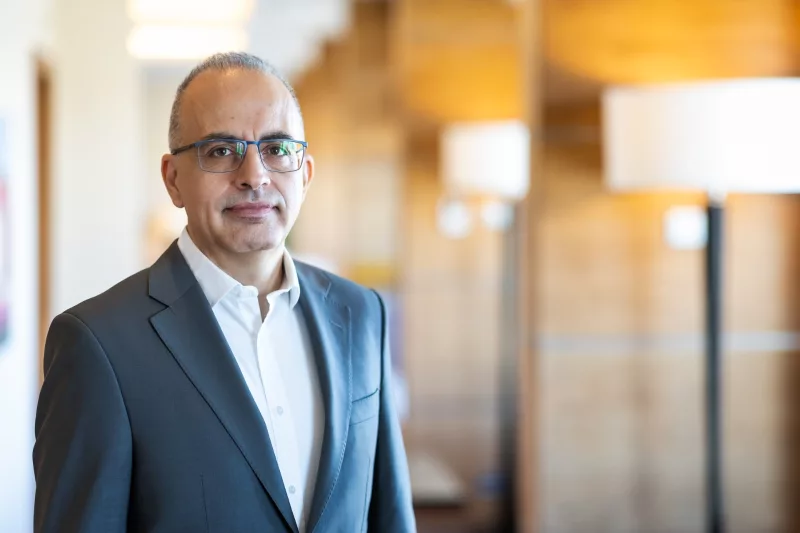
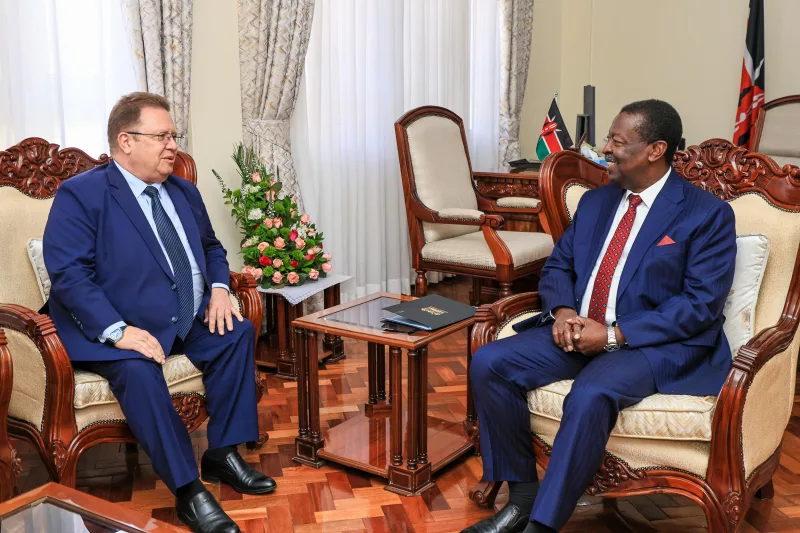
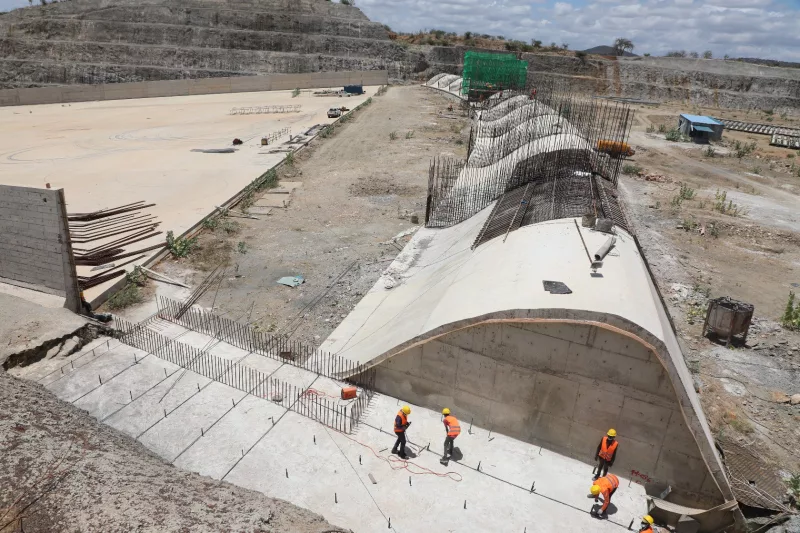
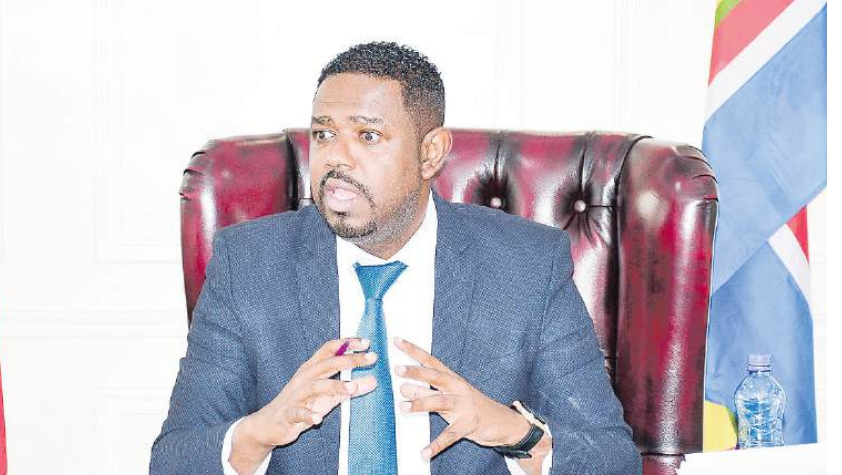
 State Department for Investment Promotion Principal Secretary Abubakar Hassan /HANDOUT
A recent report highlighted that Kenya's Special Economic Zones (SEZs) have significantly boosted the economy, generating over 7,000 direct jobs and contributing approximately Sh91 billion to the GDP by late 2024.
The positive impact is attributed to government
incentives and initiatives designed to create a favourable investment
environment, aligning with the goals of job creation, youth empowerment, and
sustainable development.
However, the World Bank has raised concerns
that generous tax incentives might encourage businesses to seek tax advantages
rather than focusing on export-led growth, potentially distorting market
dynamics.
The Principal Secretary of the State Department for Investment Promotions, Abubakar Hassan, highlights to the Star various initiatives undertaken by the government, their impact, and plans.
How are special economic zones shaping Kenya's global investment
agenda?
Global investors seek incentives. To benefit, investors must set up locally under an incentive regime that makes production globally competitive. That’s why Kenya has introduced Special Economic Zones (SEZs) so that investors can produce competitively and access markets opened by the President in the EAC, US, UK, EU, the UAE, and China.
Among all the incentives, which ones have proven most effective?
Investors value all
incentives but seek stability for 10–20 years. The Tax Laws Amendment Act
clarified this. Key incentives include: 100 per cent foreign ownership, 100 per
cent investment deduction, free capital repatriation, corporate tax at 10 per
cent for 10 years, duty/VAT exemptions on imports and zero export taxes.
Collectively, these make SEZs attractive.
How do you respond to claims that businesses are closing in Kenya
due to taxation or poor incentives?
Business has a natural
cycle. Some close due to mismanagement, competition, or technology shifts.
Under President Ruto, 350,000 businesses have been registered in the last 2.5
years, including 500 foreign firms. Only 160 companies face distress, far fewer
than new entrants. Closures aren’t solely due to government policy.
Investment is central in bilateral engagements. How do these fit
into the Bottom-Up Economic Transformation Agenda (BeTA)?
Kenya’s economy is
diversified. Macroeconomic indicators are stable with low inflation, strong
forex reserves and declining interest rates.
Under BeTA, we focus on job
creation through labor-intensive sectors like textiles, manufacturing and
Business Process Outsourcing (BPOs). We also target 10 priority value chains
with enabling infrastructure to attract investors.
Do these bilateral agreements create direct jobs, as pledged by
the President?
Chinese investors convinced
to set up in Machakos created 3,200 jobs and expanded to Athi River and
Murang’a, targeting 7,000 more. In Kilifi, FUA employs 3,000 youth, now
expanding to 10,000. Zendic in Tatu City employs 2,000 and plans 10,000 more.
Similar expansions are seen in BPOs like CCI and Teleperformance.
What reforms has your State Department achieved so far?
Removing 30 per cent local
ownership limits in tech (making Kenya Africa’s top startup hub), introducing
levies to protect local firms from cheap imports and lifting the moratorium on
power purchase agreements to allow captive power for industries. These reforms
have reinforced investor confidence.
How are you leveraging regional integration to create investment
corridors?
Kenya is the region’s
largest economy. EAC has 300 million-plus people accessible via our market.
Bilaterally, we address non-tariff barriers to ensure free movement of goods,
people and capital in East Africa, hence, strengthening regional trade
integration.
Tanzania recently passed restrictive investment laws. How does
Kenya respond?
While those laws affect
Kenyan businesses, we’ve chosen diplomacy over retaliation. We hope the
prohibitions are lifted soon.
What role does green investment play in Kenya’s investment
strategy?
Green investment is a
growth driver. Nairobi is the global hub for climate talks. The President launched
initiatives like the African Renewable Partnership and Green Industrialization
Agenda. A Green Investment Fund seeded at $40 million is targeting $200 million.
Focus areas include renewable energy, e-mobility and waste-to-energy.
How does the State Department engage the private sector and act on
feedback?
We engage continuously.
Issues are addressed through policy, legal, or administrative reforms. For
instance, amendments in the Finance Act 2023 and Tax Laws Act 2024 reflect
stakeholder input. Beyond associations, we now run Boresha Biashara Mashinani.
We started in Nakuru last month, and heard directly from local businesses.
SEZs and EPZs are often overlooked in national discussions. What
is their potential?
Huge. In two-and-a-half
years, SEZs and EPZs created 30,000 direct jobs through 90 operational
businesses. They form part of the President’s three job-creation pillars: Jobs
Kwa Ground, Jobs Maju and Jobs Kwa Mitandao.
What’s your scorecard after two and a half years?
With four tools: business
environment, incentive programs at SEZs/EPZs, promotion under KenInvest and
de-risking by Kenya Development Corporation (KDC), we are flying! We have
introduced 30-plus fiscal incentives, facilitated 300-plus investments, licensed
70 SEZ entities and 75 EPZ firms, creating 30,000 sustainable jobs in total.
KDC has de-risked Ksh6
billion in financing, including the Ksh1 billion for a cotton ginnery in Lamu.
Your final word, Sir?
Investors are bullish on Kenya. The President has profiled us globally as a favourable investor destination. Let’s have faith, support this agenda. Let’s stay the course and welcome investors to create jobs for Kenyans.