 Most Kenyan schools still burn wood because it is cheap, familiar, and often provided by parents as part of school fees.
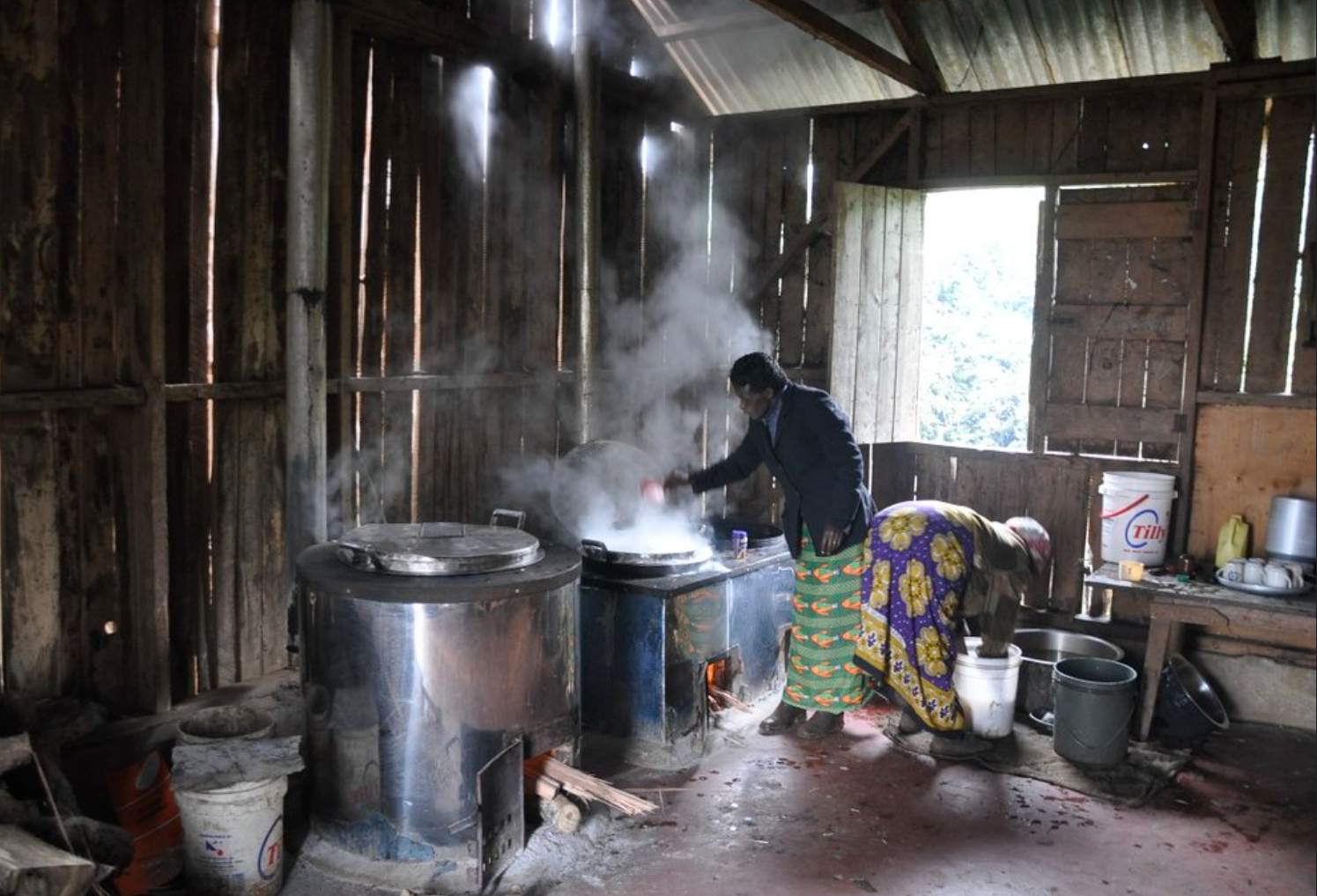
Smoke rises from the kitchen at 4am each morning, hours
before the breakfast bell rings. The long-serving cook, Kimani (who insists we use
only his surname), crouches over the fire, then stirs vats of porridge and
githeri that will keep hundreds of pupils fed through the day.
He is already used to the sting in his eyes and the itching of his throat. By midday, Kimani and his three colleagues are coughing, some nursing pounding headaches, others wiping away tears from smoke that refuses to clear. He has worked as a cook in this school near Kikuyu town for 15 years now.
These [mostly] men and women, who rarely appear in photographs when schools post impressive results, are paying a hidden price to keep students in school.
Researchers from the Kenya Medical Research Institute (Kemri) say most school cooks in Kenya breathe dangerously polluted air, experience constant respiratory symptoms, and have a lifetime of exposure to conditions that could shorten their lives.
Together with other researchers from Rwanda, they assessed schools in Kenya and Rwanda. They found that Kenyan school cooks are exposed to levels of fine smoke particles nearly 20 times above the World Health Organization’s daily safe limit.
All of the 11 schools visited, except one (charcoal), used firewood to prepare food. School menus in Kenya primarily consisted of staple foods, including githeri, ugali, beans, and vegetables. Such staple foods typically take longer to cook and require more wood consumption. This exposes cooks to more smoke, the researchers explained.
The cooks wore small monitors on their chests to measure pollution levels during an average eight-hour school day.
The researchers said: “In school kitchens, mean PM2.5 concentrations exceeded the 24-h WHO-IT1 target by 11.9 and 19.6 times in Rwanda and Kenya, respectively and also exceeded the annual WHO-IT1 (Interim Target 1 for air quality). Similarly, mean carbon dioxide exposures in kitchens were above the 24-h WHO-IT1 target, exceeding it by 1.3 and 8.3 times in Rwanda and Kenya, respectively.”
PM2.5 are tiny dust-like particles that are small enough to get deep into the lungs and cause serious health problems.
The study was led by Willah Nabukwangwa, a biostatistician at Kemri, and R'ev'erien Rutayisire from the Rwanda Biomedical Center. It is published in the current issue of the Environmental Research journal.
The data shared by Nabukwangwa and her colleagues indicates that 75 per cent of Kenyan cooks reported headaches in the past month. Nearly eight in ten said their eyes burned or watered, and more than seven in ten coughed constantly or battled sore throats. Two-thirds admitted to being burned or scalded at work, most often while wrestling with firewood-fed stoves.
Many described their workplaces as unbearably smoky and suffocatingly hot. Some said they escaped outdoors just to breathe and reported that headaches and coughing followed them home. For them, the school kitchen is not a symbol of nourishment but a place of daily sacrifice.
Students are also affected by the smoke. Smoke monitors installed inside classrooms closest to kitchens showed air pollution levels consistently above safe thresholds.
Among the 302 Kenyan students surveyed, nearly two-thirds reported headaches, more than half had coughed in the past month, and four in ten said their eyes were irritated.
The authors warned: “The elevated PM2.5 concentrations in school kitchens, combined with the relatively low ambient PM2.5 levels in playgrounds, indicate that cooking activities are the primary source of air pollution in the school environment rather than traffic or other nearby regional sources.”
Household air pollution already kills 24,000 Kenyans every year, according to the 2024 World Health Organisation (WHO) report on combating household air pollution (HAP). Children are especially vulnerable, with smoke exposure linked to stunted lung growth and missed school days.
In December 2024, President William Ruto announced that all schools should switch to liquefied petroleum gas by the end of 2025, but this has not happened yet.
“We are launching a government project that will ensure 11,000 schools in the country are connected to gas to end the use of firewood and charcoal,” Ruto said.
The President said the programme would help in conserving trees, ensuring clean energy and improving health outcomes.
“Now we can monitor transitioning all schools from using biomass, charcoal and firewood to using clean gas,” he said.
Most Kenyan schools still burn wood because it is cheap, familiar, and often provided by parents as part of school fees.
Nabukwangwa and her colleagues said schools should actually move to LPG quickly.
“As schools are the second-largest consumers of biomass energy after households, supporting their transitioning to clean cooking fuels, such as LPG or electric cooking, could lead to significant health improvements for both staff and learners, enhancing their overall health and well-being, and have climate co-benefits due to reduced consumption of unsustainable biomass,” they said.
Their study is titled, “Air pollution and health in Rwandan and Kenyan schools cooking with polluting fuels: a cross-sectional impact study.”




![Africa CDC Director General Dr Jean Kaseya at a past event. [Photo: Arthur Mbuguah, WHM]](https://cdn.radioafrica.digital/image/2026/10/8ced213c-affb-4dff-97ca-1b6bac1f958e.webp)