Kenya’s reputation as a financial and trading hub is increasingly being cast in the shadow of illicit flows, with a new report pointing to Nairobi as a major laundering paradise.
The new report by the UN Panel of Experts details how South Sudan’s wealth is laundered in Kenya. The damning findings come just months after Kenya was put on a high watch list for not having strong safeguards against the flow of dirty cash, joining a list of shame, in what is officially known as the Grey List.
Kenya was grey-listed as a wash wash paradise by the Financial Action Task Force for weaknesses in combating money laundering and terrorism financing.
According to the UN report, South Sudan’s natural wealth— gold, oil, timber and charcoal—is being siphoned through Kenya, enriching elites and criminal networks while starving the war-torn country of badly needed revenue.
The panel describes Kenya as a key laundering hub where South Sudan’s riches are monetised, concealed and rerouted into global markets.
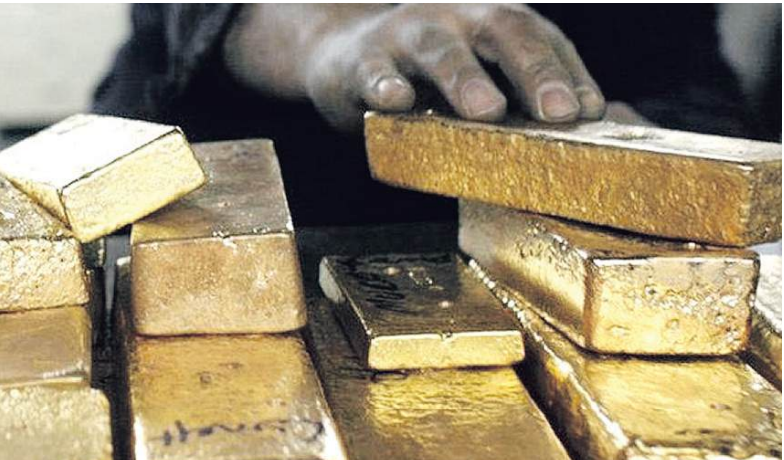
“Vast amounts of South Sudan’s gold are smuggled across the border to Kenya and Uganda, where they are sold for dollars and recycled into trade flows back into South Sudan,” the experts said.
Kenyan top leaders have recently been on the spotlight for alleged gold deals with the sanctioned Rapid Support Forces of Sudan over alleged illicit gold trade.
The new report has not named those involved. However, the South Sudan elite have connections with Kenya’s political leaders at the highest level.
In 2021, the family of a South Sudanese general sanctioned by the US for the endless war against civilians bought a high-end property in Nairobi for Sh193.5 million in cash.
In the new report, the panel noted that, like timber, the exploitation of South Sudan’s gold is virtually unregulated, with the “vast majority of the gold that is mined and traded in this way is then smuggled across the border to Kenya and Uganda.”
Once in Kenya, the gold is sold for dollars, with traders often using the proceeds to purchase goods for resale back in South Sudan. The findings echo a SwissAid report released in May, which accused Kenya of facilitating the smuggling and resale of gold sourced not only from South Sudan but also from Sudan and the Democratic Republic of Congo.
The SwissAid study concluded that Kenya had, over the past decade, grown into a preferred smuggling hub for gold—most of it ending up in the UAE, particularly Dubai.
It estimated illicit outflows through Kenya at more than two tonnes annually, noting that the gold enters but leaves the country without being formally declared for export.
The UN report also highlighted glaring inconsistencies in official data. While South Sudan does not publish trade statistics, the UAE reported gold imports worth $20 million in 2022 and $27 million in 2023.
“It is likely that significant quantities of South Sudanese gold are reclassified as being from Uganda or Kenya. In its most recent Extractive Industries Transparency Initiative report covering 2022, Uganda acknowledged that the country’s gold exports were significantly higher than could be accounted for by imports and domestic production alone, although much of this discrepancy is likely also accounted for by gold produced in other regional states,” the report said.
Oil revenues are another channel of illicit transfer. The panel found that senior officials in Juba’s Office of the President and Ministry of Finance and Planning often dictate which companies secure crude oil cargoes, with proceeds flowing to Nairobi, Kampala and Dubai.
“The oil revenues generated from these sales are deposited in the government’s account with the Federal Reserve Bank in New York, from which funds are transferred to various correspondent banks in Kenya, Uganda and the United Arab Emirates. Larger payments are made directly from these accounts, while some cash is also shipped by air to Juba. In some cases, officials seek to circumvent these mechanisms by instructing buyers of oil to make payments directly to third parties,” the report added.
The report further flagged the smuggling of charcoal into Kenya as another illicit trade, with senior members of South Sudan’s security forces directly involved.
“Charcoal is also exported to Kenya and Uganda, where prices can be higher. Documents dated January 2025 viewed by the panel contain details of charcoal being exported to Uganda by trucks via the Kaya border crossing, with each truck loaded with 300 bags,” it said.
The panel noted that soldiers of the South Sudan People’s Defence Forces were among the primary players in the charcoal trade.
“Soldiers engage in charcoal production but also in transporting charcoal, often using military vehicles, to Juba, where it fetches a higher price. The panel has observed several military and police vehicles transporting charcoal, and a number of South Sudanese described soldiers producing and overseeing the sale of charcoal along the roads outside of the city.”
Illegal logging was also cited as continuing to thrive, with local and international companies allegedly working hand-in-hand with opposition armed groups, local security actors, politicians and community leaders to export high-value timber.
The latest findings reinforce Kenya’s growing reputation as a haven for illicit trade and dirty money, a concern that has only intensified since the country was grey-listed earlier this year by the Financial Action Task Force for weaknesses in combating money laundering and terrorism financing.