
President William Ruto’s pet reforms are facing fresh opposition as governors stamp their authority on changes affecting the counties.
The recent hurdle is a tag of war between the national government and the Council of Governors over the absorption of the Universal Health Coverage staff and e-Procurement.
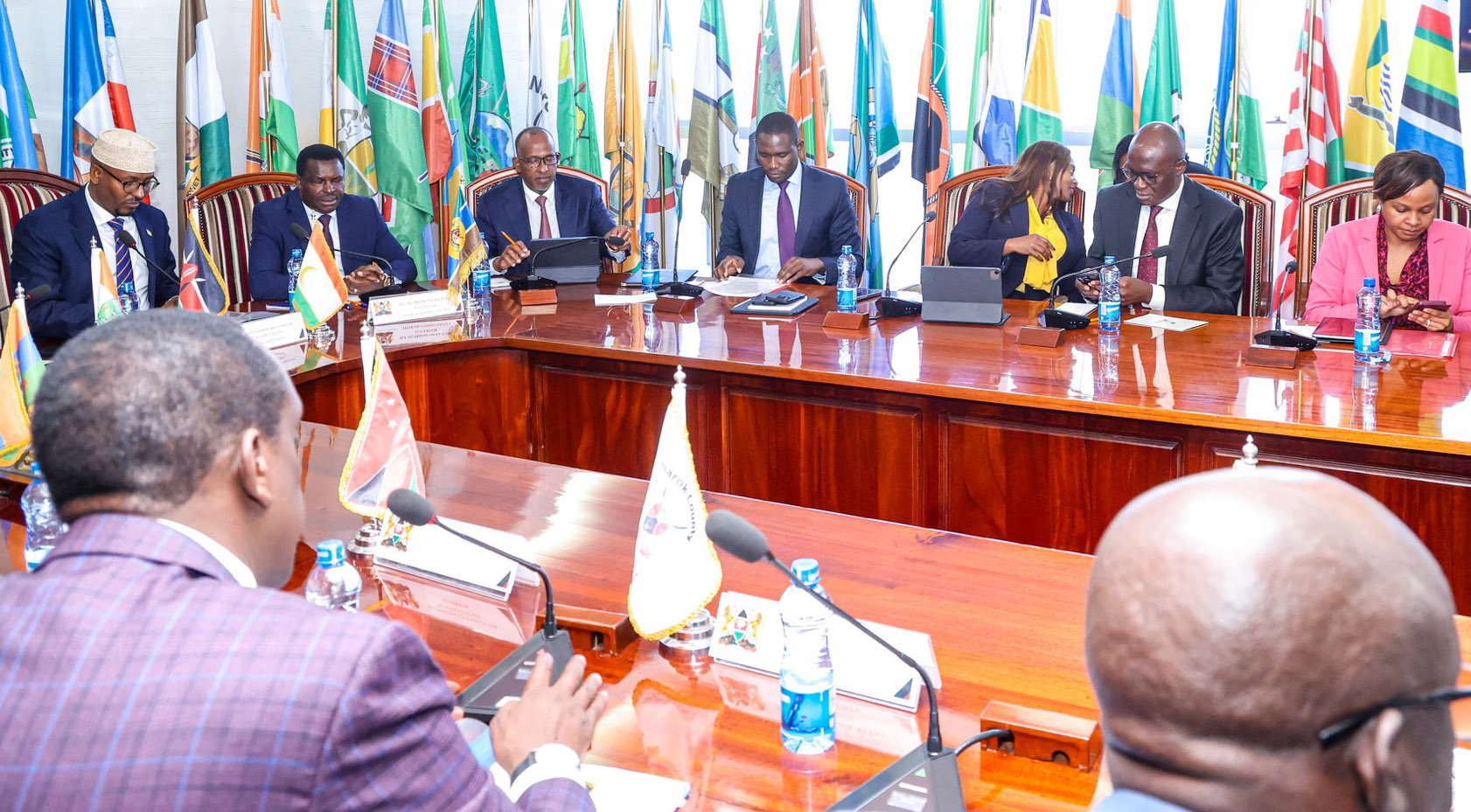
Even after a follow up meeting between the CoG and Health CS Aden Duale over the standoff on UHC on Tuesday, governors were adamant that any absorption of personnel into permanent and pensionable terms must be backed by sustainable financing.
They consequently rejected the Ministry of Health’s plan to provide one-year funding for UHC staff.
The CoG warned the Health ministry’s directive for the counties to absorb 7,414 UHC workers undermines devolution and ignores constitutional consultation requirements.
The county governors effectively stood by their statement on Monday, in which CoG chairman Ahmed Abdullahi (Wajir) termed the national government’s push for the absorption of UHC staff as a deliberate attempt to set up the county governments.
“The ministry continues to paint a public picture that county governments are derailing the process of absorbing the UHC staff. County governments cannot be back-peddling with the ministry over a devolved function,” Abdullahi said.
Among the issues the CoG contested at the Extraordinary Council Meeting is the “altering of UHC staff contracts” without the involvement of the counties and failure to allocate resources to cater for the employees.
“The council will only accede to the variation of the same upon the increase of the equitable share of revenue to factor the same. The transfer of UHC staff to county governments must be preceded by the allocation of adequate resources amounting to Sh7.7 billion from the Ministry of Health, in line with Salaries Remuneration Commission-approved salary scales,” Abdullahi added.
The verification of UHC staff, the governors said, must first be validated jointly and report officially shared before any transfer process begins.
They also maintained that gratuity payments amounting to Sh9.4 billion for staff under contractual terms must be settled by the Ministry of Health prior to transition.
Only then, they maintained, would they be amenable to employing the verified UHC staff.
In reaction to the Monday meeting, Duale on Tuesday held a meeting with the Council of Governors. Among the issues discussed was the implementation of UHC and transition of the staff permanent and pensionable terms.
In a reaction to Ruto’s direction that migration to e-Government Procurement System was mandatory, the county chiefs maintained that the roll-out was hasty, marred with inconsistencies and has disrupted service delivery at the counties.
“The e-GP system, as currently implemented, undermines the distinct status of county governments as provided in the constitution.
We therefore call on the National Treasury to immediately withdraw the circular directing the counties to implement the e-GP until proper consultations, legal alignment and capacity-building are undertaken,” they said.
The CoG said there should be continuous consultation and cooperation between the two levels of government before any circulars or directives that have a direct impact on service delivery can be issued.
They noted only three counties participated in the pilot, yet the system was enforced nationally before addressing the gaps identified.
“Lack of adequate sensitisation and training has paralysed procurement processes, particularly in critical sectors such as health.”
Public Investments and Assets Management on Monday confirmed that all ministries, state departments and independent commissions and offices have been registered in the e-GP system.
PS Public Investments & Assets Management at the National TreasuryCyrell Waguda added that as a prerequisite to procurement planning, all state departments, independent commissions and offices budgets have been uploaded in the e-GP system.
In what portends budget wars between the Executive and the counties, Waguda noted that procurement planning and other subsequent procurement cycle steps will only be done after validation of the budget for every budget line in the e-GP system.
UHC staff absorption and the e-procurement are the latest of the President’s programmes that have faced opposition after SHA, affordable housing and the new university funding model.
The national government and the governors also faced off in May and June over the control of the Road Maintenance Levy Fund (RMLF).
While President Ruto argued the national government was better placed to manage the fund, governors disagreed and moved to court. They argued counties are equally entitled to the RMLF as they are directly involved in road construction and the fund originates from a shared fuel levy.