 Kericho Governor Eric Mutai
Unreliable electronic voting, quiet rebellion against President William Ruto, gaps in evidence, and political intrigue saved Kericho Governor Eric Mutai from impeachment for the second time.
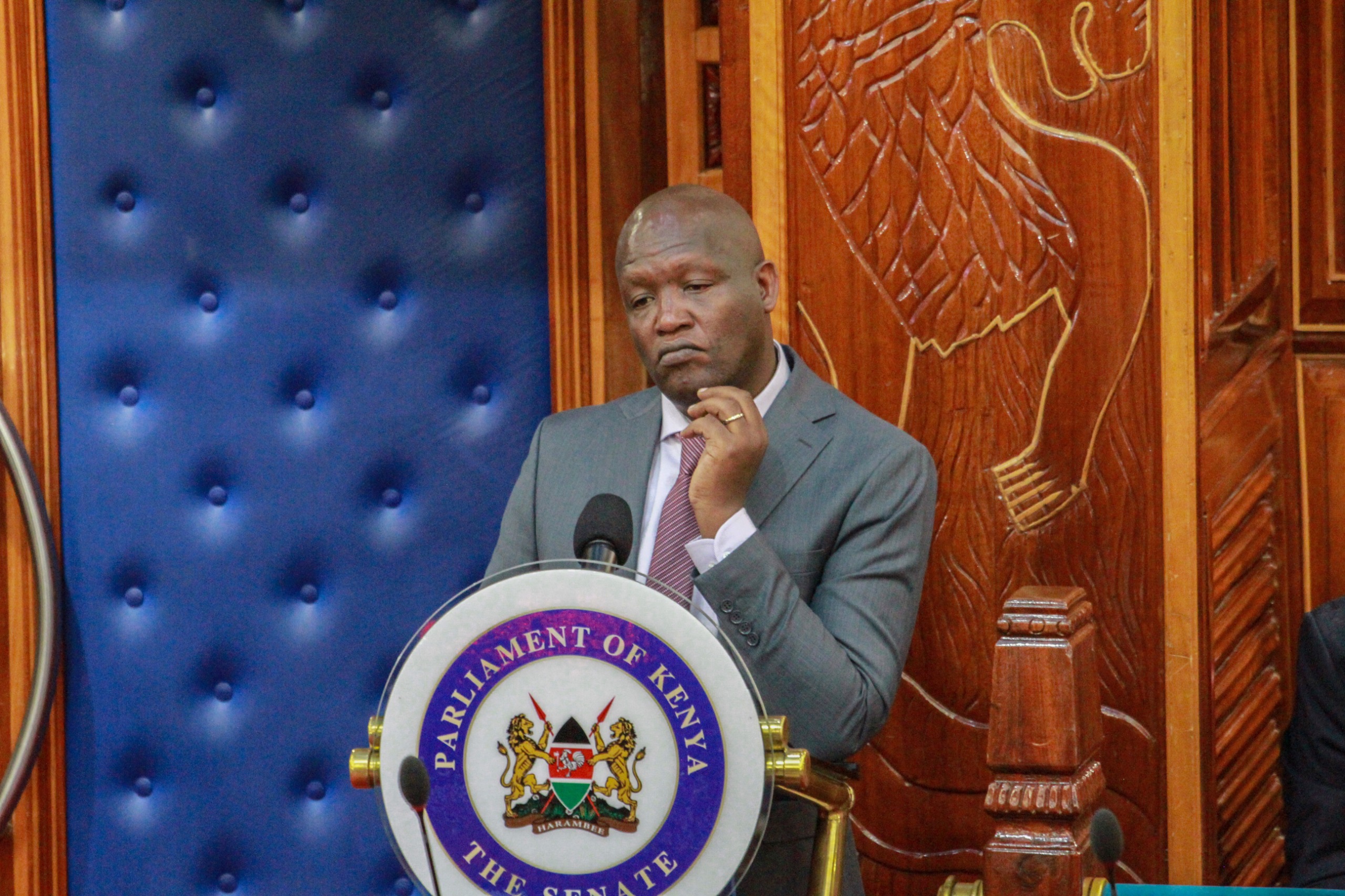
On Friday evening, Mutai emerged victorious after 26 senators voted to terminate his impeachment, 16 voted to remove him, and one abstained.
“The result of the division indicates that the motion has been negated and consequently the impeachment hearing hereby terminates,” Senate Speaker Amason Kingi ruled.
Mutai’s spirited defence, led by senior counsel Katwa Kigen, cast doubt on the integrity of the electronic voting system used by the Kericho county assembly.
The team alleged the system was “porous” and open to manipulation, saying at least 18 MCAs who denied voting were recorded as participants, three others appeared to have voted more than once, and one IP address cast nine votes.
“We cannot sacrifice the governor at the altar of an unverified system,” Kisumu Senator Tom Ojienda said.
Nyamira Senator Okong’o Mogeni said, “It is a universally accepted principle that you’d rather acquit 10 suspects if in doubt than convict one unfairly.”
Mutai also made a passionate conciliatory appeal, admitting to human imperfections but pleading for a second chance.
He was accused of gross violation of the constitution, abuse of office and gross misconduct, all charges that he denies. Specific charges included allegations of misappropriation and misallocation of county finances, claims he sanctioned fictitious payments for works, goods and services.
Mutai was also accused of illegal appointments, unlawful dismissals, irregular transfers and usurpation of statutory functions of the County Public Service Board.
Bullying, incitement and vilification of county staff and residents, were also cited, as well as leading a mob to invade a resident’s land.
Behind the scenes, he and his allies lobbied senators intensively to salvage his young political career.
But it was Ruto’s sharp criticism of the Senate earlier this month that angered senators and added political weight to the proceedings.
At a joint UDA-ODM parliamentary group meeting, Ruto accused senators of running an extortion racket during impeachment trials, calling it ‘soko huru’ or free market.
“Where does one even get Sh150 million? Isn’t that money meant for counties?” the President asked, without citing Mutai’s case directly.
The remarks triggered pushback. Kiambu Senator Karungo Thang’wa accused Ruto of “pre-emptive blackmail”, saying the President was trying to corner the Senate.
“If we impeach, he takes credit. If we don’t, he says we were bought. That’s not fighting graft—that’s weaponising the truth for political convenience,” Thang’wa said.
Senators appeared determined to demonstrate independence from Ruto.
Unlike most impeachments that conclude within two days, Mutai’s case ran for three, with extended deliberations and consultations with ICT experts.
Several senators, including Tana River’s Danson Mungatana, argued that the prosecution team, led by lawyer Elisha Ongoya, failed to prove whether Kericho MCAs met the two-thirds threshold required to impeach the governor.
“When dealing with thresholds, the standard must be beyond a reasonable doubt,” Mungatana said, likening the process to a criminal trial.
Narok Senator Ledama Olekina, who supported impeachment, countered that abstentions had to be logged electronically and that the ICT Authority had confirmed the system was sound.
Signs of a deep-rooted political fallout emerged after Aaron Cheruiyot (Kericho) spoke passionately against terminating the case, alleging massive graft in the county government.
“Do you want to go home convinced the assembly has not proved beyond a reasonable doubt that there is systemic corruption in Kericho county?” the senator asked.
He said the people of Kericho would find a way through other constitutional bodies to fight graft and get justice.
A report of the ICT authority on the integrity of the system gave it a clean bill of health, the majority leader said, thus, the need for the House to proceed with the case.
The Senate weighed conflicting reports. An ICT consultant hired by Mutai, Job Okuon, concluded the assembly’s system was vulnerable and could have been tampered with.
The ICT Authority, however, maintained it was secure and had not been interfered with.
The authority also revealed the county voting system was developed in-house, hosted offshore, and managed by Alfred Kimutai Korir, the head of ICT. The system, it added, was rolled out on August 12, in readiness for the impeachment vote.
A system audit was commissioned after Mutai’s defence team cast doubt on its credibility, arguing the use of payroll and ID numbers as passwords compromised its security.
They also said some MCAs lacked internet connectivity on the voting day, yet were still recorded as having participated.
Ultimately, doubts over the voting system, coupled with Mutai’s political charm offensive and the Senate’s desire to push back at State House pressure, tilted the balance in his favour.
INSTANT ANALYSIS
Mutai’s second acquittal reflected rebellious pushback against President Ruto, doubts over the credibility of the county assembly’s voting system, gaps in evidence, and as usual, political intrigue.
At a joint UDA-ODM parliamentary group meeting, Ruto had accused senators of running an extortion racket during impeachment trials, calling it soko huru or free market. They were furious and showed it.