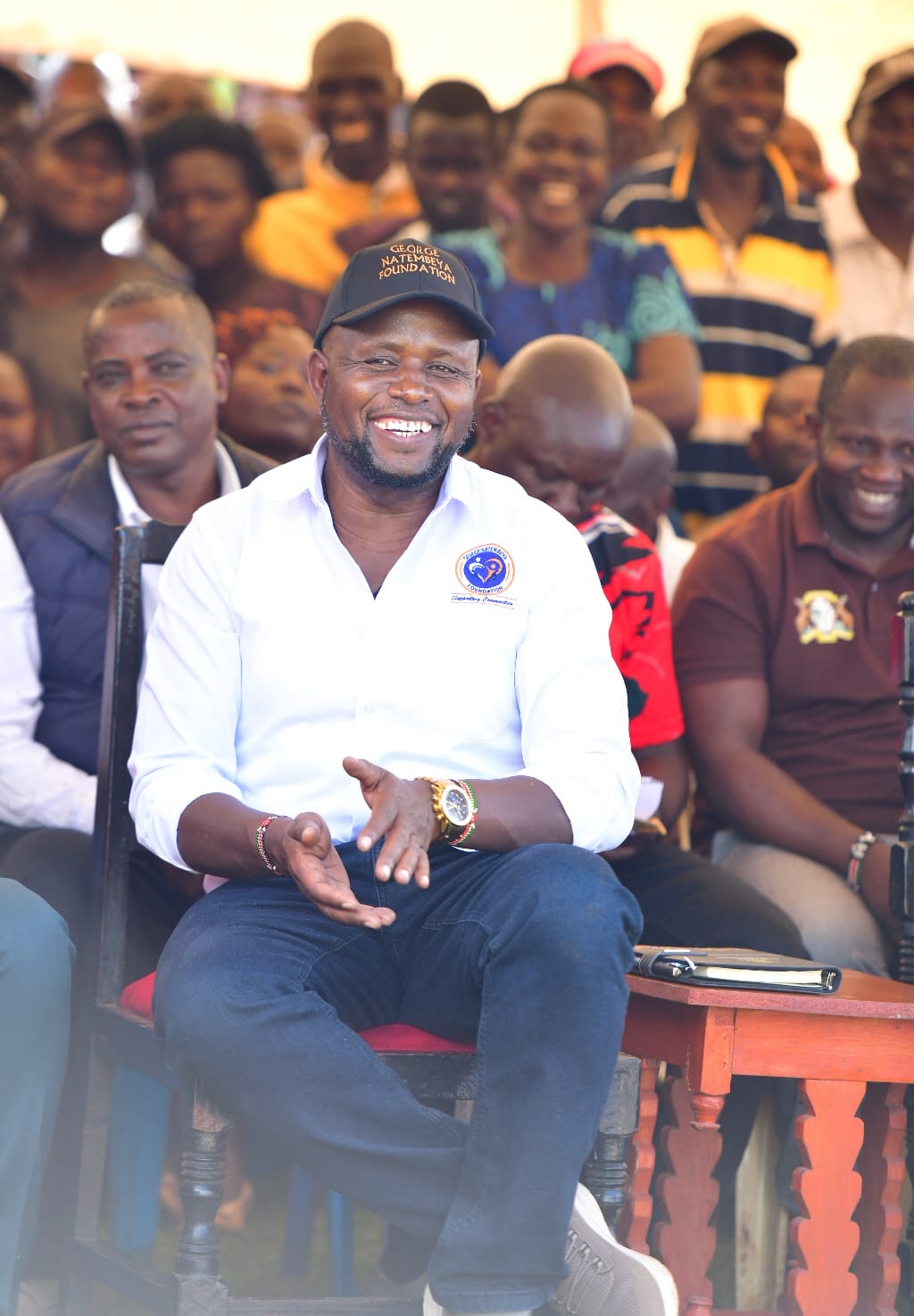
 Trans Nzoia Governor George Natembeya
Western Kenya remains one of the country’s most hotly contested political battlegrounds, with an estimated three million registered voters spread across Bungoma, Kakamega, Vihiga, Busia, and Trans Nzoia counties.
Historically seen as a swing region, Western has rarely spoken with one voice, making it an attractive target for both ruling and opposition coalitions.
As the 2027 General Election draws closer, five major political forces—Ford Kenya, DAP-Kenya, ODM, UDA and Democracy for the Citizens Party (DCP)—are vying for dominance in the region.
The political landscape of Western is currently undergoing a seismic shift, with Trans Nzoia Governor George Natembeya, who is also DAP-Kenya deputy party leader, emerging as a formidable force.
Natembeya has increasingly been linked to national ambitions ahead of the 2027 elections.
Once a relatively quiet regional administrator turned politician, Natembeya is seeking to position himself at the center of an unfolding political duel that could redefine the region’s power matrix ahead of the 2027 general election.
Pundits says should Natembeya sustains momentum, he could become the single most disruptive force in Western politics since the days of the late Michael Kijana Wamalwa.
For decades, Western politics has been dominated by two heavyweights: Prime Cabinet Secretary Musalia Mudavadi and National Assembly Speaker Moses Wetang’ula. The duo, often dubbed the "political custodians of the Luhya vote," have shaped alliances.
With both Mudavadi and Wetang’ula firmly in President William Ruto’s Kenya Kwanza Alliance, Natembeya has sought to carve out a new independent identity, portraying himself as the voice of citizens rather than political elites tied to state power.
However, Natembeya faces challenges within DAP-Kenya.
The party has in recent weeks faced internal disagreements involving its top leadership.
DAP-K has since established a nine-member Internal Dispute Resolution Committee (IDRC) to address emerging conflicts within the party.
The decision was reached during the party’s National Executive Council (NEC) meeting.
Kakamega deputy governor Ayub Savula, who is also DAP-Kenya deputy party leader, told the Star Natembeya is seeking to take over the leadership from Eugene Wamalwa, the party leader.
“Natembeya wants to take over the leadership of the party and is suggesting that Eugene becomes the patron,” he said.
Savula, however, noted that the management committee is scheduled to have another meeting to discuss the issue.
“The two are expected to lay bare all the issues before the IDRC, which will then prepare a report to be presented to NEC, which will rule on the matter,” he said.
Savula said other party members in leadership positions have no dispute.
“I am trying to talk to both parties, but what I know is that at the end of the day, a leader will emerge,” he said.
Addressing the issue earlier, Natembeya dismissed threats of expulsion from DAP-K, describing them as political intimidation and insisting he remains focused on his leadership goals.
Although he has yet to officially declare a run for higher office, questions about his intentions for the presidency in 2027 have persisted.
DAP-K secretary general Eseli Simiyu exuded confidence the friction will be resolved when the IDRC meets.
“We are hoping the matter will be resolved so that we move on to other things,” he added.
Eseli said the party’s focus at the moment is winning the Malava by-election and conducting grassroots elections, which had been halted.
“We also want to start talking to disgruntled politicians in other parties to join us. A lot of them had shown signs of joining us ahead of the 2022 elections, but they were prevented from crossing over,” he said.
The NEC has underscored the importance of maintaining peace and stability as the party prepares for upcoming by-elections.
The NEC has further resolved to uphold peace, strengthen stability and focus full energy on the impending by-elections, fielding strong, credible candidates and rallying the entire party machinery to deliver victories.
Saboti MP Caleb Amisi has been seen to rally behind Natembeya even though he is in ODM.
He has alleged a scheme by the national government to silence emerging leaders from Western.
Amisi believes Natembeya has the potential to be a president or a national leader, but he could miss out on the opportunity due to his Luhya kingpin narrative and Tawe Movement.
Amisi has said Natembeya localised his politics by restricting himself to Trans Nzoia and the larger Western region.
The Saboti MP says Natembeya should simply declare his intention to run for the presidency.
Speaking after the IDRC was formed, Natembeya said they are keen to take over the leadership of the country.
“We want to clean out house as we prepare to take over the leadership of this country, and we have agreed we must have internal democracy. We just do not want to replace President William Ruto and his government; we have a bigger vision of transparent administration,” Natembeya said.
Wamalwa said he would accept the verdict of the IDRC.
“If the committee suggests, as per the petitions filed that either Natembeya or I should leave or take over the leadership of the party, we will accept.”
Central to Natembeya’s political rise is the “Tawe Movement”—also referred to as Tawe Nation. Tawe, a Luhya word meaning “no” or “enough,” symbolises rejection: rejection of corruption, tribalism, incompetence, poverty and political manipulation.
Through Tawe, Natembeya frames his campaign as a grassroots awakening. He argues that problems such as poverty, unemployment, jigger infestations and lack of education should not be normalised as inevitable realities. Instead, he urges communities to see them as injustices that must be challenged.
While originating in Trans Nzoia, the movement aims to grow into a broader political force across the Western region and potentially the entire nation, especially in anticipation of the 2027 general election.
Tawe is positioned in direct challenge to longstanding regional power figures like Wetang’ula (Ford Kenya) and Mudavadi, which has intensified political tensions in Western Kenya.
Meanwhile, Ford Kenya remains a formidable force. Founded in the early 1990s during Kenya’s return to multiparty politics, the party carries historical weight. Its stronghold is particularly evident in Bungoma, parts of Kakamega and Trans Nzoia.
Wetang’ula has skillfully used the party as a bargaining chip in national coalitions, ensuring it remains relevant despite criticism over limited development gains.
Critics, however, argue that Ford Kenya has failed to translate its longevity into tangible improvements for the region. This has opened a window for newer movements like Tawe to present themselves as the “voice of change.”
ODM, led by Raila Odinga, has traditionally enjoyed robust support in Busia and Kakamega, often sweeping parliamentary seats. Raila’s alliances with Luhya leaders and his charisma have cemented ODM’s grassroots presence.
Yet, ODM faces growing fatigue in Western. Many residents lament that despite supporting Raila in multiple election cycles, the community has yet to produce a viable presidential candidate of its own. Younger leaders have also begun drifting away, exploring alternative political vehicles such as DAP-K and DCP.
UDA, President Ruto’s ruling party, is aggressively expanding into Western. Backed by state machinery and resources, UDA has built grassroots networks in Kakamega, Bungoma and Trans Nzoia. The party benefits from its development agenda messaging, resonating with segments eager for change.
However, UDA still faces skepticism. Some in Western perceive it as an “outsider party,” historically rooted in the Rift Valley. This skepticism complicates Ruto’s strategy of using Mudavadi and Wetang’ula as his point men in the region.
The DCP, though not as visible as the other four, has been making quiet inroads, especially among disillusioned local leaders. By positioning itself as a grassroots alternative, DCP seeks to ride the wave of voter dissatisfaction with older parties. Whether it can translate this into electoral muscle remains to be seen.
For Ford Kenya and ODM, the challenge is retaining loyalty in the face of rising disillusionment. For UDA, the test lies in proving that its influence in Western goes beyond government patronage. And for DCP, the question is whether it can seize the moment and become a credible alternative.