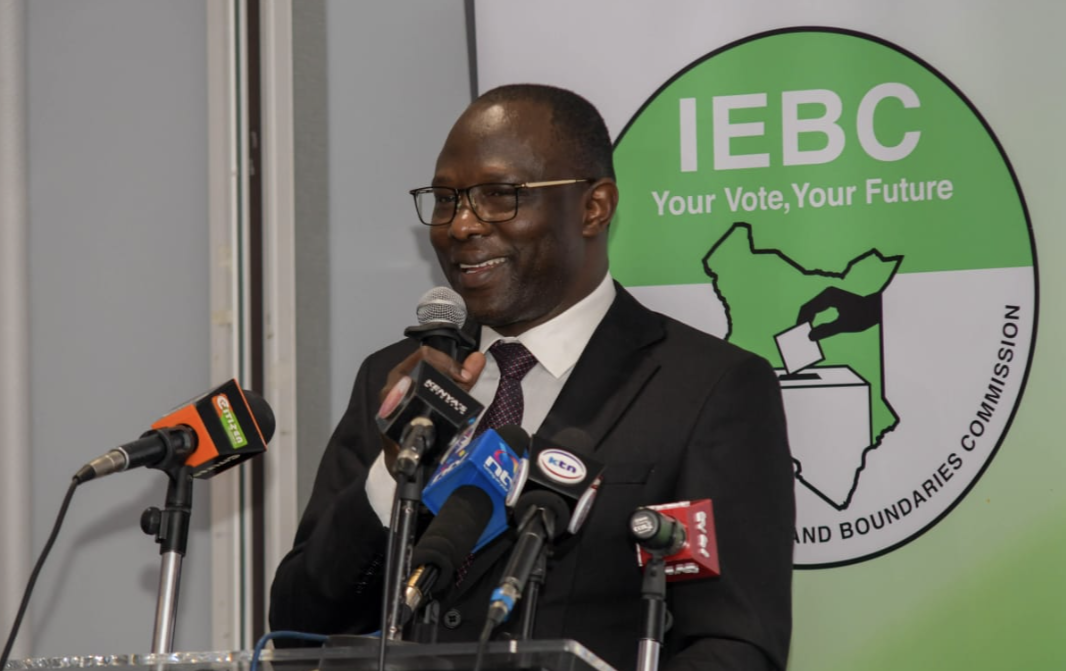
 IEBC chair Erastus Ethekon
On November 27, 23 by-elections will be held, the new IEBC team will be held to account and judged on whether it is overcoming the electoral body’s lack of credibility.
In 1966, Kenya went through the so-called ‘Little General Elections’ that had been occasioned by the defection of some MPs from the Kenya African National Union (Kanu) in favour of the Kenya People’s Union (KPU). Led by Jaramogi Oginga, the KPU ‘defectors’ did not gather a majority of their previous seats back, in favour of Kanu.
Indeed, from the historical records of the 28 available seats in the National Assembly, Kanu won 20, and from the 10 electable seats in the Senate, Kanu won eight. It is documented elsewhere by this author “that those were elections meant to punish those defectors from Kanu to KPU led by Jaramogi Oginga.
The KPU won a majority of the vote, but Kanu won with over 60 per cent of the vote.” Regardless of winning some seats, KPU was banned in 1969, and that was literally the end of multipartyism in Kenya.
Similarly, the upcoming 23 electoral slots available in the upcoming by-elections Senate (one), National Assembly (six) and the County Assemblies (16), seem to be another ‘Little General Elections’. However, this time round, there are no ‘defectors’ to be punished, but there are two arguments I raise in this commentary.
First, there will indeed be some punishment meted out on UDA which forms the bulk of the so-called broad-based government. The other party that could face punishment is the ODM, which effectively has joined this unpopular UDA government and politically now christened the “bread- or blood-based government.”
It is headed by President William Ruto and ODM’s Raila Odinga and based on a 10-point agenda that they have never effected since coming together. As a result, the youth (Gen-Zs, especially) and the larger electorate are angry over what they see as the betrayal of UDA not keeping its campaign promises and ODM not adhering to its 10-point agenda.So, the electorate are simply waiting for the day, date and time (Thursday, November 27) to carry out punishment.
They should know that by then, this ‘fever’ gripping the nation about the Harambee Stars, will be long gone; three months would have lapsed and hence, the ‘political Kenyan’ will have arisen by then.
The other party, unfortunately, will be the Independent Electoral and Boundaries Commission (IEBC). Based on the past electoral management bodies, whose trust deficit was literally zero, Kenyans are using these by-elections as a litmus test for the new commissioners, since the secretariat has been there since the previous elections in August 2022. There are many ways in which the electoral commission could build their image, trust and credibility to pass the litmus test.
This author and others have discussed and floated several strategies that the IEBC could adopt, showing they are a totally different outfit, beyond press conferences and releases.
These matter for public assurance, but not enough since trust deficit is about the technicalities of the management of the elections. Let us illustrate these strategies that we have already shared below.
First, what is great about the current commissioners is that they have already agreed on basics such as that they have a huge task ahead to restore credibility of the IEBC. By agreeing on the vice chairperson, some faith has been won.
Second, they have already shown us that they seem to agree as a team, rather than a one-person-led commission. They have also reached even to civil society and would want some level of advice from the seasoned members who have observed elections for many years. This is indeed very encouraging.
Further afield is that we have seen the pre-by-elections calendar with dates and days are vividly thought through including the registrations of the media, electoral observers and voter education providers.
Thus, the IEBC is as transparent as possible about the electoral processes ahead of the massive by-elections to be conducted in one day. The stakeholders, especially the political parties, know ahead of time and cannot blame anyone for being caught with their pants down.
The civil society likewise and so are the regional and international observer missions. We have three months ahead of preparations with slotted deadlines along each step. This is very commendable for the new team of commissioners.
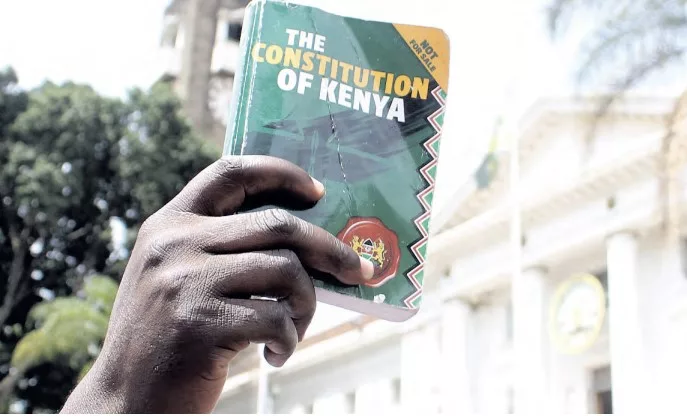
Despite the above, there are things pending. The first in line is the voter registration processes that need to be agreed upon as a continuous process that the IEBC Secretariat seemingly put a hold on despite constitutional provisions.
Second and connected to the foregoing, is the matter of the verification and/or cleaning up the register in accordance with the KPMG recommendations of June 2017.
This matter is serious since the issues cited in the KPMG report have never been made public as such, other than a summary of what the report contained. The commissioners should make sure this matter is brought to the attention of relevant stakeholders to be resolved before the end of this year.
Political parties nominations could as well be the Achilles heel to the by-elections. As documented severally over the years, these are the avenues where injustices, violence, discriminations and all other ills happen, resulting in contested nominations and thereafter outright conflict, which spill into the violent elections thereafter.
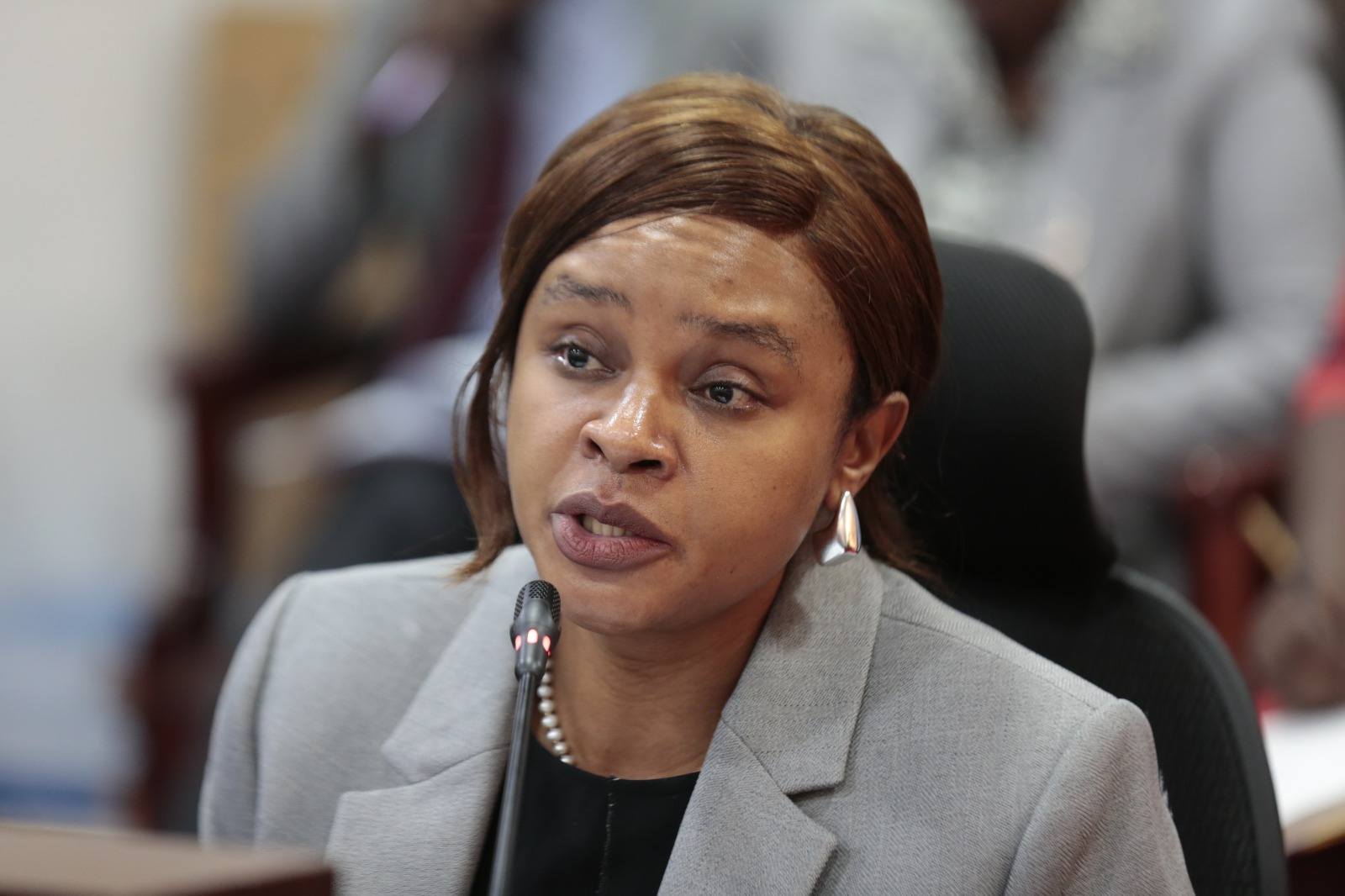
Therefore, noting one of the commissioners (Alice Nderitu) has the wherewithal, having been led the Office of the Registrar of Political parties, there is need to tap into her past job, and through the Political Parties Liaison Committee of the Commissioners, to undertake preventative approaches rather than reactive responses towards the nominations.
Further afield, before those by-elections, I believe the commissioners have somewhat agreed on how to handle the senior staff, with relevant vetting ahead of contracting them again. Vetting of other staff could be done at a later date.
This is crucial since the senior staff are always responsible for what transpires in procurement of equipment, general administration, and day-to-day management and operational activities of the IEBC. Without solid, credible and dependable staff structures and systems, the new commissioners could be walking into a set-trap.
To establish the new IEBC, this is an undertaking that cannot be avoided, since it is the commissioners who will be held eventually accountable about what transpires on Thursday, November 27, 2025.
Before I pen off, due to limitation of words, is a crucial aspect too. While it can wait, it should be in the minds of the commissioners since it is about delimitation of boundaries, which is a politico-legal question.
The Supreme Court was asked to give an advisory on the matter by the IEBC Secretariat, and the petition was challenged by the country’s Attorney General.
Therefore, there is a need for a collegiate understanding by the new commissioners on what that means and making a communication to the public before or after the by-elections.
Connected to this matter, is the High Court order that the National Housing and Population Census be redone in Garissa, Wajir and Mandera, which is still not responded to.
These two matters are very-high-octane political discussions and the new commissioners should be fully abreast with them, as they prepare for the by-elections. They may even decide the processes towards and the outcomes thereafter
Otherwise, there are many expectations by Kenyans on the new commissioners, and thus, they should walk that tightrope with confidence, caution and considerations of what Kenyans expect of them. I wish them well in the days, weeks and months ahead of Thursday, November 27, 2025.
Writer is a political scientist and human rights defender