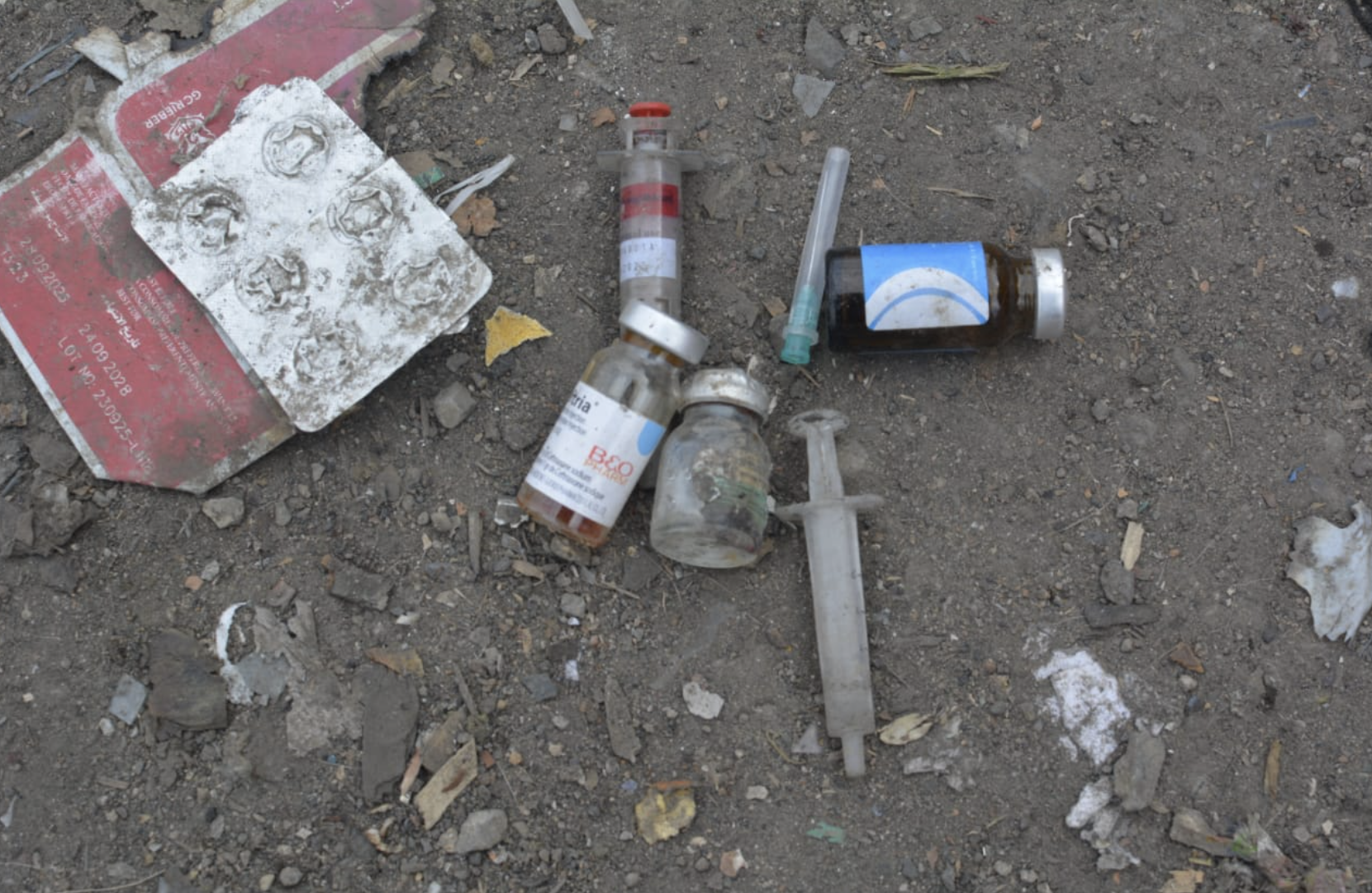
 Syringes and blood-stained cotton wool are a common thing in the
dumpsites. Photo/ Jacinta Maiga.
Syringes and blood-stained cotton wool are a common thing in the
dumpsites. Photo/ Jacinta Maiga.
Imagine a father who fears leaving his family each day, yet the need to provide keeps him going. The work is physically demanding and hazardous, but it pays for his family’s survival.
Paul Otieno has worked as a cleaner in a county hospital for the past ten years. In 2022, while cleaning the wards, he suffered a needle prick injury. At first, nothing seemed wrong. But weeks later, his skin developed a yellow tint (jaundice), and he began experiencing flu-like symptoms — fever, fatigue, nausea, and body aches. Something wasn’t right.
What followed was a long and confusing medical journey: countless hospital visits, fluid buildup that left his belly swollen, and no clear answers until a liver function test was done. Paul was finally diagnosed with chronic hepatitis C. The condition causes long-term inflammation of the liver, slowly leading to scarring (cirrhosis) and loss of function. Improper medical waste disposal, including unsafe handling of needles and syringes, is a known driver of such infections.
Dr. Ruth Kiato, medical superintendent at Kayole II Level IV County Hospital, says training staff on clinical waste management not only keeps employees and patients safe but also enhances public confidence. She stresses that any effective program must cover several critical areas.
“The first area is waste segregation and identification,” she explains. “You must train staff on how to identify different types of clinical waste and ensure they understand the importance of segregation. This includes understanding the colour coded waste bags and bins.”
She adds that staff also need clear guidance on safe handling and disposal. “Training staff on clinical waste should include how to handle clinical waste safely, including the use of personal protective equipment (PPE),” she says.
Documentation, she notes, is non-negotiable. “Staff should be familiar with the documentation required for clinical waste management, such as consignment notes for hazardous waste. Regular audits should also be conducted to ensure ongoing compliance.”
Preparedness is equally important. “In the event of a spillage or exposure incident, staff need to know the appropriate emergency procedure to minimise risk and ensure safety.”
And training must never be a one-off. “Ongoing training and refresher courses are vital to keep staff up to date with the latest best practices.”
In Kayole, we meet Raphael, a waste collector who has worked at the dumpsite for 15 years. The job helps him pay his children’s school fees and put food on the table, but it comes at a heavy cost.
“The sight and smell of the garbage dump can be unbearable,” he says. “The heaps of trash are breeding grounds for disease.” The rotting waste produces foul odours that cause respiratory problems, headaches, and nausea.
The dangers go beyond human health. Waste products seep into the soil, causing long-term damage to the ecosystem. Raphael also reveals darker practices. “Street boys (chokora) receive Sh50 from local chemists and clinics who don’t have the required documents for medical waste disposal, to dump for them at the garbage site,” he says, adding that this waste is often burned in the open.
Even more worrying, he explains, “The Ngong River, which passes just across the dumping site, is a dumping site for aborted fetuses. It’s not only the Ngong River that has aborted fetuses but also babies are found tucked into dustbins. Aborted fetuses, syringes, and blood-stained cotton wool are a common thing in the dumpsite.”
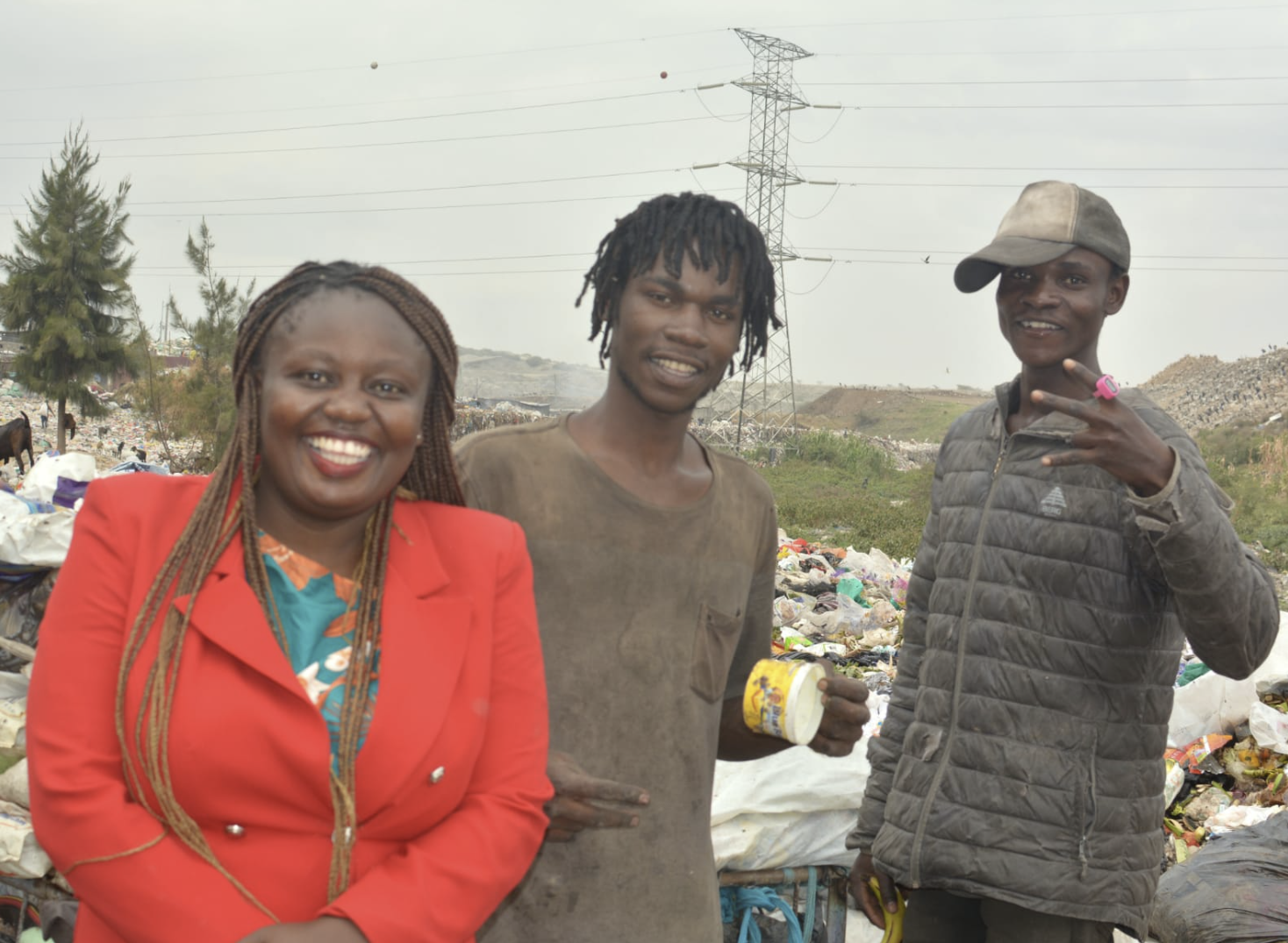 The author with Raphael, a waste collector in Kayole, and his friend. Raphael has worked in the garbage
site for the last 15 years. Photo/ Jacinta Maiga.
The author with Raphael, a waste collector in Kayole, and his friend. Raphael has worked in the garbage
site for the last 15 years. Photo/ Jacinta Maiga.
Burning medical waste in the open releases a cocktail of pollutants — including dioxins, furans, and particulate matter from incomplete combustion — which cause respiratory disease, cardiovascular problems, and increase the risk of cancer. Gases such as sulphur dioxide and nitrogen oxides further irritate the lungs, contribute to acid rain, and worsen urban smog. Inhaling this toxic smoke harms nearly every system of the body. It is linked to asthma, chronic bronchitis, heart disease, and cancer, while also causing reproductive problems, neurological changes, and constant skin and eye irritation. Open burning, far from being a disposal shortcut, is a hidden public health crisis.
Geoffrey Mosiria, Nairobi City County Government Chief Officer for Environment, says counties are training healthcare workers and waste handlers on proper practices, including segregation, handling, and disposal. “Counties play a role in raising public awareness about the risks associated with healthcare waste and promoting safe waste management practices,” he explains. They are also responsible for supervising operations, monitoring contractors, and ensuring disposal sites are properly managed. “Counties may collaborate with other stakeholders, such as healthcare facilities, waste management companies, and non-governmental organisations, to improve healthcare waste management. This collaboration helps to leverage resources, expertise, and best practices.”
Lolem Lokolile, an assistant director of public health at the Ministry of Health, adds that waste management is guided by the Constitution of Kenya, the Public Health Act Cap. 242, the Environmental Management and Coordination Act (EMCA) 1999, and the Occupational Safety and Health Act 2017. Regulations have also been developed to operationalize the Injection Safety and Medical Waste Management Policy of 2007.
James Mwita, a public health officer with Nairobi County, outlines the treatment options for medical waste. The most common is incineration, which burns waste at very high temperatures to destroy harmful substances. “Other methods include autoclaving and shredding or microwaving and shredding, which use heat and pressure to sterilize waste before it is broken down. In some cases, steam sterilization is applied to kill infectious agents, while certain categories of waste can be managed through chemical treatment, which neutralizes hazardous components,” he says.
Francis Chwanya, head of the Environmental Impact Assessment section at the National Environmental Management Authority (NEMA), explains that the authority licenses waste transporters, treatment facilities, and disposal sites to ensure they meet national standards. “NEMA also works with healthcare facilities to promote proper healthcare waste management, including training healthcare workers,” he says. The agency monitors local authorities to ensure waste is collected, treated, and disposed of safely — particularly in urban areas where volumes are high. “Through its monitoring role, NEMA ensures that waste management processes do not contribute to pollution, human health risks, or the degradation of natural resources.”



![Africa CDC Director General Dr Jean Kaseya at a past event. [Photo: Arthur Mbuguah, WHM]](https://cdn.radioafrica.digital/image/2026/10/8ced213c-affb-4dff-97ca-1b6bac1f958e.webp)