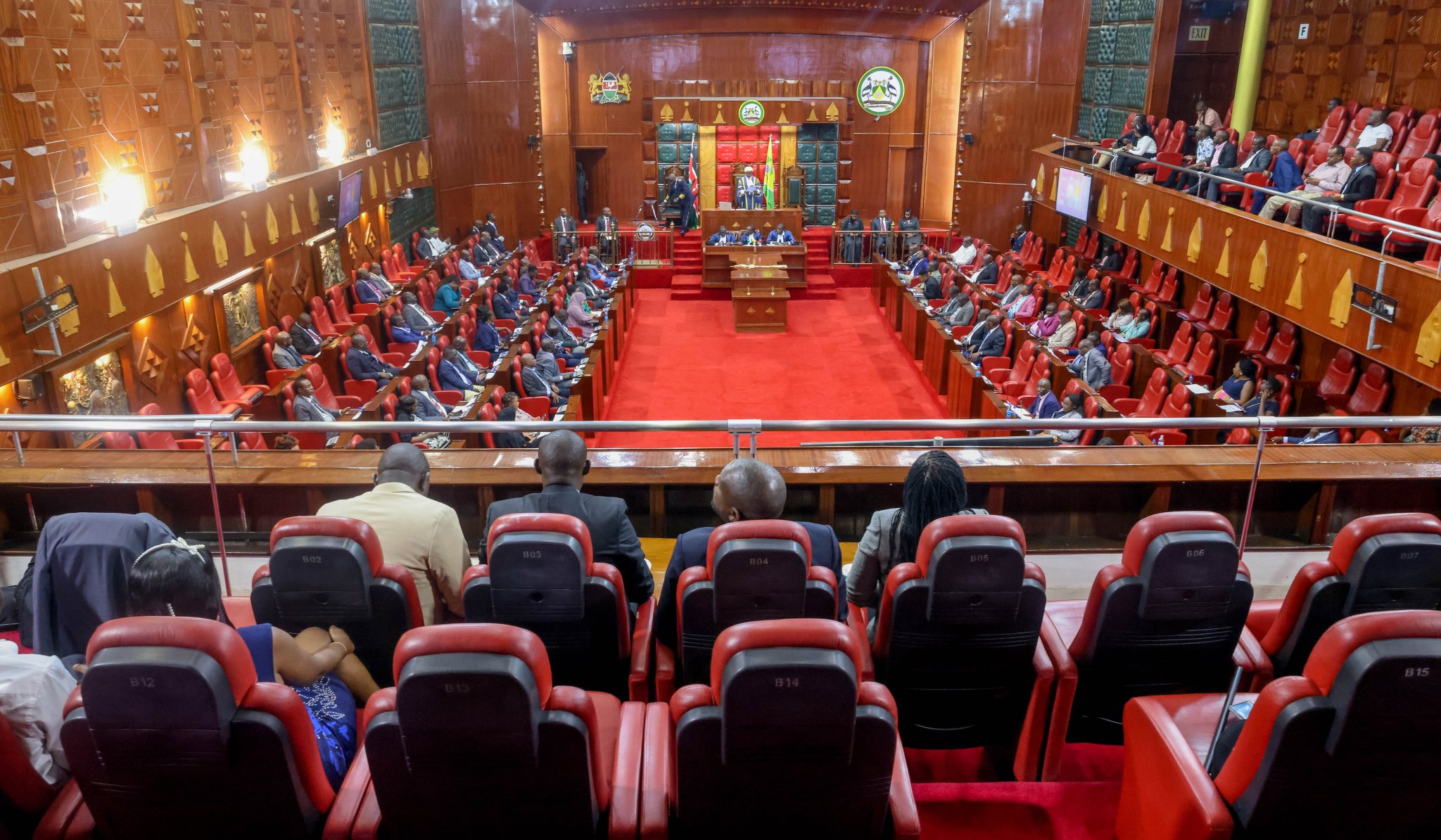
Members of County Assemblies will no longer be at the mercy of governors for operational funds, following the signing of a new law allowing them financial independence.
President William Ruto on Wednesday signed into law the County Public Finance Laws (Amendment) Bill, 2023, at the State Lodge in Homa Bay County.
The law marks a major milestone for ward representatives, who have long decried financial dependence on county executives. This addresses a long-standing gap that has left county assemblies vulnerable to political manipulation and delays in funding.
MCAs have argued that reliance on governors for finances undermined their oversight role, as all funding requests had to pass through the county treasury. Finance executives, often aligned with governors, were accused of sitting on requisitions or failing to remit approved funds.
"The County Public Finance Laws (Amendment) Bill, 2023 amends the Public Finance Management Act to provide for the establishment of a County Assembly Fund in each county," Ruto said after signing the Bill.
The fund will be administered by the clerk of the county assembly, who will ensure all earnings and accruals are retained and used solely for assembly purposes.
"The administrator shall arrange for the County Assembly Fund to be kept at the Central Bank in an account to be known as the County Assembly Service Fund Account," the law reads.
The clerk will have significant financial authority but will remain accountable to the County Assembly Service Board.
Withdrawals from the fund will require approval from the Controller of Budget, along with written instructions from the fund administrator.
Additionally, the National Treasury will be required to release funds to the assembly account at the start of each month and no later than the 15th day.
Meru Senator Kathuri Murungi, who sponsored the Bill, said the lack of resources had crippled MCAs' ability to conduct oversight.
"Most of the time, there is no money in the county assemblies. When they requisition, they are not able to get the funds to carry out their work," said Murungi, who is also the Senate Deputy Speaker.
He stressed that assemblies cannot be truly independent if they rely on governors for funding, likening the situation to Parliament before it gained financial autonomy.
"We want to treat the 47 county assemblies the way the national government treats both Houses of Parliament," he said.
"Money allocated to Parliament is shared between the National Assembly and the Senate through the Parliamentary Service Commission. We decide what to do and when—the same should apply to county assemblies."
Murungi added that financial dependence had led to the manipulation and intimidation of assembly staff.
Under the County Governments Act, the budgets of county assemblies should not be less than seven per cent of the county’s total revenue or twice the personnel emoluments, whichever is lower.
However, frequent delays and interference have hindered compliance—a problem this new law seeks to end.