When Mark introduces himself in his YouTube videos and podcast episodes, he does not shy away from naming a part of his identity that still feels unfamiliar to many.
“Hi, my name is Mark, and I'm a Grey-ace, short for greysexual,” he says in one video posted under his handle @notdefining.
Greysexuality, as Mark explains, is a term used by people who experience sexual attraction infrequently or only under specific circumstances.
“It shows that I do enjoy sexual things, but I experience them to a lower degree than others,” he says.
For Mark, naming this identity has been a way of understanding himself more clearly and connecting with others who feel the same.
And he is far from alone.
Greysexuality, often seen as falling within the broader asexuality spectrum, is a label quietly gaining recognition, particularly among younger people navigating complex questions of identity, attraction and belonging.
On platforms like TikTok and YouTube, greysexual creators are beginning to open up about their experiences.
Some share stories of coming out, others offer explainers for viewers still wrapping their heads around the nuances between asexual, demisexual and greysexual identities.
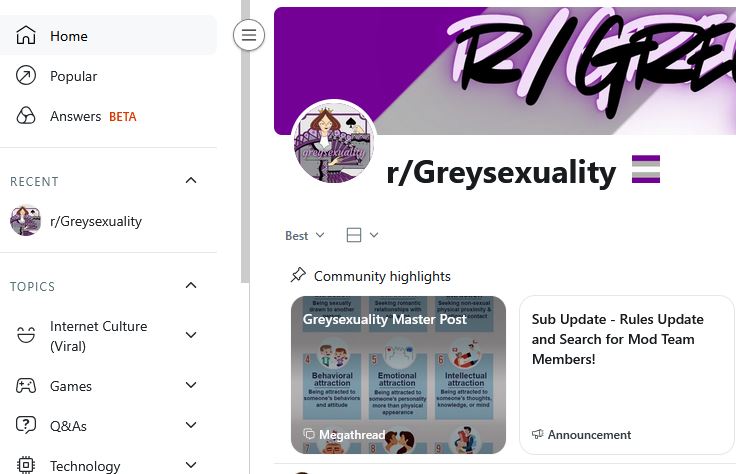
Reddit has also become a gathering point. A dedicated subreddit, r/Greysexuality, now hosts more than 8,300 members and remains active with discussions ranging from relationship advice to personal reflections and memes.
According to The Daily Mail, this trend, however, comes amid growing concern from experts that millennials and Gen Z are having fewer sexual partners than previous generations at the same age.
The outlet states that studies indicate a growing number reporting no sexual partners or infrequent encounters, a phenomenon often referred to as the 'sex recession'.
Researchers say it is not simply a lack of interest, but is often fueled by anxiety.
The term greysexual was first used in 2006 on the Asexual Visibility and Education Network to describe the 'grey area' between being completely asexual and feeling sexual attraction regularly.
One of the experts, US Writer Carter Sherman, interviewed more than 100 young people on the topic of sexuality for her book The Second Coming.
In her research, Sherman argues that a mix of miseducation, pornography, digital disconnection and political pressure has reshaped how younger generations relate to sex and intimacy.
She found that many young people are withdrawing from intimate relationships, citing pressure from social media and the highly publicised political debates around sexual rights.
Scientific studies appear to back this up.
For instance, research suggests that scrolling through idealised images on platforms like Instagram can negatively affect young people’s body image and self-esteem, two factors that can reduce sexual confidence and interest in intimacy.
Some experts have raised concerns about the fast-growing awareness and adoption of identities like greysexual, especially online.
They warn that the proliferation of sexual orientation labels, often through platforms such as TikTok and Reddit, may risk overcomplicating how people understand sex and relationships.
However, others see the trend in a more positive light. They argue that it is giving people much-needed vocabulary and community to express feelings they might otherwise struggle to explain.
For many, identifying as greysexual provides validation and clarity.
A 2022 survey by the Ace Community Census found that 43 per cent of people on the asexual spectrum had been told they should try to "cure" themselves, highlighting the social challenges faced by those who identify outside traditional sexual norms.
Medical professionals stress the importance of distinguishing between identities such as asexuality and greysexuality, where consistently low sexual attraction is typical, and sudden changes in sexual desire, which can be symptoms of underlying health issues.
According to the NHS, persistent loss of libido may be linked to conditions such as heart disease, diabetes, thyroid dysfunction or hormonal changes like menopause.
Other causes can include side effects from medications, particularly those for high blood pressure or depression, the contraceptive pill, heavy alcohol consumption and stress-related factors.
Doctors advise that sudden changes in libido should be evaluated medically to rule out treatable causes.