
Steadily over the years, the influence of vehicle graffiti in Africa has snowballed into a force to be reckoned with.
Though each country has its distinct style shaped by local culture, many African nations share a common appreciation for these moving canvases of art, which bring vibrancy and personality to the roads.
As vehicle graffiti continues to push artistic boundaries, ten African cities stand out for their commitment to showcasing unique and creative designs.
Taking the tenth position is Abidjan in Côte d’Ivoire. According to an article by the BBC, inspiration for vehicle graffiti in the country, particularly in cities like Abidjan, often stems from street culture, social commentary, and a desire for self-expression.
Renowned Ivorian artist Aboudia, for instance, draws inspiration from the graffiti created by street children. His work is often described as nouchi, the urban slang of Abidjan, reflecting a deep connection to local identity.
Vehicle graffiti in Abidjan also carries the weight of history. Following the First Ivorian Civil War, which began on 19th September 2002, some Ivorians processed the aftermath of the conflict through art.
Many vehicle graffiti pieces thus serve as a form of reconciliation, documenting the nation’s efforts to come to terms with the social and emotional impacts of war.
The ninth position goes to Addis Ababa, Ethiopia. Unlike other African cities, where graffiti spans both old and modern vehicles, Ethiopia shows a strong preference for older models such as Volkswagen Beetles and Ladas. For many Ethiopians, these cars evoke nostalgia, linking to childhood memories, family events, and a sense of the past. In a city where new vehicles are expensive, decorating older cars allows owners to express their style, stand out, and make personal statements.
Practicality also plays a role in Addis Ababa’s vehicle graffiti culture. According to the Multidisciplinary Digital Publishing Institute, graffiti can make older, sometimes dilapidated vehicles more noticeable, enhancing visibility and potentially improving safety on the road.
Moreover, the Amharic language influences graffiti design. Using the Ge’ez script, artists combine visual creativity with verbal expression, embedding social or political commentary into their work. This approach reflects the unique identity and experiences of Addis Ababa’s graffiti creators.
At eighth place is Kinshasa, Democratic Republic of Congo. According to the VII Foundation, graffiti in Kinshasa allows artists to voice opinions on poverty, corruption, and the effects of globalisation. Some graffiti explicitly tackle neo-colonialism and the exploitation of Congo’s resources, highlighting the gap between wealth and poverty.
Local identity is central to Kinshasa’s vehicle graffiti. Artists often incorporate elements of Lingala, the city’s dominant language, along with cultural symbols. Phrases such as Nzambe Moko (a declaration of monotheism), Bana Kin (a term of endearment for locals), and Pesa Motema (a plea for emotional understanding) are commonly used. Resourcefulness also defines the city’s graffiti culture, with some artists using recycled materials, including car parts, to craft their designs.
Seventh on the list is Monrovia, Liberia. According to a blog by Inspired Eye, artists like Panda, also known as Gerald Massaquoi, create distinctive visual languages that reflect daily life, social issues, and Liberian identity.
Social commentary is a core element of Monrovia’s vehicle graffiti, addressing challenges such as poverty, drug abuse, and youth struggles. At the same time, these works celebrate cultural expression, allowing artists to challenge conventional representation in Liberia’s art scene.
Tunis, Tunisia, ranks sixth. Vehicle graffiti in Tunis has often been a post-revolutionary expression. Following the 2011 revolution, graffiti became a tool for Tunisians to voice dissent and celebrate the newfound freedom of speech.
Artists painted walls—including those of former prisons and government buildings—to commemorate the revolution and critique the previous regime. Beyond politics, graffiti in Tunis draws from hip-hop culture, heavy metal, and “Ultras” (football fan) culture, shaping the city’s unique artistic language.
Accra, Ghana, occupies the fifth position. According to Edith Cowan University, vehicle graffiti here communicates beliefs, experiences, and aspirations, reflecting the city’s cultural and social landscape. Religious messages are common, with slogans acting as affirmations or spiritual encouragement.
Many inscriptions invoke divine protection or express gratitude. Vehicle graffiti in Accra is also a form of personal expression, with drivers choosing designs that showcase their cultural background and creativity. The annual Chale Wote Street Art Festival in Jamestown celebrates this rich visual culture.
Fourth place goes to Lagos, Nigeria. According to News Central, vehicle graffiti in Lagos reflects shared experiences, individual narratives, and the vibrant, dynamic nature of city life.
Religious iconography, popular proverbs, and local expressions frequently adorn vehicles, reflecting faith and social commentary. Pop culture also plays a significant role, with images of musicians, sports figures, and contemporary icons featuring prominently. During events such as the #EndSARS protests on 8 October 2020, slogans like Soro Soke (“speak up”) appeared widely on vehicles, demonstrating graffiti’s role in mirroring social and political movements.
Johannesburg, South Africa, ranks third. According to the European Journal of Development Studies, vehicle graffiti here is a form of public art reflecting personal experiences, community narratives, and socio-political context.
During apartheid, graffiti served as a tool for resistance, allowing marginalised communities to voice frustrations. Today, it continues to address inequality, social justice, and community empowerment.
Beyond politics, graffiti adds colour and dynamism to urban spaces, transforming walls and vehicles into vibrant canvases. Areas such as the Maboneng Precinct exemplify how graffiti enhances Johannesburg’s visual landscape.
Cape Town, South Africa, comes in second. Similar to Johannesburg, vehicle graffiti draws from the broader South African street art scene, rooted in protest and the desire to beautify public spaces. Spray paint is central to the city’s graffiti culture, creating intricate and colourful designs.
Bold patterns and unique characters showcase the city’s diverse cultural landscape. Festivals like the International Public Art Festival in Salt River inspire creativity, attracting artists from around the world to contribute to public art, including vehicle graffiti, further enhancing Cape Town’s visual vibrancy.
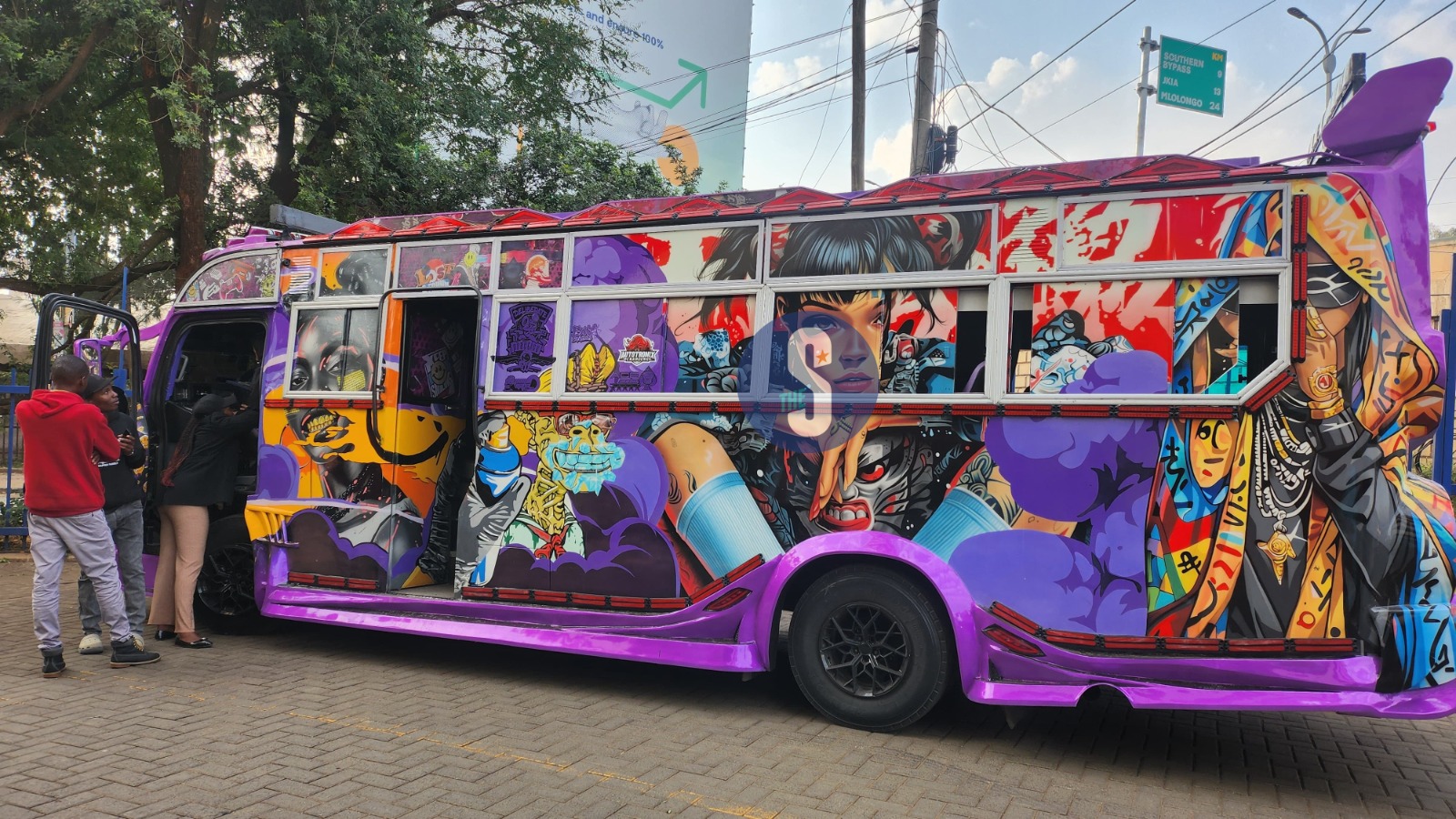
Topping the list is Nairobi, Kenya. The city’s matatu industry has a rich visual history, evolving from plain white vehicles with a yellow stripe to vibrant canvases of local talent. The removal of a graffiti ban in 2015 sparked a revival, with drivers competing for the most striking designs.
According to the University of Nairobi Journals, Nairobi’s matatu graffiti blends pop culture, social commentary, and self-expression. Vehicles often feature international musicians, movies, or sports figures, reflecting Kenya’s engagement with global trends. For example, some matatus showcase Rihanna or designs inspired by popular movies trending on TikTok.
Vehicle graffiti across Africa is more than decoration—it is a mobile manifesto. Each brushstroke challenges invisibility, reclaiming public space from monotony and asserting that roads can be canvases for identity, protest, and joy. Messages may be political, poetic, or playful, but they all compel observers to engage. The stories of nations often speed past us at 80 kilometres per hour, daring viewers to notice before they vanish into the dust.
Speaking from Juja, Kevin Okello, a 26-year-old matatu enthusiast, said that while vehicle graffiti is popular across Africa, Kenya sets the standard.
“It is always a euphoric feeling when I see people abroad on TikTok in awe of our matatu graffiti,” Okello said proudly.
Diana Wamotho, 30, echoed his sentiment, claiming that no other country matches Kenya’s creativity.
“Kenyan matatu owners are always looking for eye-catching designs. A recent example is the launch of the Mood matatu in July,” she said.
Not all Kenyans share this enthusiasm. In Kahawa Sukari, 50-year-old Gavin Kiprono expressed nostalgia for the era when matatus were plain-colored, with only a few sporting yellow stripes.
“Now, with so much graffiti, I spend close to half an hour every day trying to decipher the names of the matatus amid all the art,” Kiprono said.
Even some younger Kenyans are cautious. Agnes Nelima, 25, from Juja, feels that the fast-paced evolution of matatu graffiti may soon harm the transport industry.
“Matatu graffiti is art, but its rapid evolution risks cultivating a culture of unruliness,” Nelima explained.







