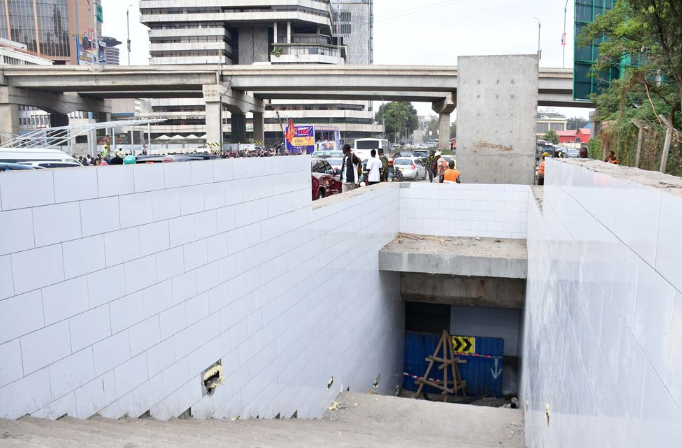
Nairobi residents are eagerly awaiting the official opening of the Sh2 billion Green Park underpass, a modern pedestrian corridor designed to transform urban mobility and safety in the city centre.
With construction almost complete, city officials are optimistic that the new infrastructure will soon usher in a new era of walkability and pedestrian safety in the capital.
Strategically located at the intersection of Uhuru Highway and Haile Selassie Avenue, the Green Park underpass will link key city landmarks, including Uhuru Park, the Nairobi Railways Station, and Haile Selassie Avenue directly to the Central Business District (CBD).
The Kenya National Highways Authority (KeNHA), in collaboration with China Road and Bridge Corporation (CRBC), is developing the underpass.
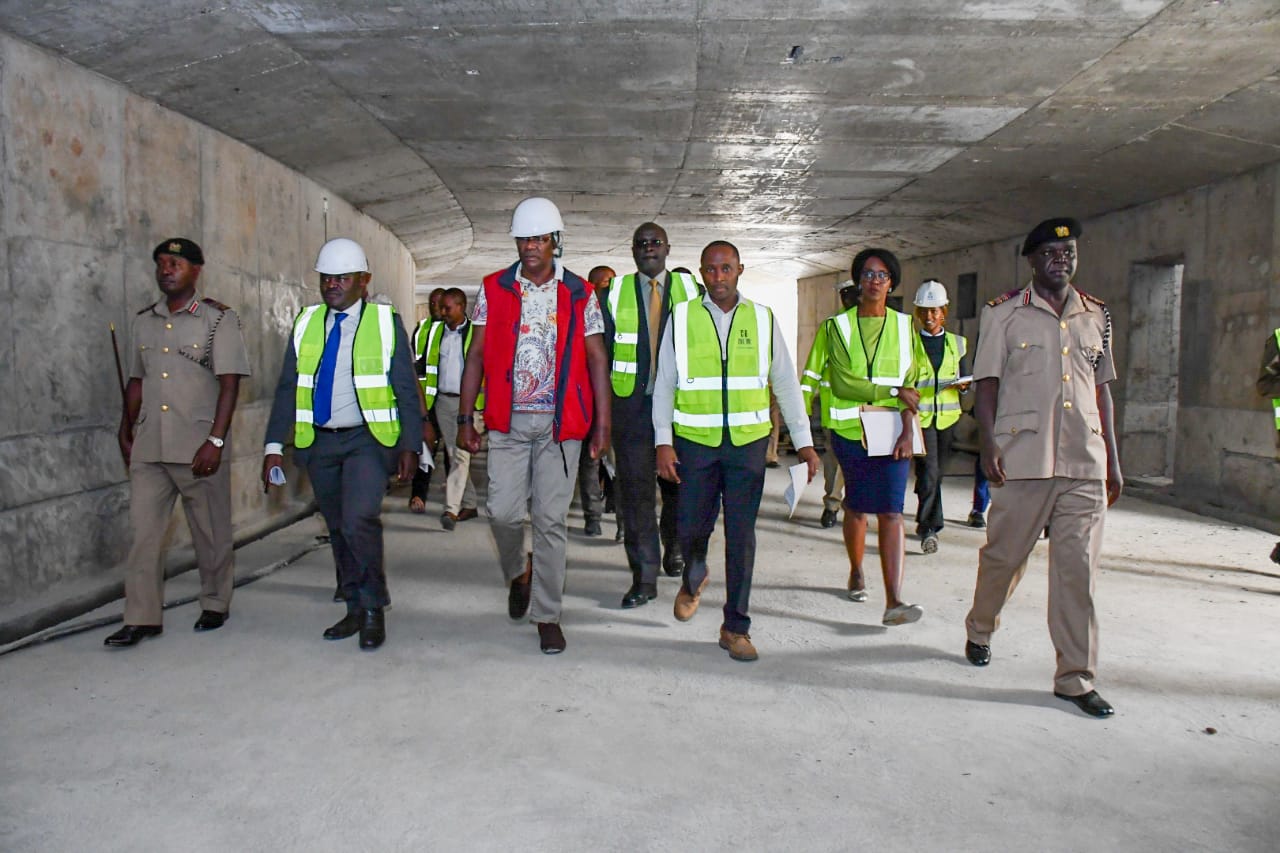
During a recent inspection tour with engineers and government officials, Eliud Owalo, Deputy Chief of Staff for Performance and Delivery Management, described the project as more than just a passageway.
“This Green Park underpass is not just any construction project,” Owalo said.
“It is the embodiment of a vision to modernise Nairobi’s urban landscape. We’re creating an experience, not just a crossing.”
The design of the underpass draws heavily from international examples of pedestrian-first infrastructure in cities like Amsterdam, New York, London, and Copenhagen.
These cities are globally recognised for prioritising pedestrian and cyclist safety, offering well-lit, secure, and aesthetically pleasing pathways that integrate seamlessly with urban life.
Similarly, the Green Park underpass is set to feature wide, well-lit corridors, CCTV surveillance, retail outlets, kiosks, and coffee shops, ensuring that pedestrians enjoy a safe and pleasant journey through the city — even beneath one of its busiest highways.
Owalo emphasised that the structure is designed to eliminate the dangerous street-level crossings that have long plagued Nairobi’s road network.
“By moving foot traffic below ground, we reduce pedestrian-vehicle conflicts, improve safety, and decongest traffic above,” he said.
According to Engineer Jared Makori from KeNHA, more than 21,000 pedestrians use the Uhuru Highway–Haile Selassie intersection daily, with 8,500 crossing during peak hours.
The underpass is expected to streamline this massive human traffic flow, enabling faster, safer, and more efficient movement between major transit and recreational hubs.
The Green Park underpass will feature well-lit corridors, retail outlets, and CCTV surveillance to enhance security for pedestrians.
By diverting foot traffic below ground, the facility is expected to significantly reduce pedestrian-vehicle conflict, enhance commuter safety, and improve vehicular traffic flow around the critical intersection.
This is seen as a proactive strategic shift from reactive traffic management.
The project aligns with the city's long-term transport and development goal of creating an organised commuting experience.
With Nairobi’s CBD often jammed with both foot and vehicular traffic, the new tunnel is a crucial step toward modernising how the city moves.
Nairobi’s new pedestrian facility mirrors similar successful projects globally.
Notable examples include: Karlin-Zizkov Pedestrian Tunnel, Prague, a 303-metre tunnel connecting districts under Vitkov Hill, offering cyclists and pedestrians a safe route.
Other examples are the Trenčín Underpass, Slovakia, which is currently being transformed into a vibrant cultural space, highlighting how underpasses can serve as more than just transit paths and Bilthoven Underpasses, Netherlands-designed to prioritise pedestrians and cyclists by re-routing motor traffic and improving access across former at-grade crossings.
Work on the Green Park underpass began on March 13, 2024, and officials project it will be completed before the end of 2025.
Once open, it is expected to become a model for future non-motorised transport (NMT) infrastructure across Kenya.
As Nairobi continues to grow, the success of projects like the Green Park underpass is expected to define the city’s ability to become a safer, more inclusive, and more pedestrian-friendly capital.