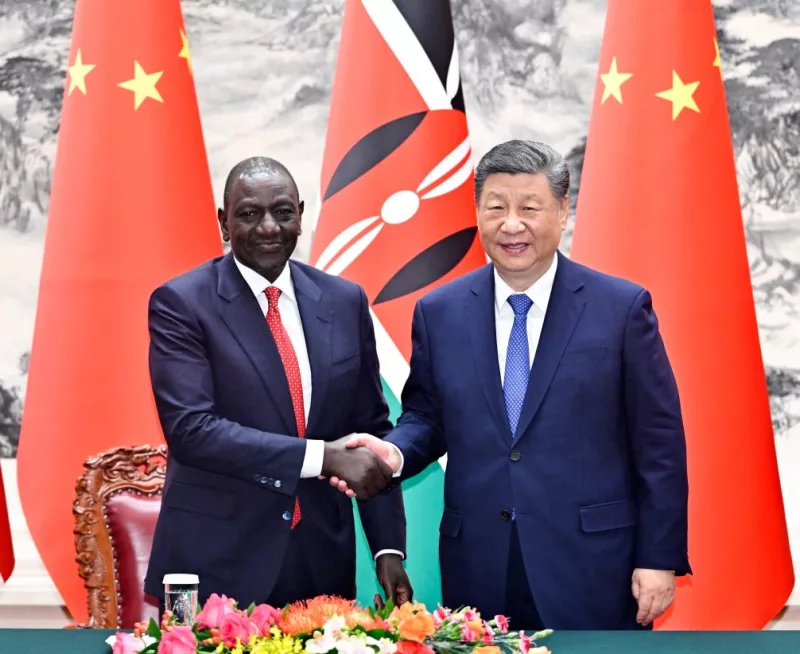
The signing into law of the Persons with Disabilities Act on May 8 by President William Rutorepresents a new dawn for all Kenyans with disabilities. It marks a significant stridetowards greater inclusion through establishing systems for protecting, promoting andmonitoring the rights of persons with disabilities. The new Act completely aligns with theUnited Nations Convention on the Rights of Persons with Disabilities.
Disability rights
Part III of this transformative legislation comprehensively sets out the rights of persons withdisability. It elaborates on the Bill of Rights of the Constitution and particularlymakes operational Article 54. Unlike the constitution, which does not expressly providethe right to legal capacity of persons with disability, the new Act recognises this importantright in line with the CRPD. Other rights provided for in the new Act include: equality andfreedom from discrimination, the right to marry and form a family, the right to privacy,the right to physical and mental integrity, the right to human dignity and the right toeducation, among others.
The new Act is far more detailed on rights than the 2003 Act, repealed by the 2025 Act.It is interesting to look at the main highlights of the Act, emphasising its differences fromthe earlier Act.
Equality and non-discrimination
Persons with disabilities in Kenya have faced, and continue to face, both systemic and directdiscrimination. This often leads to limited access to opportunities, which in turn results in alow quality of life due to socioeconomic poverty. The new Act is a breath of fresh air as itexpressly guarantees every person with disability equal protection in law, equal benefit of thelaw and adequate legal protection against discrimination on all grounds. It recognises theequality of every person with disability before the law in the political, economic, social, culturaland all fields of life.
Right to legal capacity
Historically it was common for persons with disabilities to be denied rights to makeindependent decisions and to freely participate in legal processes, based on some assumptionthat a person with some disability had no abilities. Some financial institutions have eventurned away customers with visual disability and asked them to use a representative to accessbanking services. The new Act addresses this problem by entitling every person withdisability to recognition as a person before the law. It guarantees every person with disabilitythe right to own and inherit property, a right that is constantly violated due to disregard forthe personal autonomy of persons with disability. It guarantees every person with disabilitythe right to control their own financial affairs, and to have access to savings and loanfacilities, mortgages and other forms of financial credit on an equal basis with members ofthe society without disability. This provision opens a pathway for persons with mentaldisabilities to control and make decisions on their finances, as this right to legal capacity isnot clearly recognised by the Mental Health Act.
Women with disability
The new Act gives special protection to women with disability by safeguarding their rights thatpreviously have been subject to gross violation. As a woman with visual disability, Ihave experienced stigma while seeking sexual and reproductive health services. Healthcareproviders often question the need for a woman with disability to access sexual andreproductive health services.
There are reports of pregnant women with disability beingabused by health providers and receiving sympathy for simply being pregnant. The new Actelaborates the right to sexual and reproductive health services protected in the constitutionin relation to women with disability. It affirms the right of women with disability to accesssexual and reproductive health services and the right of every woman with disability to retainand control their fertility. The new law strictly prohibits the discriminatory practice ofdepriving a woman with disability of their child on the grounds of disability.
Right to education
As a person with disability, both my primary and secondary school education was acquiredthrough special schools. This was where, as learners with disabilities, we were separated fromthose without disability. This practice promotes stereotyping and discrimination. Separationof learners results in reduced capacity of persons with disabilities to effectively participate incommunity life. The new Act breathes life into Article 54(1)(b) of the Constitution (aboutintegrated education) through setting out measures needed to achieve the right to inclusiveeducation. It calls upon all learning institutions to offer individualised support measures,assistive devices, appropriate equipment, adoptive technology and other support services inenvironments that maximise academic and social development to enhance full inclusion.
TheAct requires the ministry in charge of education to develop strategies to implement inclusiveeducation through recruitment of special education teachers in all schools, introduction of sign language in all learning and training institutions, establishment of research centres toundertake research in education for students with disabilities, etc.
Right to employment
Lack of reasonable adjustments, coupled with discrimination and stigma associated withdisability, are among the barriers limiting access to employment by persons with disabilities.
The new Act strictly prohibits employers from discriminating against a person with disabilityin any respect. It requires employers with at least 20 employees to reserve five per cent directemployment opportunities for persons with disability.
The new Act requires employers to make reasonable adjustment for employees withdisability including through making existing facilities usable and accessible, job restructuring,modified work schedules, payment of assistive allowances to employees with disability.
Private employers who engage persons with disability, and those who modify their physicalfacilities or incur other expenditure to provide reasonable accommodation for suchemployees are entitled to apply for partial reductions from their net taxable income ascompensation.
However, despite these tax benefits having been in the repealed Act, they have not motivatedprivate employers sufficiently to hire persons with disabilities. This stems from the extent ofthe additional costs involved in modifying the work environment, from inadequateenforcement and lack of awareness. Will this change?
Other tax relief
As in the repealed Act, persons with disabilities may, on application, be partially or whollyexempted from paying income tax or other levies (presumably including housing and healthlevies) on employment income. If granted to persons with permanent disability, the new Actprovides that the exemption is permanent, a new provision that will be a huge relief forthose benefiting. Articles, materials and equipment, including motor vehicles, for use bypersons with disabilities continue to enjoy exemption from import duty and value added tax.
Unlike the old Act, the new Act provides for exemption for income tax for parents andguardians of persons with disabilities. However, this benefit is only available to a parent orguardian of a person certified with severe disability and incapable of catering for their basicneeds. A poor parent or guardian who assumes custody and care of a person certified withsevere disability may apply for a long-term monthly cash transfer from the government inaccordance with the Social Assistance Act.
Conclusion
The National Council for Persons with Disabilities, having reviewed the Act, said it “isanticipated to usher in a new paradigm shift for persons with disabilities nationwide”.
The Act addresses the needs of persons with disabilities and establishes measures toeliminate systemic barriers thatin the past have resulted in social exclusion anddiscrimination. The new law sets out enforcement mechanisms to ensure accountability. Iffully implemented, this Act will enhance inclusion and totally improve the lives of personswith disabilities in Kenya.
Time will tell whether the government will be able, and willing, to put in the necessaryfinance and effort.
Nkirote is Clooney Foundation for Justice fellow, under the Waging Justice for Women programme, at the Katiba Institute