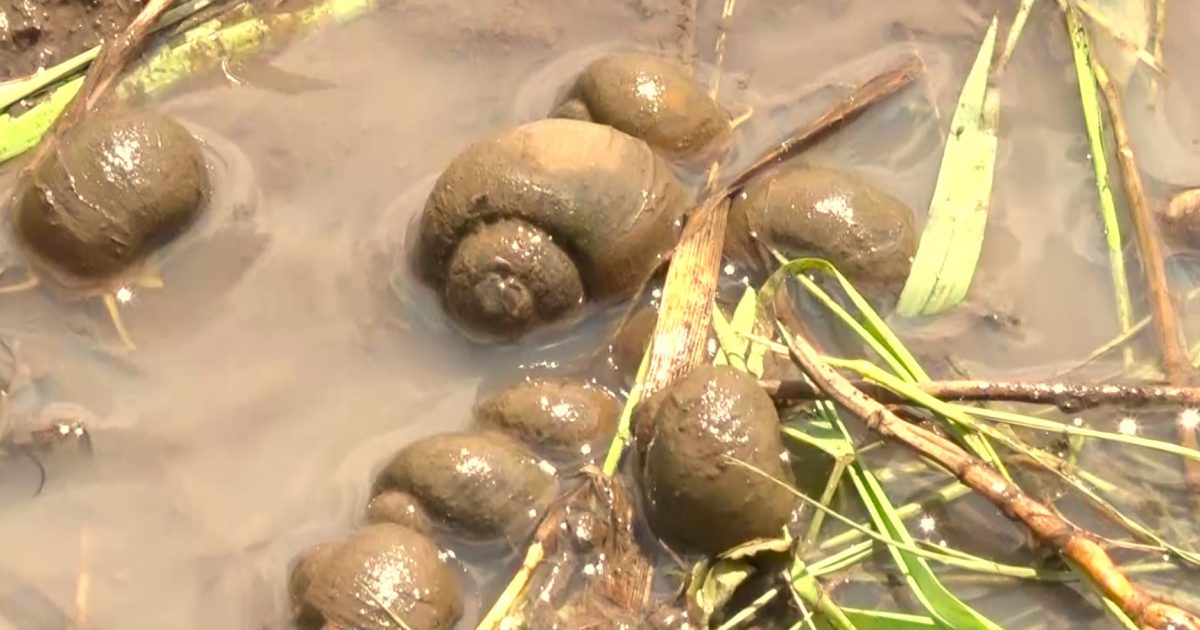
The discovery of invasive apple snails in the Mwea Irrigation Scheme has raised alarm among farmers, scientists, and government agencies.
These freshwater snails, scientifically known as Pomacea canaliculata, are native to South America but have now established themselves in Kenya’s largest rice-growing region, posing a serious threat to food security and livelihoods.
First spotted in 2020 in the Kimbimbi and Ndekia units of the scheme in Kirinyaga County, the apple snails have since spread rapidly across the irrigation network.
Carried by water and farm equipment, their population has exploded, affecting nearly 90 per cent of the scheme.
So, what makes apple snails so dangerous?
Apple snails feed aggressively on tender rice shoots, especially in newly transplanted or direct-seeded fields. The damage can be devastating.
Studies show that even moderate infestations can reduce rice yields by about 14 per cent.
However, the financial impact is even more severe, cutting farmers’ profits by up to 60 per cent due to replanting costs and lost productivity.
In severely affected areas, some farmers have reported crop losses of up to 80 per cent, forcing them to abandon fields or replant multiple times.
For a region that produces over 80 per cent of Kenya’s rice, the implications are significant.
Efforts to control the pest are ongoing, though challenging.
Farmers are currently using labour-intensive methods like handpicking adult snails and crushing their eggs.
Others are adopting physical traps, using attractant plants like cassava to lure snails, or introducing ducks to feed on juvenile snails.
The Kenya Agricultural and Livestock Research Organisation (KALRO) has recommended draining water after transplanting, as the snails cannot survive without water. Research is still ongoing to develop effective control methods.
“We still encourage them to use biological methods as opposed to chemicals that may have side effects,” an official said during a past meeting.
Chemical solutions remain limited, but a biodegradable chemical, Biograde 300 SL, has recently been approved and is currently being piloted across thousands of acres.
Kirinyaga Deputy Speaker Jinaro Njamumo has cautioned farmers against using unregulated chemicals sold by brokers, warning they could be harmful.
“The fear we have is that these chemicals have effects not only on rice but also on humans and have been prohibited by international organisations,” he said.
To coordinate action, a Multi-Institutional Technical Team (MITT) comprising CABI, Kephis, KALRO, MIAD, and other agencies has been formed. Their mission is to train farmers, raise awareness, and prevent further spread of the pest.
There is growing concern that if not contained, the snails could spread to other major irrigation schemes such as Ahero, Bunyala, Hola, and Bura, escalating the crisis nationwide.
Experts are now calling for urgent investment in integrated pest management, stronger quarantine controls, and increased farmer education.
Without swift and coordinated intervention, Kenya risks not only a decline in rice production but also increased reliance on costly imports.
Farmers are calling for long-term solutions, warning that chemical spraying is damaging their crops.
“We urge the government to fast-track research on ways to control the snails because spraying is not a solution,” said Joseph Kamau.