
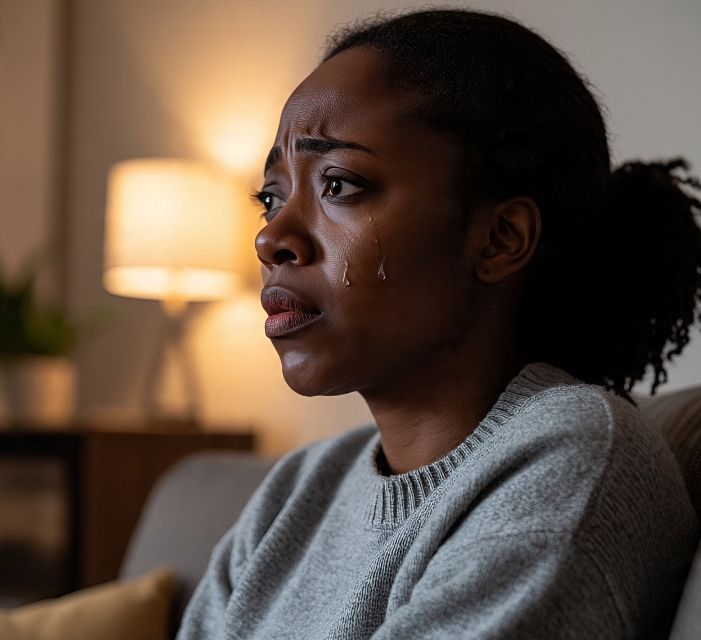
 AI illustration of a woman with reproductive health struggles
 The topic of reproductive health for Kenyan women has long been the subject of contentious debate.
While some progress has been made, many women still feel these efforts are just a drop in the ocean.
A growing number of women believe reproductive health should be treated as a basic right, not a luxury.
Speaking to The Star, Naomi Njuki, a recent mother, shared how her reproductive health journey nearly pushed her into depression.
Njuki and her husband, after waiting five years for their careers to stabilize, decided they were ready to have a child.
But when three months passed with no success, the couple grew anxious. What they had assumed would be simple turned into a prolonged and complicated journey.
Njuki, who had always prioritized her health—regular gym workouts, yoga, healthy meals, ginger shots, and hydration—was taken aback.
By the sixth month, the couple booked an appointment with a gynaecologist. Despite her anxiety, Njuki hoped for answers.
However, their visit took a discouraging turn. The gynaecologist dismissed their concerns and belittled Njuki for expecting to conceive within six months, leaving her feeling judged and humiliated.
Vowing never to return, Njuki and her husband began a two-year ordeal of consulting multiple specialists. Each visit often invalidated the previous diagnosis, testing their patience and hope.
The situation was made worse by mounting pressure from family members.
"Even though we later got the correct diagnosis, it came after two years of emotional and financial strain. Gynaecologists are not cheap," Njuki said.
For Beatrice Nafula, a university student, her reproductive health challenges began with her first period at age 14. Though she had looked forward to it, nothing prepared her for the intense pain that followed.
The first two days were manageable. But on the third day, Nafula was woken by a sharp, stabbing pain in her stomach that soon spread to her abdomen and back.
When she told her mother, she was told it was normal and she needed to toughen up.
Each month brought crippling cramps, unrelieved by painkillers. On many nights, Nafula would crouch on the floor, struggling just to breathe through the pain.
It wasn’t until her first year in university that her mother began taking her concerns seriously—after witnessing her vomit violently during a period episode. But even then, the appointment with a gynaecologist ended in disappointment.
“I thought finally I’d be taken seriously, but some doctors accused me of exaggerating to seek attention,” Nafula said.
Eventually, she was diagnosed with polycystic ovary syndrome (PCOS), but the treatment raised more questions than answers.
“You can never win. Even after the diagnosis, the gynaecologist shut down all my follow-up questions. Now I’m drowning in hormonal prescriptions I barely understand,” she said.
For Grace Mumbua, a mother of one, her struggles began after giving birth. What should have been a joyous moment felt hollow.
Despite holding her newborn, she felt empty—numb from the trauma of labour and overwhelmed by guilt.
At first, she dismissed her feelings. But as the weeks went by, simple tasks like feeding and bathing her baby became increasingly difficult.
“I felt like I was watching my life fall apart from a distance,” Mumbua recalled.
Six months later, her boyfriend sat her down and gently suggested she might be suffering from postpartum depression. She initially resisted the idea, fearing it made her appear weak.
After some introspection, Mumbua agreed to seek help. But finding an obstetrician who took her seriously was like finding a needle in a haystack.
Most dismissed her symptoms as emotional distress that would fade. But things only got worse. At her lowest point, Mumbua even feared she might unintentionally harm her child.
“I don't know how I would have made it without my boyfriend's support. He’s an angel,” she said.
Dr. Jason Macharia, a gynaecologist, says Kenya still faces major gaps in reproductive healthcare despite the legal recognition of it as a basic right.
“Contraception remains inaccessible to many women. A significant number who wish to avoid pregnancy can’t access modern contraceptives,” he said.
He also emphasized the lack of comprehensive knowledge about reproductive health and rights.
“Gynaecologists and obstetricians are the first point of contact for many women. Treating them like a burden is not only unprofessional—it’s inhumane. We all need to do our jobs with compassion.” Macharia stated.






