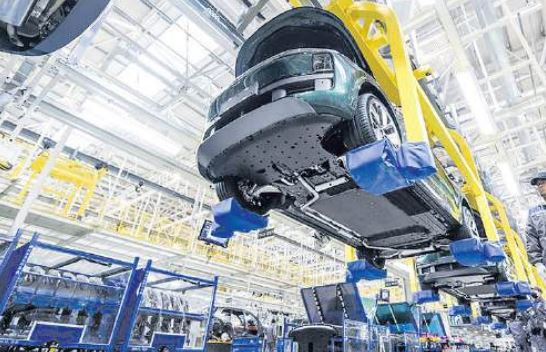
 A factory of Chinese electric vehicle maker Li Auto Inc., in Changzhou, east China’s Jiangsu Province /XINHUA
The transition to electric vehicles is not just a technological shift—it is a redefinition of the global industrial landscape.
In 2025, China leads this transformation, commanding more than 60 per cent of the global EV battery supply chain.
From lithium extraction to battery manufacturing, China has built a coherent and scalable ecosystem that positions it as a key player in green transportation.
For Africa—home to some of the world’s richest deposits of critical minerals such as cobalt, lithium, and nickel—this evolving dynamic presents both opportunities and lessons.
Over the past decade, China has invested significantly in clean energy technologies, recognising early the central role of EVs in future mobility and carbon neutrality goals. Through consistent policy, public-private partnerships and large-scale infrastructure, it has created a robust EV industry. The focus has extended far beyond domestic manufacturing; Chinese companies have made strategic investments across the EV value chain – including in Africa, where much of the world’s essential battery minerals originate.
Chinese firms have entered into agreements and partnerships in countries like the Democratic Republic of Congo (cobalt), Zimbabwe (lithium) and South Africa (nickel), contributing to mineral exploration, mine development and export logistics. In many cases, these investments have brought in foreign direct capital, employment opportunities and infrastructure. Such collaborations underscore the importance of cross-border partnerships in realising the full potential of global energy transitions.
However, as the EV market grows exponentially, mineral-exporting economies in Africa face a critical development crossroads. The increasing global demand for EVs – and the minerals that make them possible – could either deepen Africa's reliance on raw material exports or become a catalyst for long-term industrial transformation. The difference lies in the choices African governments make now.
Africa has the resources. What it needs is a deliberate strategy to move up the value chain. Exporting unprocessed minerals generates limited revenue and fewer jobs. On the other hand, local processing, refining and eventually manufacturing can create more robust, diversified economies. With the right policies, Africa could begin building its own battery supply capabilities or form regional alliances to share industrial infrastructure.
This is where China’s model offers useful insights. China's success in EVs was not accidental – it was built on long-term planning, investment in human capital and integration between government and industry. African nations can adopt similar approaches, not by replicating China's strategy exactly, but by tailoring it to regional strengths and economic contexts. For example, countries could prioritise the development of mineral industrial parks or establish special economic zones dedicated to clean energy technologies.
Equally important is the need for intra-African cooperation. No single African country has all the elements needed for a complete EV supply chain. But through regional integration – supported by frameworks such as the African Continental Free Trade Area – countries can share resources, standardise policies and pool investments. A refined mineral from one country could be processed into battery components in another, then assembled into electric buses or two-wheelers in a third. This kind of regional specialisation can enable Africa to gain a foothold in the global green economy.
The role of multilateral institutions and development partners will also be vital. Supporting Africa’s ambitions with access to financing, technology transfer and fair trade agreements will help ensure that mineral wealth becomes a foundation for inclusive growth. Furthermore, public-private partnerships involving African governments, local entrepreneurs and international investors can facilitate infrastructure development and skills training.
It is also crucial for African countries to balance investment attraction with long-term economic vision. Welcoming foreign partners – including from China – should be aligned with national development goals such as employment generation, environmental sustainability and technology adoption. Transparent contracts, clear regulatory frameworks and local content requirements can ensure that collaborations are mutually beneficial.
The global shift to EVs is still in its early phases. Demand for lithium, cobalt and nickel is projected to surge over the next decade. This gives Africa a window of opportunity to redefine its role in the global supply chain. The decisions made today – on investment, infrastructure, education and governance – will determine whether the continent becomes a critical link in future clean energy industries or continues to play a supporting role.
In this evolving landscape, China has positioned itself as a valuable partner and an example of strategic foresight. Its presence in Africa’s mineral sector reflects a broader global trend of seeking long-term supply stability and deeper international cooperation. For African countries, this offers not only investment but also a learning opportunity – one that can inform national strategies and regional ambitions alike.
As the world races toward a cleaner, electric future, Africa’s mineral wealth is once again in the global spotlight. The difference now is that the continent has greater agency to shape its own path. The question is not whether Africa will participate in the EV era, but how it will define its role – passively as a supplier, or proactively as a co-architect of the new energy economy.