 A section of Thika Superhighway./FILE
The United States, once a dominant force in global geopolitics, is experiencing a noticeable decline in its appeal and influence among African countries.
The recently released poll by the Pew Research Centre, a Washington-based think tank, indicates that favourable perceptions of America in many African countries have significantly dwindled in the last decade.
In Kenya, for instance, the US rating as most preferred economic partner has dropped to 48 per cent compared to 52 per cent in 2019.
This shift, driven by a combination of strategic missteps, competing global powers and evolving African priorities, has significant implications for US foreign policy and global standing.
Historically, the US was viewed as a partner of choice in Africa, particularly during the post-Cold War era.
Programmes like the President’s Emergency Plan for AIDS Relief, launched in 2003, saved millions of lives and bolstered US credibility. However, this goodwill has waned as African nations have diversified their partnerships, driven by perceptions of American neglect and inconsistent engagement.
A 2023 Gallup World Poll revealed that US approval ratings in Africa slipped from 59 per cent in 2022 to 56 per cent, while China’s rose from 52 per cent to 58 per cent, surpassing Washington, for the first time.
The shift in public perception underscores a decline in US soft power, as African populations increasingly view other powers as more reliable partners.
Destructive policies such as aid cuts and punitive trade tariffs by current Trump administration are only the latest exemplars of US disaffection among Global South countries, most of which are based in Africa.
The US has also been criticised for prioritising geopolitics over human rights, which has alienated some African nations.
For example, during the Trump administration (2017–2021), derogatory remarks about African countries, damaged US credibility.
Additionally, the Biden administration’s failure to follow through on promises of robust engagement, such as the 2022 US-Africa Leaders Summit, which produced few tangible outcomes, further reinforced perceptions of US unreliability.
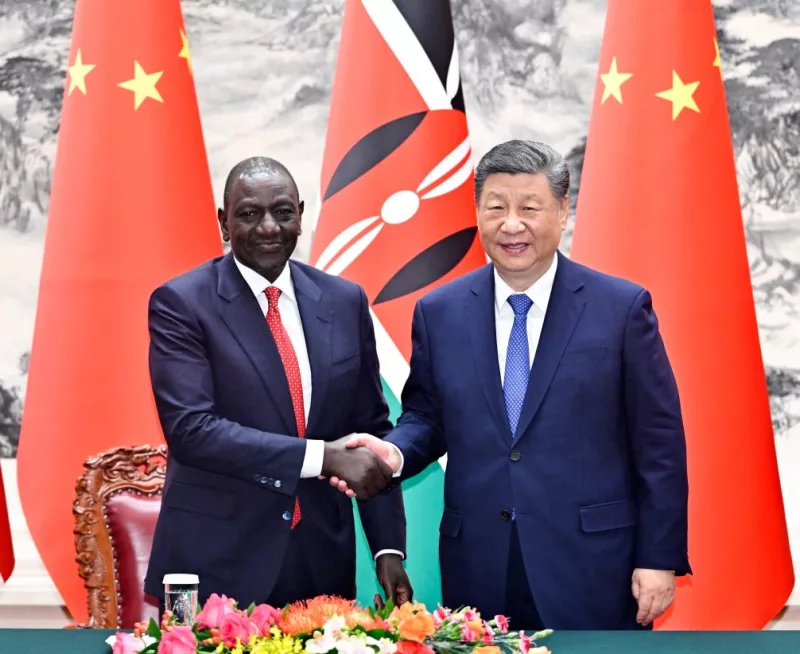
Another key factor in Washington’s declining influence is its inability to compete economically with China. Since surpassing the US as Africa’s largest trade partner in 2009, China’s trade with Africa reached $295 billion in 2024, four times the US-Africa trade volume.
China’s Belt and Road Initiative has funded major infrastructure projects, such as the Mombasa-Nairobi Standard Gauge Railway, which has transformed regional connectivity.
In contrast, US initiatives like Prosper Africa, launched in 2019, have struggled to match this scale, with American companies often deterred by perceived risks and lack of government support.
Beijing’s foreign direct investment in Africa has also outpaced the US, doubling American levels by 2021 and supporting hundreds of thousands of jobs across the continent.
African governments, prioritising economic development, are therefore drawn to China’s no-strings-attached approach, which heavily contrasts with US aid, often tied to so-called democratic reforms.
But it doesn’t stop at the external factors. America’s domestic challenges, including political polarisation and events like the January 6, 2021, Capitol insurrection, have tarnished its image as a democratic model.
African leaders, observing US internal divisions, question its ability to project stable leadership. For example, a 2021 Afrobarometer survey indicated that only 49 per cent of Africans viewed Washington as a reliable democratic partner, down from 60 per cent a decade earlier.
While the US retains some goodwill, its influence is being eroded by a lack of sustained engagement, inconsistent policies and the rise of other global competitors, who offer alternatives that resonate more with African aspirations.
In order to regain its utility and approval among African countries, the US should consider increasing trade and investment engagement with the continent. Extension of the African Growth and Opportunity Act, the linchpin of African duty free exports to the US market, beyond 2025 should be a priority.
On the policy front, the US should avoid abrupt and disruptive shifts in its engagement strategies with Africa while also supporting African-led solutions rather than imposing conditions.