County governments are dragging their feet in submitting annual budgets to the Controller of Budget for approval, delaying the release of funds two months into the new fiscal year.
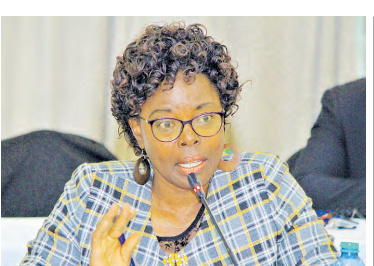
The Star has established that only 15 counties have submitted their 2025–26 financial year budgets to CoB Margaret Nyakang’o.
Of these, only two—Nairobi and Kisii—have been cleared, while the other eight are still under review.
Counties whose budgets are being reviewed are Kitui, Makueni, Machakos, Kakamega, Kirinyaga, Nyeri, West Pokot and Kirinyaga, Vihiga, Samburu, Kajiado, Laikipia and Lamu.
This means that counties that have not submitted their budgets, or are yet to secure approval, remain locked out from accessing funds from the National Treasury.
Only upon approval can they place requisitions to finance specific budget lines.
The revelations come as a shock, especially since county leaders have previously blamed the National Treasury for delays in disbursing funds.
By law, all county governments are required to submit their approved budgets to the CoB by June 30 each year to pave the way for fund requisitions and disbursements for specific budget lines.
“They should submit immediately after June 30. They are already breaking the law if the assembly does not pass the budget by that date,” Nyakang’o told the Star.
In contrast, Nyakang’o said that her office received the national government’s budget immediately after June 30—duly signed by the President.
The Office of the CoB, established under Article 228 of the Constitution, is an independent institution mandated to oversee the implementation of national and county budgets by authorising withdrawals from public funds.
Sources attribute the delays in budget submissions to wrangles between county executives and assemblies, laxity by county executives in submitting budgets for approval and failure by county assemblies to process the documents on time.
Several counties are embroiled in political infighting that has paralysed key operations, including the approval of crucial financial plans.
Nyakang’o described the relationship between some county executives and assemblies as “dysfunctional” and “convoluted,” where political rivalry often supersedes service delivery.
“In some cases, assemblies engage in what can only be described as political blackmail—deliberately delaying, rewriting, or rejecting proposals to extract concessions from governors, assert power, or settle scores,” she said.
In Bungoma, a power struggle between Governor Kenneth Lusaka’s administration and the county assembly has escalated into a full-blown legal dispute.
The assembly reportedly disbanded the legally constituted budget committee and created an ad hoc team that significantly altered the executive’s budget proposal.
“There is a serious case in Bungoma. The assembly disbanded the budget committee and formed an ad hoc one, which then mutilated the proposed budget. They passed their own version using coercive tactics,” Nyakang’o said.
Following the fallout, the courts intervened and barred the disbursement of funds, freezing county operations and stalling Lusaka’s development agenda.
In Nyamira, chaos erupted following a failed attempt to impeach Governor Amos Nyaribo. The political fallout led to the impeachment of Speaker Enoch Okero, who was accused of betraying pro-impeachment MCAs.
This sparked an unprecedented standoff: two rival assemblies emerged. One, led by Okero, dubbed itself Bunge Mashinani and held sittings outside the official chamber, while the other continued to operate as the main county assembly.
Surprisingly, the executive submitted its business to the Bunge Mashinani faction.
The Senate intervened by forming a committee to investigate the standoff. The committee, alongside a Bomet court, later declared Bunge Mashinani illegal and ordered surcharges for those involved.
Eventually, Ekerenyo MCA Thaddeus Nyabaro was elected as speaker. A committee was subsequently formed to investigate 12 MCAs allied with Okero, recommending their removal for missing eight consecutive sittings.
However, the suspended MCAs challenged the move and secured a court order lifting their suspension temporarily. They are also disputing the legitimacy of Nyabaro’s election.