THE war on corruption in county governments has intensified, with senators now demanding access to automated financial records from the National Treasury.
The move comes amid a surge in graft allegations in the devolved units, with several governors under investigation by the Ethics and Anti-Corruption Commission and others already battling court cases.
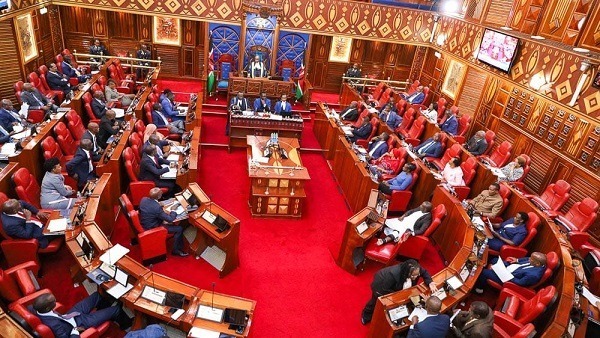
In a move that could expose financial malpractice—and potentially trigger a standoff between lawmakers and governors—the Senate is pushing for real-time access to the Integrated Financial Management Information System (Ifmis).
Besides monthly reports of Ifmis transactions for all the 47 counties, senators also want read-only access to the system to enable real-time monitoring of financial operations at the county level.
“Ifmis is the major tool for misappropriation in the counties. This is where they collude to void transactions and make illegal payments,” said Busia Senator Okiya Omtatah, who is spearheading the push.
Ifmis is a comprehensive, automated platform managed by the National Treasury to streamline government financial operations and enhance transparency.
It integrates key public finance functions including planning, budgeting, procurement, expenditure tracking, and reporting.
However, senators argue that instead of promoting accountability, Ifmis has become a "one-stop shop" for financial abuse in county governments.
They claim it enables unscrupulous officials to manipulate records and siphon public funds with minimal oversight.
“We want access to the system because that is where the collusion is happening. For a long time, we have relied on third-party reports from the Controller of Budget and the Auditor General, but they don’t give us the full picture,” Omtatah said.
Speaking to the Star, Controller of Budget Margaret Nyakang’o backed the senators’ assertions, describing Ifmis as the “engine” of the financial mess plaguing counties.
Nyakang’o said massive data manipulation and collusion happen within the system, facilitated by users with privileged access.
“Ifmis is where a lot of problems are. There’s massive manipulation going on—only those with access can truly understand it. That system is at the heart of the mess,” she said.
However, Nyakang’o also cautioned that senators could be overwhelmed by the volume of data generated daily by the counties.
They may require expert assistance to interpret the information meaningfully.
“That information will be too much. I don’t know what they’ll do with it because it needs to be synthesised for proper understanding,” she said.
The senators' push comes as the EACC tightens the noose on alleged corrupt county officials, including governors, their relatives, and close associates.
Last week, the Star exclusively revealed that the EACC has recommended the prosecution of Marsabit Governor Mohamud Ali, his wife Alamitu Jattani, and several allies over a Sh728 million tenders scandal.
Other governors on the agency’s radar include Kiambu’s Kimani Wamatangi and Bomet’s Hillary Barchok, while Trans Nzoia Governor George Natembeya has already been charged.
Three former governors have so far been convicted: Moses Lenolkulal (Samburu), Ferdinand Waititu (Kiambu), and Daniel Waithaka (Nyandarua).
In the Senate, Omtatah has tabled a motion that has received widespread support from colleagues. It reads:
“The Senate resolves that the Cabinet Secretary in charge of the National Treasury shall, every month, forward to the Clerk of the Senate all Ifmis transactions and reports for each county government for onward transmission to the respective senator for accountability and transparency.”
Omtatah said the move is intended to strengthen the Senate’s constitutional oversight role and promote better governance in the use of public funds.
Currently, he argued, senators lack access to real-time financial data from Ifmis, which he said hampers effective oversight.
“Senators are constrained by lack of access to real-time data from the Ifmis system for the respective counties they represent, thus affecting effective oversight of county governments,” he said.
“As a result of unchecked financial systems, county governments have continued to accumulate pending bills due to unplanned expenditures, inflated project costs, and unaccounted-for spending.”
Okiya’s initiative comes days after he released a report of an audit, which he said he commissioned to scrutinise the financial books of Busia county in the 2022-24 financial year.
He claimed he was denied access to crucial county financial documents to carry out the audit.
“They denied me access to, among others, the Ifmis vote book, the Ifmis cash book, and source documents such as procurement papers for specific projects where the county executive spent colossal amounts of money during the 2022-23 financial year,” he said.
Nevertheless, he conducted the audit, alleging that some Sh5.2 billion could not be accounted for during the 2022-23 fiscal year.
“Urgent institutional and legal action must be taken to ensure accountability and prevent a recurrence,” he said.
However, the Busia government under Governor Paul Otuoma trashed the allegations, accusing the senator of engaging in "political theatrics aimed at reviving a faltering political trajectory.
"His actions are not only irresponsible but also a deliberate attempt to malign the integrity of the governor and tarnish the image of the county government of Busia," the county responded.
Nyamira Senator Okong’o Omogeni has backed Omtatata's demand, saying that governors who intimidate their finance officers to manipulate the financial system are the weakest link in the counties.
“If anyone does not want transparency and accountability, they should quit,” Omogeni said,
Omogeni said transparency and accountability are key tenets of the constitution, adding that their demand for access to the financial system is squarely within the Kenyan laws.
“There is a likelihood – it is very high–that monies that we fight to send to counties are ending up in the pockets of a few,” he said.
He said senators fight so hard to secure enhanced resources for the counties, thus it would not be too much to have a view on their expenditures.
Kakamega Senator Boni Khalwale, while backing Omtatah’s bid, said that Ifmis manipulation is one of the many ways public funds are being siphoned in counties.
“The corrupt in Kenya have multiple ways of circumventing the law. Ifmis is the first one. There is budgeted corruption and collusion between government officials and contractors,” he said.